- Networth Farmer
- Posts
- A Regenerative Revolution
A Regenerative Revolution
"Nature is the art of God." - Dante Alighieri.

Networth Farmer
December 03, 2025 • Estimated Reading Time: 17 minutes

“Nature is the art of God,” ~ Dante Alighieri
Table of Contents
New In Ag-Tech
A Robot Comeback Built for Real-World Farming
Naio Technologies, the French field-robotics pioneer, is stepping into a new chapter under fresh ownership—bringing renewed focus to what farmers really care about: cutting costs, saving time, and reducing dependence on scarce labour. Known for its reliable weeding robots like Oz, Orio, and Ted, the company is refining its machines to better support vegetable, vineyard, and field-crop growers across Europe.
Why Labour-Saving Matters More Than Ever
To be honest, there aren't any signs that the workforce deficit is getting better. Many European farmers still have trouble finding enough seasonal labourers, and rising salaries are making their profits smaller.
Naïo's robots get straight to the source of this problem. They do a great job of automating boring operations like weeding and growing crops between rows. The useful upside?
Less need for hired help at busy times
More stable costs for labour
Less time spent overseeing staff
These improvements can save vineyards and vegetable farms hundreds of euros every season.
Less Chemicals, Less Inputs, Less Stress
The EU wants to use less herbicides, thus Naïo's mechanical weeding devices are coming at the perfect time. Field tests in several parts of Europe have demonstrated that automated weeding greatly reduces the need for chemical inputs. This helps farms stay in compliance while also boosting soil health and biodiversity. In a market where rules change quickly, being able to keep up output without chemicals is a big plus.

Engineered for Use in Europe's Fields, Not Doar Trade Exhibitions
Practicality in the real world is what distinguishes Naïo. The unpredictability of European agriculture, as well as uneven fields and various agricultural systems, are factors that their robots are engineered to address. New ownership promises upgrades that farmers have been asking for, including longer battery life, more autonomy, and smarter navigation.
Why You Should Look Now
If you're thinking about automating your farm or agribusiness, you should take another look at Naïo Technologies. Their new orientation means more support, more reliability, and higher long-term value.
Are you ready to find out if field robotics is right for your business? It's time to think about what Naïo's new chapter could signify for your business.
Brain Teaser
What kind of band never plays music?
The Soil Beneath the Policy
Something shifted in Brussels this June that most agricultural policy announcements miss entirely: acknowledgment of failure before prescription of cure.
On 24 June 2025, the EESC adopted an official opinion calling for regenerative agriculture to become a core pillar of EU green farming policy. The European Economic and Social Committee's decision to make regenerative agriculture a core EU strategy was not surprising. What was surprising was that they did it. One of the members of the European Economic and Social Committee (EESC) Stoyan Tchoukanov, made the admission that the current frameworks- the Common Agricultural Policy, the European Green Deal, and the whole system of European agricultural governance- are still "fragmented and insufficient to address the current challenges." European farmers have been living inside that insufficiency for years. The challenges include increasingly erratic weather, rising production costs, and ever more complex regulations, a shrinking profession haemorrhaging young people who've calculated that inheriting debt and volatility constitutes poor life planning.
The Reframe
The EESC's definition acknowledges this reality without romanticising it: regenerative agriculture as "an adaptive and holistic farming approach applying proven, science-based methods with positive impact on the environment, farming communities' livelihoods and public health, ensuring resilience of yields, competitiveness and efficiency and social outcomes."
Take a moment to notice what's missing: the moralising about stewardship, the lectures on planetary boundaries, and all that typical sustainability show. Let's focus on the outcomes instead. We've seen some great improvements in things like organic carbon in the soil, how well the soil is covered, the variety of plants, water retention, and even photosynthesis. We can keep an eye on indicators using the monitoring systems and remote sensing technologies we already have, which really helps to reduce the administrative hassle.

Farmers across Europe applying cover cropping, reduced tillage, rotational grazing, agroforestry, and natural fertilisation already see these results: lower input costs, healthier crops, improved biodiversity, greater resilience to drought and floods. The EESC isn't inventing regenerative agriculture. It's finally creating policy architecture that acknowledges what's already working in fields whilst current frameworks demonstrably aren't.
The proposal to establish key performance indicators centred on measurable environmental outcomes, as opposed to prescriptive practices, demonstrates a notable level of sophistication. A single data system that brings together CAP funding, private investment, corporate sustainability reporting, and advisory services could improve the disorganised policy environment we have now.
But coherence without capital is still abstract. The EESC suggests specialised transition aids, such as investment help, low-interest loans, and insurance plans that are unique to the situation. These are especially important for small farms, young farmers, and those who work on marginal land, which are the kind of businesses that are most likely to have to pay transition expenses and have the hardest time getting traditional loans.
Brussels just signalled that gap might finally close. Whether it actually does depends on follow-through translating committee opinions into budget allocations, simplified regulations, and risk-sharing mechanisms that don't leave farmers bearing full transition costs alone. This has immediate strategic consequences for European AgTech. Technologies that make it possible to quantify regenerative KPIs, such as measuring photosynthesis, assessing biodiversity, and monitoring soil carbon, go from being good to have to being necessary for policy. Advisory platforms that help farmers make the shift while lowering risk become essential services instead of optional ones.
Digital Pasture




Tending Dreams
How a Dutch Young Gun is Revolutionising Sustainable Farming
30-year-old Teun van den Borne now harnesses algorithms to outsmart weeds and weather in the flat polders of Harskamp, where windmills once turned grain into flour. As a third-generation potato farmer, Teun inherited 900 hectares of sandy soil from his father, but he's no traditionalist. "We can't keep spraying like it's 1950," he says, his voice cutting through the hum of GPS-guided tractors. Teun's 'Frietje Precise' chips aren't just tasty; they're a blueprint for carbon-neutral farming, slashing chemical use by 80% while lifting yields 20%.
Teun started his journey at HAS University in 's-Hertogenbosch, where he traded his books for tech. He started the Precision Agriculture Practice Centre in 2019. It's a hands-on lab where Dutch farmers can try out drones and AI sensors. His 120-hectare demo farm is full with new ideas. For example, soil monitors send moisture data to a smartphone app, which turns on automated irrigators that save 30% on water. Robotic weeders use computer vision to kill invaders with lasers while leaving helpful bugs alone. "Precision isn't fancy—it's survival," Teun says as he looks at yield maps on his tablet. These gadgets, which work together through platforms like FieldView, let him change the amount of fertiliser he uses every square metre, which improves the quality of the potatoes he sends to Belgium and the UK.

Teun’s impact ripples wider. Alongside Wageningen University, he has educated 500 aspiring farmers to make data-driven decisions in defiance of EU subsidies that are at risk from nitrogen limits. As the Green Deal promotes regenerative agriculture, investors from Flanders attend his lectures in search of scalable models. Agronomists may use his microbiome-tracking devices to learn about soil health, and policymakers can use them to protect themselves from climate change.
In spite of the December frost, Teun looks out over his flourishing fields and says with a smile, "Farming's not about fighting nature—it's about farming with it." In an industry where everyone is average, Teun's determination shows that young people in Europe have what it takes to code the green future.
Fields & Frontiers
Why Impact Investing Is Working: Imagine supporting a fund that goes beyond just making money and actually puts that money back into repairing our broken food systems. Pymwymic is on an interesting journey as an impact investor based in the Netherlands, showing that you can achieve both purpose and returns. Pymwymic is really passionate about tech-driven food systems these days. They've invested in companies like OneThird, which is a startup that uses AI and near-infrared scanning to figure out how long produce will last and help cut down on waste throughout the supply chain. This isn't about charity. Pymwymic has a portfolio of 22 ag-food companies and manages over €100 million, proving that you can have both financial success and make a positive impact at the same time.
The Text That Was Never Meant for Him: College student Kendrick Constant of Texas accidentally texted a random number "Happy Thanksgiving!" in 2016 while assuming it belonged to his relative. "Happy Thanksgiving to you too," responded an unidentified granddad from Arizona. So, who's this? The 64-year-old Henry Glaval avoided the uncomfortable moment by responding with a picture of his turkey. In response, Kendrick produced a plate of his own. Their conversation continued nonstop. Henry and his friend have become like family over the past nine Thanksgivings, sharing news of their lives, college guidance, and pain over Henry's wife's death. They were complete strangers, separated by 1,200 miles and forty years. Unbreakable relationship formed from a single incorrect digit. Here is the full story.
Unagi's Gambit: In the shadowy hallways of CITES, where countries argue over the destiny of extinct relatives, the ancient eel of Japan, unagi, the slippery rite of the summer solstice, faced the threat of extinction. Under the guise of environmental protection, the European Union pushed for the tying of the Japanese eel, Anguilla japonica, whose spectres provide fuel for a kabayaki grill empire worth £500 million and worldwide cravings. Seventy percent of Japan's harvest comes from China, a vital resource that is precariously balanced on import quotas, which have the potential to drive up costs and choke festivals all the way from Toronto to Tokyo. However, the committee reacted negatively, voting 100 to 35, because they believed the bid was unscientific and a diplomatic kabuki in which briefings from Tokyo influenced countries in the Global South. We saved our eel culture from disaster, Minister of Fisheries Norikazu Suzuki breathed out. But the trade is precariously balanced as 5 December approaches, the plenary shadow. Is it inevitable that the West's environmental decrees would suffocate the East's feasts in this watery armaments race, or will unagi be able to swim freely in a sea that is ecologically balanced? Find out more on Asahi.
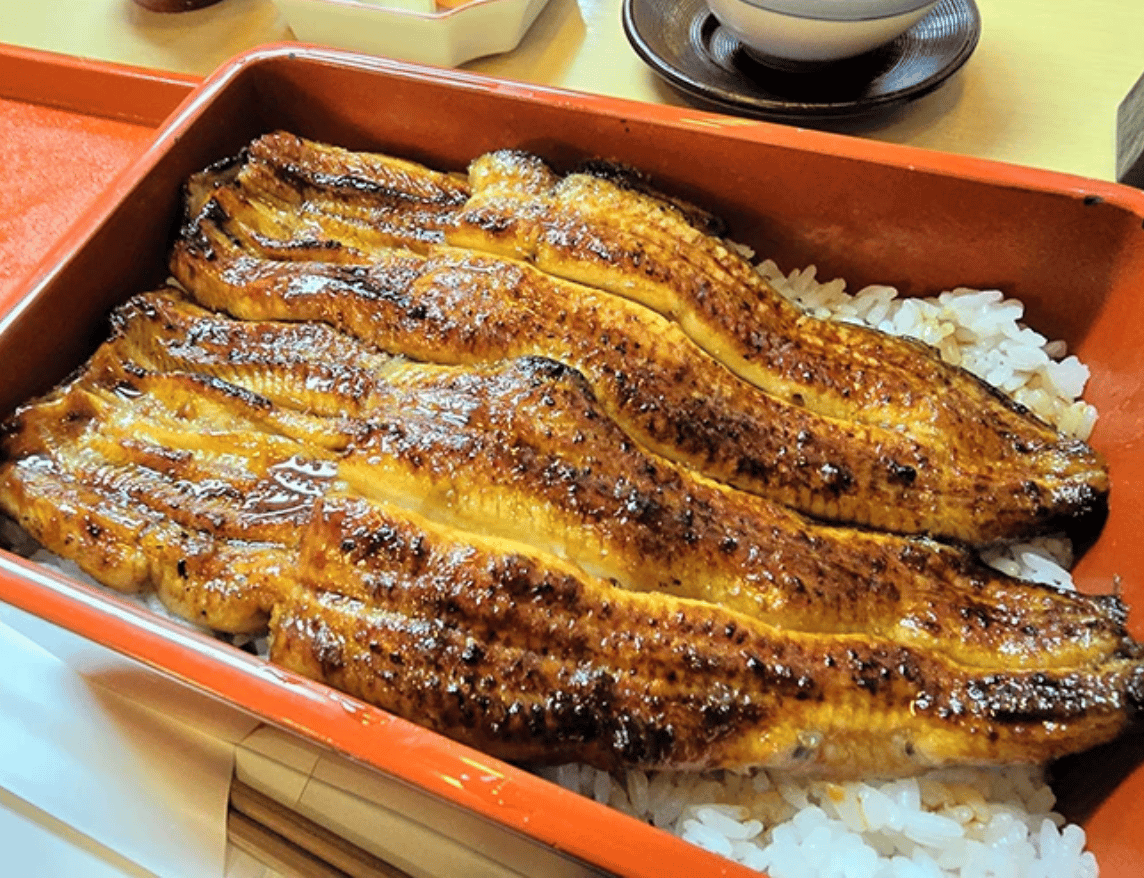
Photo by Nobufumi Yamada
China’s Masterstroke: China is making bold moves to seize the reins of global AI governance by proposing a World Artificial Intelligence Cooperation Organisation (WAICO). This initiative aims to establish unified standards and give more visibility to voices from the Global South. President Xi introduced this Shanghai-based organisation at the APEC summit, highlighting its commitment to transparency and respect for national differences. At the same time, it aims to enhance China's diplomatic influence and facilitate the global expansion of its regulated AI companies, such as DeepSeek's R1. Meanwhile, with the US avoiding federal regulations, the EU wrestling with its risk-based AI Act, and the UK still hesitating, there's a noticeable regulatory gap emerging. China's "AI+" plan focuses on open-weight models to gain economic strength rather than getting into AGI arms races. Can Beijing really bring people together in a world that's so divided? What if WAICO turns into the new nuclear non-proliferation treaty for AI, spearheaded by the nation that's trying to outpace the West?
Commission Broke Its Own Rules to Gut Green Laws: In a damning verdict, EU Ombudsman Teresa Anjinho has ruled that the European Commission committed maladministration while rail-roading its controversial Omnibus I package. The probe exposed blatant breaches of the Commission’s own Better Regulation rules: internal consultations were slashed to under 24 hours—over a weekend—and mandatory climate-proofing checks vanished without trace.Launched in February 2025, the sweeping deregulation drive is now in inter-institutional negotiations. Insiders warn the final text will gut the Corporate Sustainability Reporting Directive (CSRD) and Corporate Sustainability Due Diligence Directive (CSDDD) far beyond original plans, confining their reach to only the very largest companies while sparing thousands of others.When the Commission sacrifices transparency and green safeguards for speed, who really benefits—European citizens or corporate lobbies? To understand better, read further on Ombudsman.europa.
Pi Price Pinch: It looks like the popular budget mini-computer, the Raspberry Pi, is becoming a bit more expensive. And guess what? It's not because of any virus or crypto-miner; it's just the classic case of supply and demand at play. The company has shared that prices will go up by $5 to $25, depending on the model, for its Pi 4 and Pi 5 lines. They say this is due to rising global RAM costs, which are being pushed up by the growing AI-server market. If you’ve been using Pis for things like farm sensors, automation prototypes, or DIY AgTech projects, it might be a good time to take a step back and think about it. The 16 GB Pi 5 is now priced at $145, up from $120 — that’s a noticeable pinch for those working with a tight tech budget. Raspberry Pi just dropped a new 1 GB-RAM version of the Pi 5, and it’s only $45! It’s great to see them sticking to affordable options, even when times are tough. The Verge has more on this.
Answer to Brain Teaser
A Rubber Band
Till You Laugh

Disclaimer

Follow
  |   |