- Networth Farmer
- Posts
- AgTech Trailblazers
AgTech Trailblazers
“It is better to go to defeat with free will than to live in a meaningless security as a cog in a machine.”~ saac Asimov

Networth Farmer
November 07, 2025 • Estimated Reading Time: 9 minutes

“It is better to go to defeat with free will than to live in a meaningless security as a cog in a machine.”
~Isaac Asimov
Table of Contents
New In Ag-Tech
Fragrance-Based Pest Control
While European farmers watch their pesticide options disappear faster than Brussels can write replacement regulations, a French company has been reverse-engineering how insects think. Agriodor's approach sounds like science fiction: instead of killing pests, they're confusing them with weaponised plant fragrances.
Pest Controllers Didn't See This Coming
Plant-based semiochemicals—kairomones and allomones—are essentially chemical conversations between plants and insects. Agriodor intercepts these conversations, broadcasting fake messages that either repel pests from crops or lure them into traps. No synthetic insecticides, no collateral damage to beneficial insects, just molecular manipulation of pest behaviour at field scale.
The technical sophistication matters: Agriodor claims their platform can address over 80% of global insect pest species. That's not incremental improvement—that's category disruption. Their R&D pipeline develops new formulations in three years versus the decade traditional pesticide development requires.
Why Europe Should Pay Attention
Founded in 2019 as an INRAE spin-out based in Rennes, Agriodor secured €7 million from SWEN Capital Partners and others. Current field trials include 500 hectares of sugar beet across Europe, with commercial launch targeting 2025 for initial crops.

Photo Credits: Agriodor
The regulatory timing is impeccable. As the EU Farm to Fork strategy mandates 50% pesticide reduction by 2030, Agriodor offers compliant alternatives rather than forcing farmers to produce less with fewer tools. European regulators increasingly classify semiochemicals as low-risk biocontrol agents—the fastest approval pathway available.
The Market Nobody's Talking About
Agriodor positions itself within an €11 billion market by 2025, but here's what competitors miss: this isn't about capturing market share from existing biopesticides. It's about defending billions in crop value that will simply disappear when conventional pesticides become unavailable.
European farmers don't need another biological control agent that works "quite well." They need solutions that actually prevent economic losses when chemistry stops being an option. Agriodor's bet is that confused pests are as good as dead pests—and considerably more regulatory compliant.
Brain Teaser
If an electric train is heading north, which way is the smoke going?
The Planter Box Revolution
Biological seed treatments perish before they get to the ground. It's a dirty truth in farming: the good bacteria that firms say will protect your crops are dead by the time the seeds hit the ground. European biological companies have spent billions trying to keep germs alive through the seed treatment gauntlet, but they have failed miserably. At the same time, regulatory pressure is pushing farmers towards treatments that don't work.
Five years ago, an American company named Meristem came up with a solution: hermetically sealed capsules that farmers sprinkle into planter boxes like talc. The technique is so simple that it nearly makes you feel bad about it, but that's what makes it work.
The Adoption Equation
Meristem's observation cuts through the myths about AgTech: the more complicated a technology is, the less likely farmers are to use it. Biological seed treatments need particular tools, educated workers, and careful scheduling. BIO-CAPSULE doesn't make the farmer's job any harder; it combines crop protection ingredients in the same manner as farmers put talc graphite into planters.
The system’s Hopper Throttle MaxStax delivers 16 crop input components such as fertilisers, inoculants, synthetic crop protection, and biocontrol—are delivered straight to the furrow by MaxStax. In a powder formulation, live microorganisms are safeguarded until they are ready to be used and remain dormant until seed germination. When compared to seed treatment or liquid starter, TNGlobal's in-field study shows that the planter box can provide up to ten times as many live microorganisms.
Europe’s Regulatory Knot
European regulations tend to prioritise biological products over synthetic alternatives, leading to a significant demand for items that often do not meet performance expectations due to the challenges faced by delivery systems in effectively reaching the soil. BIO-CAPSULE facilitates the integration of new formulations without the need for costly re-registration, thereby minimising waste and addressing the regulatory challenges in Europe. The platform is designed to support both biologicals and reduced-rate synthetics in combinations that are permissible by regulators; however, farmers currently face challenges in deploying these with their existing equipment.
The commercial traction observed serves to affirm the strategy: 3.1 million acres in 2023, with a projection of 8.5 million acres in 2024. Meristem's MAX Family products are designed to address the significant challenges posed by the "big five" pests—corn rootworm, soybean cyst nematode, corn nematodes, corn root rot, and sudden death syndrome—which collectively result in an annual economic impact of $4 billion for American farmers.
What European AgTechs Can Do
License Meristem's patented technology rather than developing competing systems from scratch. European biologicals firms could accelerate commercialisation under tightening pesticide regulations by integrating proven delivery platforms instead of reinventing packaging.
Develop regional adaptations using locally available materials and crop-specific formulations. The hermetic seal protecting microbes until activation requires clever packaging, not advanced materials science. European companies understand local crops, climates, and regulatory requirements better than American imports.
Bundle delivery with existing products. Seed companies and equipment manufacturers could partner with delivery system innovators, treating simplified application technology as infrastructure rather than separate purchase decisions. This distribution strategy converts the delivery system into a platform that captures value across multiple product categories.
Meristem's core thesis-adoption is inversely related to complexity-explains why precision agriculture with elaborate calibration processes fails repeatedly whilst systems requiring zero behaviour change succeed immediately. European AgTech consistently overestimates farmers' willingness to adopt complex solutions, then blames farmers for not appreciating innovation.
Europe's biological agriculture transition depends entirely on solving the "dead on arrival" problem. Meristem solved it half a decade ago. European firms are still trying to keep microbes alive through processes that fundamentally can't work. That gap represents either enormous opportunity or catastrophic strategic blindness, depending on how quickly European AgTech recognises what's already proven in American fields.
Digital Pasture


Fields & Frontiers
Greenhouse Genius: Amsterdam-based Source.ag just got $17.5 million in a Series B financing to grow its AI platform for Controlled Environment Agriculture (CEA). This is a major indication for farmers who are having trouble meeting the growing demand for fresh fruit, finding enough workers, and following stricter requirements about sustainability. Their system is already being used in more than 300 greenhouses in 18 countries to assist estimate harvests, automate irrigation, and turn raw data into decisions that can be acted on. This is the link between your digital skills and your human knowledge. If you want to grow greenhouse crops, vertical farming, or precision climate management, this platform shows how AI can be a strategic partner, letting you lead instead of just managing. The support from seed company Enza Zaden and grower coop Harvest House shows that even big companies are getting on board with the AI-co-pilot approach. Is your IT stack ready for AI? And can any of your products provide a "plant-model co-pilot" to boost productivity today?
Unlock Your AI Toolbox: "The Founder's AI Stack: Series 1" is a great way to improve your startup game. You might not have known that tech could be your secret weapon. This resource gives you four AI tools that can take the place of a $10,000-a-month firm. These tools include an investment deck like Sequoia's, an investor memo, a LinkedIn engine, and SEO FAQs, all in one easy-to-use package. Think about how much money you could save on marketing, how much faster you could make content, and how much more prepared you could be for investors—all without employing a whole crew or spending a lot of money. That implies more money for trial plots, research and development, and swiftly changing your value proposition for European AgTech companies. Want to know how to use AI without all the technical talk? Don't sleep on this; read the complete breakdown here. It's time to stack better.
Power Players Reshaping AgTech: October's boardroom shuffle reveals who's betting big on AgTech's next chapter. The Northern hemisphere may be welcoming cooler autumn weather but the Ag industry is focused on bright green fields in 2026. It is investing heavily in personnel to achieve their goals. Seed design pioneer Inari just appointed Lisa Nunez Safarian as CEO. She is a 30-year agriculture veteran who was instrumental in developing Monsanto's seed, crop protection, traits, and licensing programme. She's taking the reins from Flagship Pioneering's Ignacio Martinez, and her pedigree screams scale: former Bayer president of crop science North America with proven results in High Yield Designs. Meanwhile, automation company Agtonomy appointed Michael Abbott to its board—fresh from General Motors where he led autonomous driving and software-defined vehicles, plus stints at Apple's Cloud Services, Microsoft, Twitter, and Palm. The move follows Agtonomy's oversubscribed $18 million Series B from SpaceX backer DBL Partners. Elsewhere, Sofina Foods Europe tapped Graham Wilkinson as group agriculture director, former CEO of the Agriculture and Horticulture Development Board, and IFFO appointed Peru's Adriana Giudice and Norway's Egil Magne Haugstad as president and VP for 2026-2027. No musical chairs here, just strategic bets on who'll dominate agtech's next decade. Meet the full lineup on AgTech Navigator.

Photo by Artem Podrez
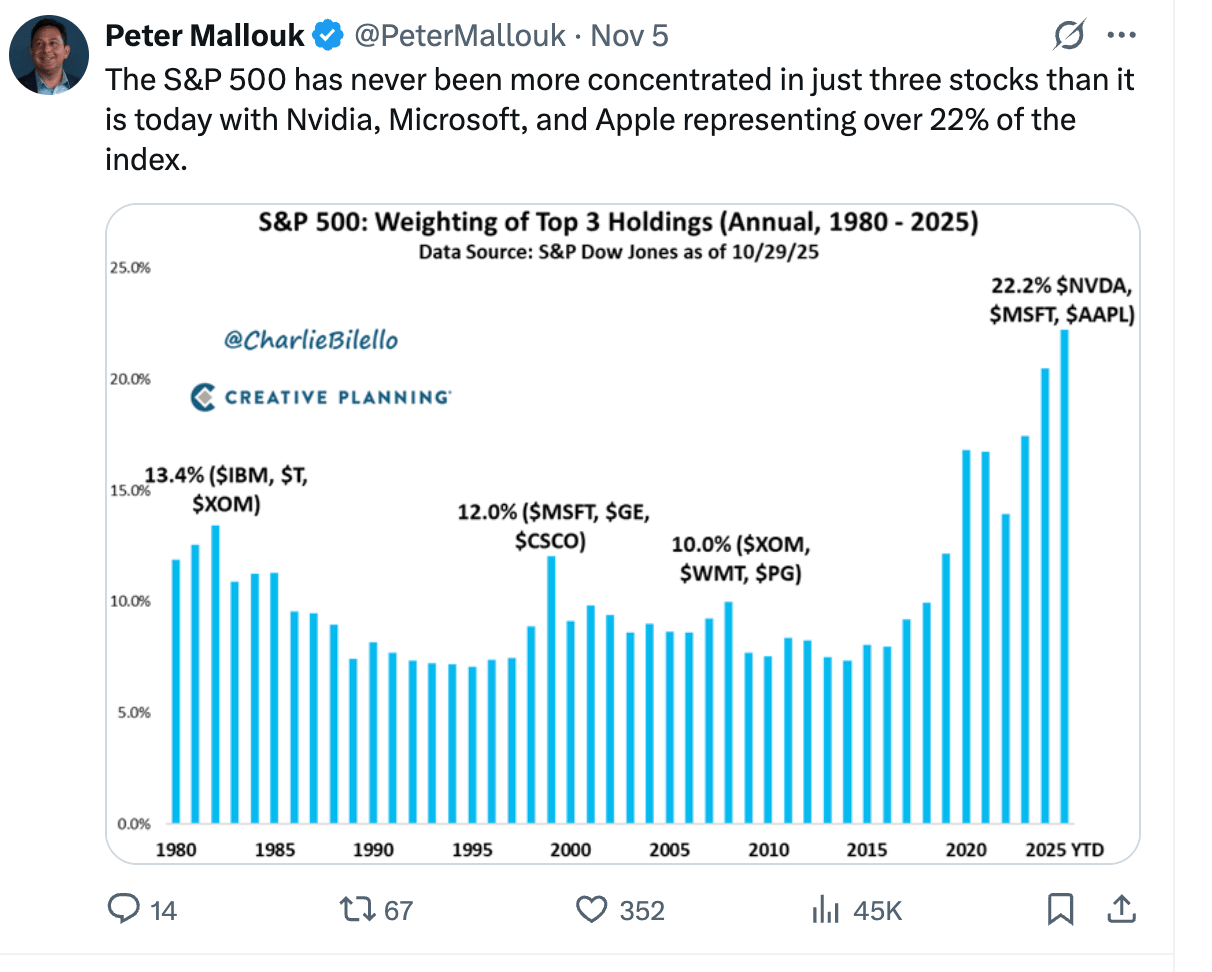
AI Hype vs Reality: A recent piece in Inc. says that even though there is a lot of talk about "Apple Intelligence" and AI-powered gadgets, most of Apple's profits still come from its tried-and-true services sector, not the new AI capabilities. This might be a wake-up call for both IT fans and AgTech pioneers in the UK. What does that mean for smaller companies if even Apple, with all its hardware power, can't make money from AI yet? What if the next major farm-tech startup makes huge claims about AI but doesn't pay attention to how to make money? You're about to dive into the future of tech: exciting, ambitious, and maybe not as ready to pay the bills as you think. Are you interested? Click through to get the whole story behind Apple's $100 billion secret. What will happen next, and when will the money catch up with the hype?
Why COP30 Matters for AgTech: Alright, AgTech friends, strap in, because this year’s COP 30 in Belém, Brazil is set to flip the script for agriculture and climate alike! Brazil is hosting, which is a perfect storm: tropical invention meets global ambition. Brazil isn't simply using tired old phrases about feeding the globe. Institutions like Embrapa will show off 50 years of low-carbon, tech-infused farming, from crops that can survive droughts to tests that check the condition of the soil. This is a big deal for AgTech in Europe. So many of the solutions we make, including precise tools, regenerative systems, and climate-smart inputs, are now at the top of Belém's list of things to do. The "agriculture as a solution" message from Brazil indicates that European entrepreneurs need to work towards global climate goals, not just market needs. COP 30 is moving from "what we plan" to "what we do." Automation, AI-driven breeding, and bio-inputs are all important if they really make things more resilient. So what? If you have a tool, sensor, or system that helps with both adaptation and productivity, you're in the limelight. Are you ready to get involved in this moment and help design the next generation of farming that is tech-savvy, climate-friendly, and strong?
Resilience Isn’t Optional Anymore: According to the latest survey from the MSCI Institute, corporate climate resilience is now a boardroom imperative across Europe and beyond. A staggering 82% of firms say that investing in operational resilience delivered positive financial or reputational results. Meanwhile, 87% of firms are assessing storm-damage risk, 78% are modelling floods and 67% factoring extreme heat into their planning. Here’s the kicker: although three-quarters (75%) of companies now have formal climate-risk oversight frameworks, yes, board members and senior management are actually paying attention, only 20% currently offer products or services aimed at helping others adapt to climate change. So, the market knows the storm is coming, yet few are supplying the life rafts. For AgTech businesses in European agriculture, this reveals a massive gap and an even bigger opportunity. While the mainstream remains focused on transition and net-zero, the physical risks (floods, heatwaves, storms) are already impacting operations today. If you’re developing sensors, climate-smart inputs or resilience-driven platforms, you’re not just keeping up; you’re ahead. Dive deeper into the full survey to see how the market is preparing and where your AgTech business can stride in.
Roots & Records
Innovation Took Root Beneath the SeaThis story starts with water, not tractors or sensors. For hundreds of years, the Dutch fought to get land back from the water by building dykes, draining polders, and learning how to live in harmony with nature. That ongoing fight created a culture of accuracy, creativity, and working together to solve problems that still defines Dutch farming today. After World War II, food was scarce so the government, scientists, and farmers worked together to come up with a new vision for farming that was based on efficiency, technology, and sustainability. Wageningen University & Research came out of this initiative. It is currently a world leader in AgTech innovation, connecting science and practice in real time. Fast forward todate, The Netherlands, a country roughly the size of Wales, has become the world’s second-largest agricultural exporter. A Brief Timeline of Dutch AgTech Progress 1950s–60s: Mechanisation and cooperative models spread to rural areas, which increased exports and production. 1970s–1980s: Greenhouse horticulture became a precise business, with Westland being the first to adopt climate control and fertiliser recycling systems. 1990s: Wageningen University built up its international research network, which led to big advances in plant genetics and farming in controlled environments. | 2000s: The Netherlands becomes a world centre for high-tech greenhouses, sending both expertise and infrastructure to other countries. 2010s: Digitalisation, AI, and robotics are changing how efficiently farms work. Dutch firms are at the forefront of sensors, self-driving tractors, and data-driven sustainability. 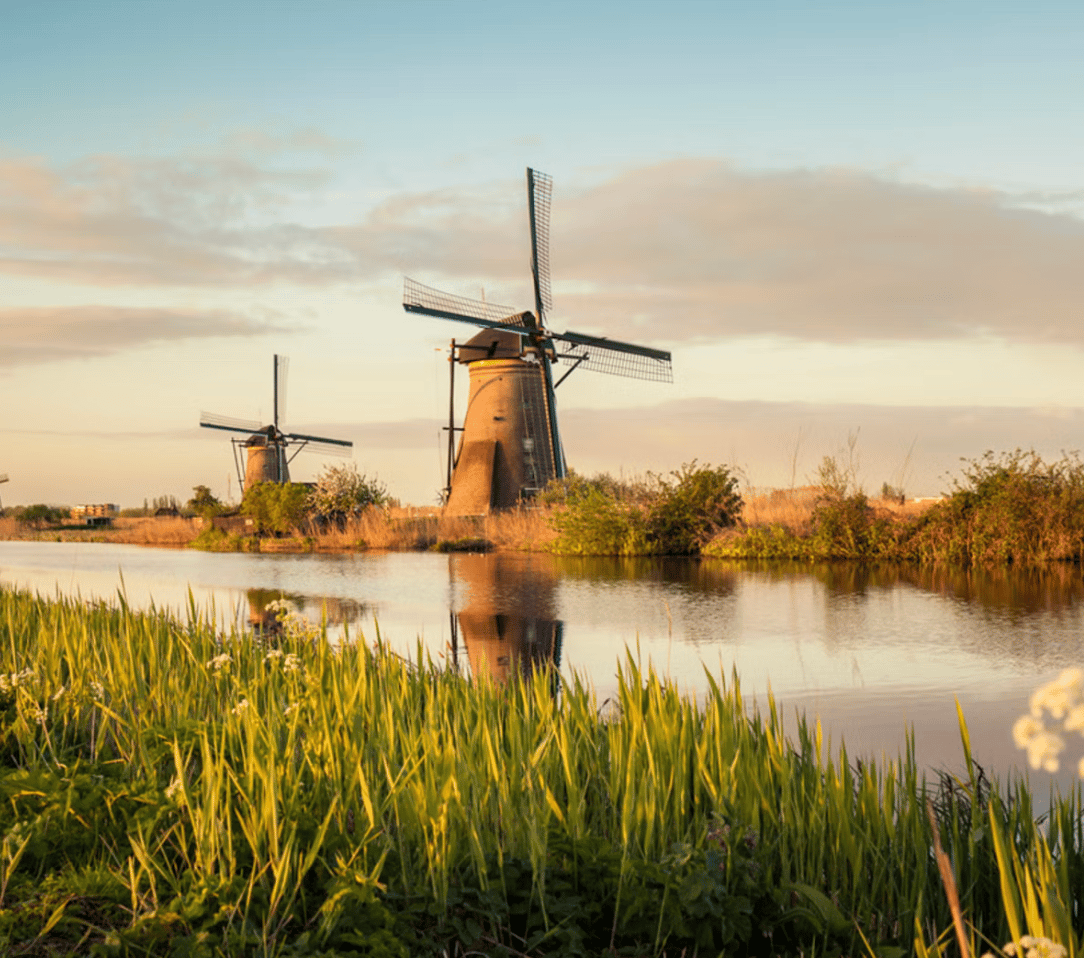 According to National Geographic, Dutch farmers use up to 90% less water than the average farmer in the world and have cut their usage of chemical pesticides to almost nothing in many areas. Vertical farms are presently going up near Rotterdam. They use LED lights and AI to grow fresh food all year round. |
Answer to Brain Teaser
There is no smoke. It's an electric train.
Till You Laugh


Disclaimer

Follow
  |   |