- Networth Farmer
- Posts
- Farm Tech Today
Farm Tech Today
“The truth comes as conqueror only because we have lost the art of receiving it as guest.” ~ Rabindranath Tagore

Networth Farmer
November 26, 2025 • Estimated Reading Time: 8 minutes

“The truth comes as conqueror only because we have lost the art of receiving it as guest,”~ Rabindranath Tagore
Table of Contents
New In Ag-Tech
Precision Seeder Simplifies Electrification
While many in Silicon Valley argue about whether farming jobs should be electrified, a Friulian company has quietly addressed one of precision farming's biggest problems: getting electric seed distribution to function in the field.
Real-World Problem-Solving Engineering
The MS 8230 ELEKTRO precision seeder from MaterMacc, which has been part of the Pöttinger Group since late 2022, is an example of what happens when modern electricity meets classic agricultural engineering. The machine can work with widths of 2.54 to 6.10 meters and 6 to 12 rows, but the real novelty is how it handles the basics.
The unique "Easy-Set" hydraulic system lets operators change the distance between rows by moving seeding parts along the carrying frame. It's easy to use and doesn't require any tools. At the same time, the electrically operated 'Magicsem' distribution disc system places seeds with real accuracy. This is made possible by less friction, lower suction force needs and a single gasket design that makes the Hoover more efficient. Recent field tests in Cremona during strip-till maize planting showed that the machine could run at 9 km/h, which is close to the manufacturer's recommended maximum speed of 11-12 km/h. The steel distribution disc, which comes in different sizes and can be replaced by simply opening the side cover, is mounted on ball bearings to make it easier to turn and shake up the seeds inside.

Why This is Important for European AgTech
MaterMacc's method teaches us an important lesson: making farming work with electricity doesn't imply putting batteries and motors in everything. It involves figuring out where electric control has clear benefits, such more accurate seed dispersal, while keeping hydraulic and mechanical systems that operate best where they are. The company is very advanced in manufacturing because it focusses on lowering welding spots by using bolted frame elements, optimising the design of the parallelogram for the seeding element, and keeping the product small compared to the centre of gravity of the tractor.
This Italian precision seeder is a model for European AgTech: it combines traditional farming knowledge with selective electrification where it really helps. The $51 million collapse of Guardian Agriculture taught us that revolutionary ideas don't always work. On the other hand, MaterMacc's growth inside Pöttinger's established framework shows that practical innovation prevails.
Brain Teaser
Imagine you're in the forest, surrounded by ravenous, man-eating wolves. How do you put an end this terrible situation?
What a Thai Startup Just Taught Me About Europe's Biologicals Problem
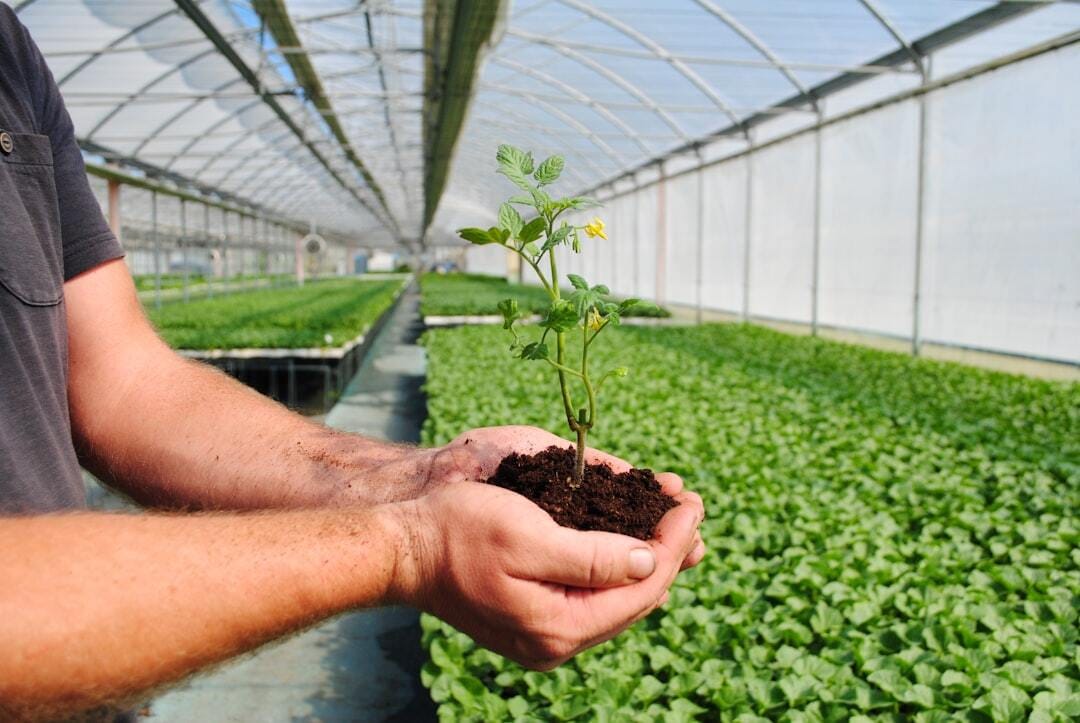
I've spent the past month watching European biological companies struggle with the same challenge: how do you convince farmers to pay more for sustainable solutions? Then I discovered Living Roots in Thailand, and realised we've been asking the wrong question entirely. Avika Narula and Abhi Agarwal, the company's co-founders, are using AI-powered biological fertilisers made from local waste materials to fix the slash-and-burn dilemma, in which farmers set fire to fields every year to get rid of agricultural waste. The business strategy is what makes it smart.
The Inversion We're Missing
While European companies portrayed biologicals as high-end substitutes that necessitate behaviour modification, Living Roots tackled the issue in reverse. Intentional field burning depletes soil quality and locks up nutrients, resulting in catastrophic air pollution throughout Southeast Asia each year. Farmers know how awful it is; they just don't have any reasonably priced options. Living Roots' biological solution organically breaks down crop residue, which is less expensive than synthetic fertilisers and gradually improves soil health. The environmental advantage is the unavoidable result of resolving farmers' real economic issues, not the selling point.
Why Asian Innovation Matters for European Capital
After an overcrowded pre-seed sponsored by Accelerating Asia, Living Roots recently obtained bridge funding from Epic Angels. They have been chosen for the 2025 cohort of ClimAccelerator. Instead than trying to overtake established fertiliser firms, their collaboration strategy shows the strategic savvy that European biologicals frequently lack. 68% of Brazilian farmers already use biologicals, according to the company's target market, because of government assistance and the high cost of fertiliser. They are using better economics to address current needs rather than developing new ones.
The Inconvenient Lesson
European AgTech continuously underestimates farmers' receptivity to better economics while overestimating their readiness to pay for sustainability. By offering green discounts, Living Roots demonstrates that biologicals don't require green premiums. This can be interpreted as either confirmation or caution for investors in Europe. confirmation that markets for biologicals are developing beyond early adopters. European businesses that prioritise sustainability narratives over cost competitiveness risk losing to Asian corporations who approach the same issues more logically.
The investing premise is simple: support businesses that produce biologicals at a lower cost than synthetics, not those who make synthetics appear more costly in comparison. Living Roots is an example of how this approach functions on a large scale. Before Asian innovation redefines what "competitive biologicals" truly means, European capital should pay attention.
Digital Pasture



Tending Dreams
Peppone’s Next-Gen Grain
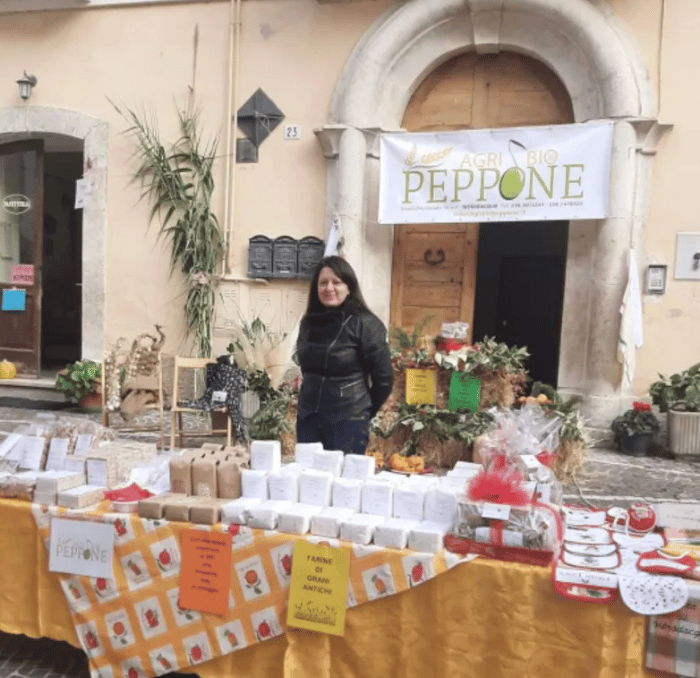
In a hilly corner of Abruzzo, Italy, the De Santis family has turned an ordinary cereal farm into an experiment in resilience. They are blending heritage grains, low-impact cultivation, and community-focused diversification to create a living model for climate-aware farming across Europe.
With a project budget of €87k, partially funded by the CAP, Peppone made investments in stone milling, precision seed drills, weather stations, and training spaces to establish a comprehensive on-farm grain-to-bread supply chain. The useful mix of old farming knowledge and careful updates has increased profits and, importantly, created new benefits for the community: around 600 students visit for educational trips each year, and the mill continues to support local processing.
But what does this have to do with us? A lot, in fact, because Peppone changes the way we think about innovation. Innovation goes beyond drones and AI. It's also about combining precision equipment like weather stations and seed drills with specialised product creation, direct-to-consumer marketing, and experiential agritourism. These choices cut down on transportation emissions, bring in more money for the local economy, and make farms better able to adapt to climate change.
If you are a policymaker and investor, pay attention to how targeted CAP policies (M04, M06) reduced the risk of tiny capital upgrades, leading to bigger social and environmental returns than just higher raw yield gains. Peppone should inspire us as farmers and AgTech pioneers to come up with solutions that work for small, multifunctional farms, such as economical processing, climate sensors, and narrative platforms that turn provenance into price.
Peppone's method is user-friendly and accessible to a wide audience. It involves protecting seeds that have been suited to the local environment, adding technology where it makes the plants stronger, and building a direct connection between farmers and citizens. That implies that for Europe's AgTech community, some of their money needs to go from flashy things to useful things—smart, low-cost technologies and business models that make climate action a way to generate money instead of a cost.
Fields & Frontiers
Night’s Quiet Power: In the silent, cold expanse of the night, a forgotten Victorian invention stirs. The Stirling engine, a marvel of sealed physics, requires no combustion, only a temperature difference to hum to life. Now, engineers are reimagining it as a guardian against our overheating world. By harnessing the day’s residual heat or the chill of a dark sky, these graceful machines could power our air conditioning without fossil fuels. They offer a poignant paradox: using the sun’s own lingering warmth, or the cold of space, to cool the very world it heats. A beautiful, circular promise of respite, powered by the sky itself. Read more on Interesting Engineering.
The Dairy Farmer Who Chose Death Over Dairy: For seventeen years, Nadine Stemerdink-Bongen woke before dawn in Aalten, Netherlands, running a dairy operation with her heart and soul. She knew every cow by temperament, every field by its quirks. "I couldn't express my creativity," she would later admit, a confession that sounds absurd until you understand what farming had become. Endless regulations, crushing economics, and mental health issues that were spreading like wildfire throughout rural areas. Nadine worked the crisis hotline in Taboer, listening to desperate farmers contemplating darkness. She heard her own voice in theirs. The dairy sector doesn't discuss what it costs to stay. The seven-day weeks. The financial tightrope. The identity so fused with occupation that imagining another life feels like self-erasure. Nadine experienced burn-out. Then she asked herself a question that agriculture rarely permits: "Have I ever actually done this?" lived a life that felt like hers rather than one inherited, expected, demanded. Today, Nadine Stemerdink-Bongen works as a funeral director and church worker in Bredevoort, accompanying the dying and bereaved. Find out Nadine's story where she challenges the sector's unspoken rule: once a farmer, always a farmer.
Ageing, Demystified: Making long-lasting, effective technology is just as important as maintaining a healthy lifestyle as we age. Rather than visible signs of ageing like wrinkles and grey hair, a TED-Ed video by Juulia Jylhävä reveals three hidden molecular signals within our bodies that are the best predictors of how well we age. To learn more about our long-term health and lifespan, she investigates intangible signals like DNA methylation and biological "clocks" that scientists use. These biomarkers aren't merely interesting in and of themselves; they can foretell significant changes in our health over the course of several decades. Those of us working in AgTech or with systems with a lengthy lifespan should take this as a signal: optimising isn't the only thing that matters; we must also consider resilience and longevity. Expand your perspective on sustainability on YouTube.
Rewriting Agriculture's Nitrogen Playbook: In the rough agricultural season of 2025, Pivot Bio, an AgTech business based in Minneapolis, is changing the way nitrogen is managed by using biology instead of chemistry. Their solutions are 30% cheaper than standard synthetic fertilisers. Their gene-edited bacteria dwell on the roots of crops and add nitrogen to the air exactly where plants need it. They do this in a weatherproof, nutrient-rich dry planter box for maize and cotton. This new idea avoids the problems and damage to the environment caused by the Haber-Bosch process, which has been around for a hundred years and uses a lot of energy and releases hazardous gases. Pivot Bio's solutions have been shown by thorough academic study to dependably provide nitrogen in a variety of situations, increasing yields and lowering the need for synthetic inputs. Pivot Bio is aggressively changing sustainable agriculture as it builds more collaborations and gains respect among the world's green tech leaders. But the big question remains: can biology really replace chemical fertilisers on a large scale and feed the world's rising population? The solution can be found in growing fields and the stories of farmers all across the world. Discover Pivot bio’s full portfolio.
A Bold Leap Into Purpose: In a world where success is often measured by wealth and status, his decision to leave a six-figure tech career in his 20s to start a funeral business with his wife speaks volumes about courage and heart. It reminds us that fulfillment comes not from numbers in a bank account but from meaningful work that touches lives deeply. With every farewell they facilitate, they also celebrate life, compassion, and human connection. This inspiring journey challenges us to rethink our own paths and what truly matters in the legacy we leave behind. Discover more about this extraordinary choice and the powerful story behind it on Business Insider.
Oyster Bay Oversubscribed: Oyster Bay Venture Capital has concluded its Fund II, which was oversubscribed and raised more than €100 million. This shows that investors have a lot of faith in agri-food tech innovation. This Europe-based VC, managed by entrepreneurs, only invests in companies that improve the entire food value chain. It is founded on the success of its initial fund. Fund II has previously invested in promising firms like goodBytz, Nukoko, Arda Biomaterials, and seedalive GmbH. These companies are working on problems related to robotics automation, alternative ingredients, upcycling, and seed technology. The fund's goal is to support game-changing solutions that will modernise and improve the global food system. This is important since the food sector is critical to the world and the economy and needs new ideas that are both sustainable and scalable. This is an indication of great prospects for early-stage food tech developers all around Europe and beyond.
Call of Duty Black Ops 7: In a dramatic shift for the video game business, Call of Duty Black Ops 7 has come to represent the dangers of badly executed AI. What ought to have been a demonstration of technological progress turned out to be a warning story—in which artificial intelligence disturbed the core of the user experience rather than improving games. The game's AI flaws have spurred a heated discussion on the ethical and responsible use of technology in entertainment, bringing up pressing issues with user trust, ethics, and oversight. The delicate balance between innovation and deterioration must be addressed by both developers and players at this pivotal juncture. Beyond gaming, Black Ops 7's teachings serve as a wake-up call for the ethical application of AI in digital environments. Examine in more detail what went wrong and why it affects interactive technologies going forward on Forbes.
Inside Atrium Agri's Strategic Expansion: Atrium Agri is really stepping up to strengthen its presence throughout the agricultural supply chain. Recent developments show a clear strategy aimed at vertical integration, covering everything from sourcing inputs to boosting its retail presence. This isn't just about growing for the sake of it; it's a thoughtful approach to building resilience and seizing opportunities in a shaky market.
For people in the industry, this indicates a move towards bigger, more integrated companies that can manage quality and costs from the source all the way to the end-user. The company's recent acquisitions and operational updates really show us where the industry is heading. Dive into the complete analysis on iGrow News to get a better grasp of what this means for the wider market.
Answer to Brain Teaser
Stop Imagining
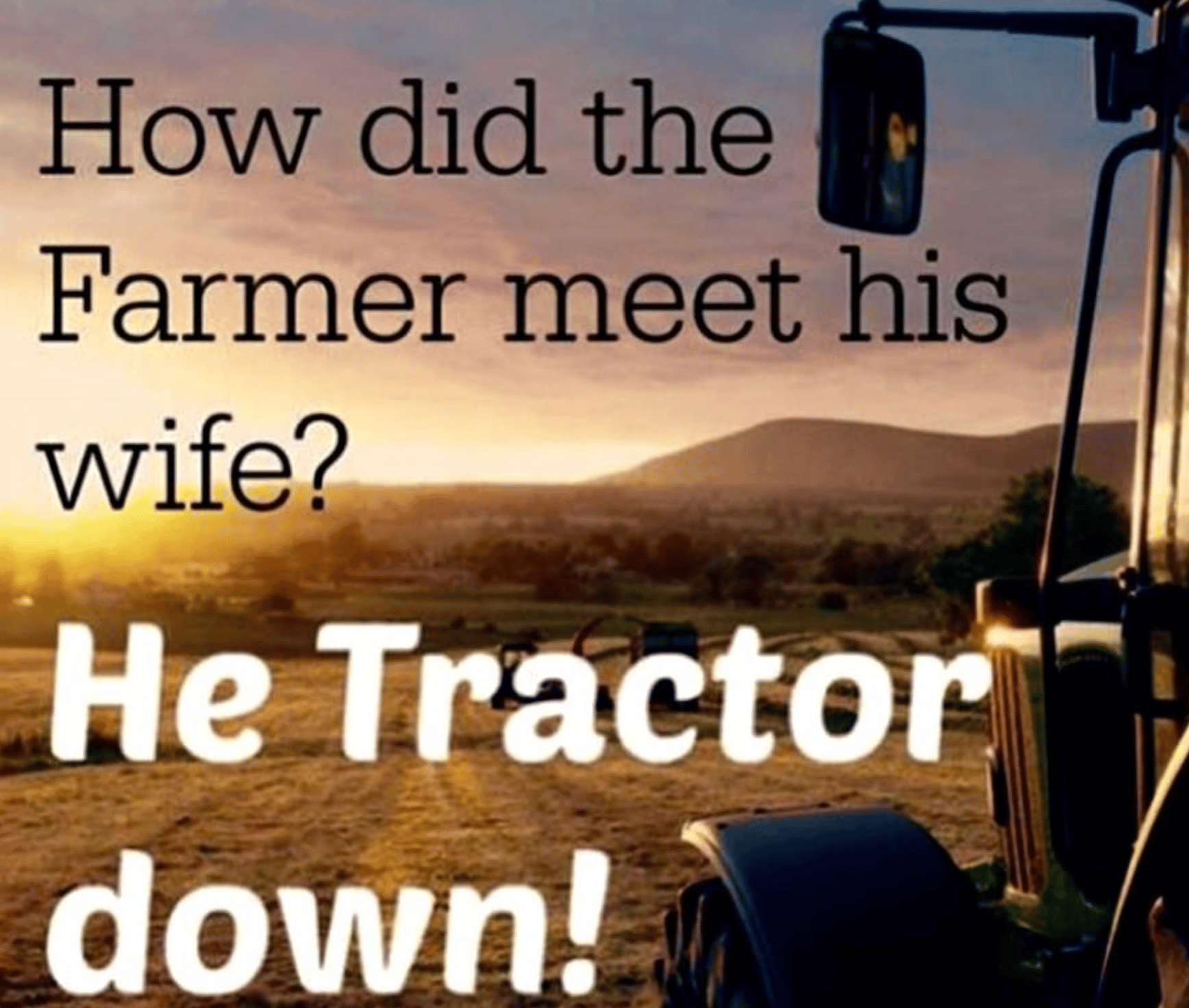
Till You Laugh



Disclaimer

Follow
  |   |