- Networth Farmer
- Posts
- Feeding Tomorrow, Today
Feeding Tomorrow, Today
“The future starts today, not tomorrow,” ~Pope John Paul II

Networth Farmer
October 17, 2025 • Estimated Reading Time: 18 minutes

“The future starts today, not tomorrow,”
~Pope John Paul II
Table of Contents
🚜 New In Ag-Tech
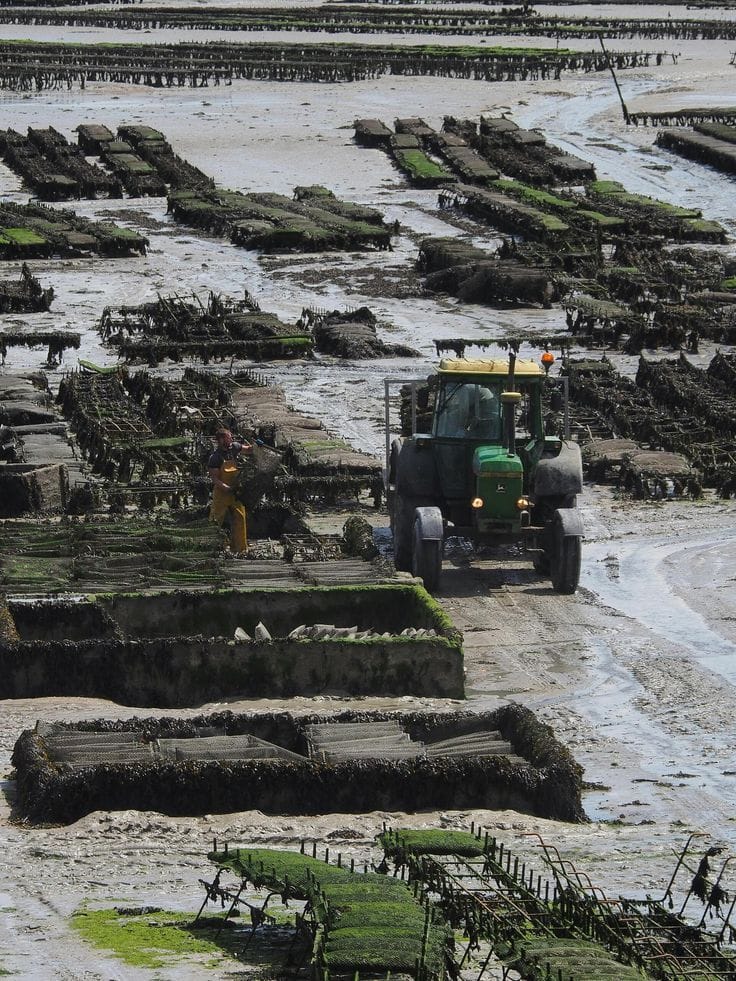
The Greenhouse That Traded Red for Green
The transition wasn't romantic. It meant abandoning decades of accumulated knowledge about soil moisture, pollination timing, and harvest windows. It meant learning an entirely new agricultural language—photobioreactors instead of substrate systems, cell density instead of fruit size, biomass harvesting instead of hand-picking.
The Calculation Behind the Courage
But here's what the spreadsheets revealed: while tomato cultivation faces mounting challenges—rising energy costs, market saturation, and intense competition—algae cultivation offers something increasingly rare in European agriculture: genuinely new market opportunity. Algae serves cosmetics, pharmaceuticals, nutraceuticals, and sustainable protein markets simultaneously, with demand far outstripping supply.
But here's what the spreadsheets revealed: while tomato cultivation faces mounting challenges—rising energy costs, market saturation, and intense competition—algae cultivation offers something increasingly rare in European agriculture: genuinely new market opportunity. Algae serves cosmetics, pharmaceuticals, nutraceuticals, and sustainable protein markets simultaneously, with demand far outstripping supply.
The greenhouse infrastructure translated surprisingly well. Climate control systems designed for precise tomato growing adapted to algae's needs. The CO2 injection systems that once boosted photosynthesis now feed ravenous algae cultures. Even the automated monitoring technology found new purpose tracking cell growth rates instead of fruit development.
The Broader Lesson
This is a glimpse into what the future of agriculture in Europe really needs. As traditional crop markets evolve and climate challenges increase, the greenhouse operators who succeed won't just be the ones growing the same crops more effectively. There are definitely some folks out there who are bold enough to rethink what their infrastructure can really create. The former tomato grower in De Kwakel is still sticking with agriculture. He's showing us that sometimes, taking the most sustainable route means having the guts to nurture something entirely new.
Brain Teaser
What is always in front of you but can’t be seen?
From Soil to Synapse
When Brain Science Meets the Breakfast Table on World Food Day 2025
If you had told a farmer ten years ago that neuroscientists will one day tell them what crops to sow, they would have thought you were crazy. But here we are on World Food Day 2025, witnessing Europe lead the way in an agricultural revolution where knowing about synapses is just as important as knowing about soil. The effects are amazing.
The €450 Billion Question That No One Asked
Brain diseases, like depression, anxiety, dementia, and stroke, are the main cause of disability around the world, costing trillions of dollars every year. At the same time, European farming is obsessed with finding ways to get the most out of their crops and make sure they last. What no one thought to question until lately is if the way we grow food has something to do with how healthy our brains stay as we get older.
The Brain Health Initiative and Fruitist have come up with a bold answer: "molecules to metabolism, soil to synapse." This is a framework that brings together agriculture, neurology, medicine, nutrition, public health, and sustainability. It's not just a cool term. It's a plan for changing the way food is made in Europe, with brain health as the main goal. It's like precision farming, but instead of getting the most bushels per hectare, you're trying to get the most cognitive resilience per calorie you eat.
Wondrous Wageningen: Where Artificial Intelligence Meets Aldehydes
Elsewhere in Europe, scientists at Wageningen University & Research are tackling a more pressing brain-related issue: the question of why plant-based foods have a regrettable flavour. This is in contrast to the philosophical debates taking place in the West about the nature of consciousness. 'Beany' or 'oxidised' are terms that characterise off-notes that certain plant-based substitutes have. These off-putting tastes originate from substances like ketones and aldehydes, which can overpower the senses even at low quantities.
Then came FLAVOUR-AI, a solution developed by Wageningen drawn from neuroscience. In order to find the best substrates, microorganisms, and fermentation conditions, the program uses machine learning and big datasets to find them more faster. Through the process of precision fermentation, they are effectively retraining the neuronal connections that associate "disgusting" with "delicious."
This is the intersection between applied neuroscience and food science. Rather than relying on objective chemistry, the researchers have come to understand that taste is based on the way in which particular chemical structures elicit reactions in the nervous system. Through AI-driven fermentation, they are rewiring our brains' reward centres to embrace sustainable proteins.

The Brussels Convergence: Where Policy Meets Plasticity
The 5th Brain Innovation Days took place in Brussels on October 15 and 16, 2025, which was also World Food Day. The event brought together Europe's brain research community. The theme was "The Adaptive Brain in a Fast-Evolving World," and there were presentations on Brain Research Frontiers, Brain Health Equity, and thinking about work in new ways outside of neuroscience.
Why is this important for farming? Because European policymakers are finally putting together the pieces of the puzzle that link the Common Agricultural Policy to brain health consequences. The Brain Health Initiative makes a strong case: changing the way we grow and eat food for brain health gives society a "triple dividend": an economic return (ROI), value on investment through ESG credibility (VOI), and a brain health return (BOI).
The EU Commission's 2025 Life Sciences Strategy wants to make the EU the best place in the world for life sciences by 2030. Life sciences include health, food, agriculture, and fisheries. The strategy says that "public understanding is especially important in fields like agriculture and food technology, where health and innovation meet." Translation: Europe is betting its agricultural future on the convergence of brain science and food production.
The World Food Day Message
The message from Europe's neuroscience-agriculture pioneers is clear: we've been asking the wrong questions. It's not just "can we grow enough food?" or even "can we grow it sustainably?" The question is: can we grow food that nourishes both body and brain, supports both farmer mental health and consumer cognitive resilience, advances both environmental regeneration and neurological protection? Europe's emerging answer is a resounding yes. But only if we intentionally design agriculture systems with neuroscience at the center, not as an afterthought.
Happy belated World Food Day. May your harvest feed both stomach and synapse.
📢 Digital Pasture


🌎 Fields & Frontiers
Bobbing for Love: Long before it became a splashy Halloween game, bobbing for apples held serious romantic stakes in British courtship. Each apple in the tub represented a hopeful suitor, and a maiden who bit her chosen apple on the first try was said to be destined for true love. Two attempts meant an outcome that might wane, and three or more was a bad omen for lasting romance. Over time, the ritual evolved, crossed the Atlantic, and merged into autumn celebrations and Halloween lore. Today it’s playful and lighthearted. But beneath the splashing water lies a centuries-old game of fate, flirtation, and tradition. Want to uncover more of its mysterious journey? Dive into the full story online.
Stop Chasing Hype, Start Fixing What Works: Maia Ventures just raised €55 million to help agri-food firms that require "polishing, not reinvention." This is a direct criticism of the Silicon Valley strategy that has left European agtech with a lot of failed moonshots. The Italian fund stayed away from "tourist LPs" on purpose. Instead, it got money from the European Investment Fund, CDP Venture Capital, and big names in the food business like Cereal Docks and Andriani. These are investors who "live the problems we want founders to solve." What was their thesis? Stop going after green premiums and capital expenditures that are sponsored by venture capitalists. Instead, work with other businesses to construct capital-efficient models that give you the opportunity to depart strategically or financially. The fund has already put money into six startups that make chocolate alternatives from Italian carob, plant-derived exosome biotech, food safety SaaS, and genomic analysis platforms. David Bassani, one of the founding partners, says that "generalist VCs who applied a Silicon Valley playbook to a sector with different go-to-market models, capex, and supply chains" are to blame for the lack of funding right now. Click here for more on this.
"Seward's Folly"—158 Years Later: So, back on October 18, 1867, the U.S. officially got its hands on Alaska after buying it from Russia for $7.2 million, which is pretty wild when you think about it—less than two cents an acre! Can you believe it? 586,412 square miles for what you'd pay for a regular suburban home these days! The deal, worth about $129 million in 2023 dollars, faced a lot of harsh criticism. Senators labelled it "reckless and wasteful," while the American public rolled their eyes at Secretary of State William Seward's deal for what they viewed as a frozen wasteland. People called it "Seward's Folly" and "Seward's Icebox." Here we are today: Alaska has raked in more than $500 billion just from oil revenue, plus it’s got huge gold deposits, a key military location, and amazing natural resources. Why was Russia so eager to sell? So, what were those secret negotiations that nearly messed up the whole deal? The tale of history's greatest real estate deal just keeps getting crazier. Find out more on history.com
Food Rights Rising: World Food Day is more than just a date; it's a call to action. Concern USA reminds us that even though the Earth has adequate food for everyone, 10% of the globe is still hungry. Their explanation goes into this paradox in depth, focusing on more than simply the amount of food. Access, nutrition, and dignity must also be taken into account. This year's focus on the "right to food" makes us reconsider how we make policies, come up with new ideas, and work together as a community. Will we settle for supply, or do we want demand to include diversity, sustainability, and inclusion? To learn more about the entire breakdown and useful information, check out Concern's World Food Day explainer.

The UK Beats Everyone at Sustainable Trade: The 2025 Sustainable Trade Index reveals a global economy in transition, where traditional pathways to prosperity through trade are being reshaped by mounting pressures across economic, societal, and environmental dimensions. The UK tops the rankings at #1, followed by New Zealand at #2, while the U.S. lags at #14 and Canada at #19. The UK and Australia (#6) performed strongly on environmental pillars despite relatively high GDP per capita, while wealthier nations like the U.S., Canada, and South Korea scored lower. The index, jointly produced by IMD World Competitiveness Center and the Hinrich Foundation, measures 30 economies' capacity to participate in global trade while supporting long-term goals of economic growth, environmental protection, and societal development. What separates the winners from losers? And why are some of the world's richest economies failing at sustainable trade? The report by Hinrich Foundation has the answers.
Protein Shake Might Be Poisoning You: Consumer Reports just shattered the illusion that a morning protein shake is a healthy start to your day. Over two-thirds of 23 tested protein powders and shakes contained more lead in a single serving than experts say is safe to consume in a day. Naked Nutrition's Vegan Mass Gainer topped the danger list with 7.7 micrograms of lead per serving—1,570 percent of the daily safety threshold. That's not a typo. Huel's Black Edition wasn't far behind at 6.3 micrograms while popular brands like Garden of Life, Momentous, Quest, and Optimum Nutrition all exceeded safe limits. The truly terrifying part? This is worse than 15 years ago—average lead levels are higher, and fewer products have undetectable amounts. Plant-based proteins had nine times more lead than dairy-based ones, yet even "clean" whey products tested positive. Why is no one stopping this? The FDA doesn't review supplements before they hit shelves, and there are no federal limits for heavy metals in protein powders. You've been trusting an unregulated industry with your health. What brands should you avoid? Which ones are safe? And why are your "healthy" supplements slowly accumulating neurotoxins in your body? Get your queries tackled on Forbes.
A $4K Desktop That Outperforms Your Data Center: NVIDIA has sent out the DGX Spark, which they call "the world's smallest AI supercomputer." It has 1 petaflop of AI capability and 128GB of unified memory in a 2.6-pound container. It's expensive at $3,999, but it changes everything. Jensen Huang, the CEO, personally delivered the first unit to Elon Musk at SpaceX's Starbase facility. This was similar to when he delivered the original DGX-1 to OpenAI in 2016, which helped start ChatGPT. The gadget can execute inference on AI models with up to 200 billion parameters and fine-tune models with up to 70 billion parameters locally, which used to require cloud infrastructure. It has a 20-core ARM CPU and is based on NVIDIA's Grace Blackwell GB10 chip. It addresses the memory bottleneck that affects consumer GPUs. TIME just named it the best invention of 2025 for making AI supercomputing available to everyone. It is currently available on from ASUS, Dell, HP, Lenovo, and NVIDIA. Edge.AI has the details.
💡 A Thought for Friday
What a $750M Tumbler Can Teach European FarmersWhen the Market Whispers, Listen Picture this: It's 2019. Stanley's Quencher tumbler is dying on shelves. The company is ready to pull the plug. Meanwhile, somewhere in Middle America, a blogger named Ashlee LeSueur is frantically trying to reach someone—anyone—at Stanley because she knows they're about to kill something brilliant. Sound familiar, AgTech founders? How many times have we dismissed feedback from that one passionate farmer who "gets it" while chasing mythical enterprise deals? The Pivot That Changed Everything Stanley went from $70 million to $750 million in three years—not because they invented new technology, but because they listened differently. They pivoted from outdoor enthusiasts to nursing mothers. From rugged individualists to community-driven influencers. From what they thought the market wanted to  Photo by Andrea Piacquadio | what one obsessed customer knew it needed. In AgTech, we're obsessed with precision agriculture platforms and AI-driven analytics. But what if your breakthrough isn't more sophisticated technology? What if it's Elisabeth Hidén in Sweden telling her farming community about your soil sensor? What if it's the smallholder farmer in Kenya who sees something in your product that your investor pitch deck completely missed? Your Ashlee Is Out There Stanley's resurrection came from someone with no industry credentials who had to Google abbreviations for purchase orders. She just believed. Passionately. Relentlessly. Right now, there's a farmer somewhere using your technology in ways you never imagined. They're modifying it, combining it with local knowledge, solving problems your engineers didn't know existed. They're your early signal—your market whisper. The question isn't whether you're building great AgTech. The question is: Are you humble enough to let your users rebuild it with you? Sometimes the future of agriculture doesn't come from the lab. Sometimes it comes from someone who simply refuses to let a good idea die. |
Answer to Brain Teaser
The Future
😆 Till You Laugh


Disclaimer

Follow
  |   |