- Networth Farmer
- Posts
- From Plough to Platform
From Plough to Platform
"When tillage begins, other arts follow. The farmers, therefore, are the founders of human civilization."~ Daniel Webster

Networth Farmer
October 24, 2025 • Estimated Reading Time: 16 minutes

“When tillage begins, other arts follow. The farmers, therefore, are the founders of human civilization.”
~Daniel Webster
Table of Contents
🚜 New In Ag-Tech
Peptides on the Offense
In all honesty, when I first heard about tiny peptides revolutionizing crop protection, I raised an eyebrow. But after digging into Micropep Technologies’ latest push, I’m convinced this isn’t just science for science’s sake—it could redefine the next decade of European farming.
A New Set of Tools for Farmers
Micropep is based in Toulouse but works all around the world. The company specialised on micropeptides, which are small chains of amino acids found in plant genomes. They use their AI-powered discovery platform, Krisalix™, to sort through trillions of sequences and find very specific bio-actives. Their first candidate, MPD-01, is presently being tested in the US and Europe on plants that are sick with fungal diseases like soybean rust and late blight.
Why it Matters in Europe
For years, farmers in Europe have faced shrinking chemistry options, rising regulatory pressure and increasing pathogen resistance. Micropeptides offer something different: new modes of action, lower doses, and better environmental profiles. As Micropep puts it, these molecules sit between conventional chemistry and full biologicals—precise, stable and scalable.
The "So What?"
To those in the AgTech industry who are also farmers, here's the punchline: Instead of being a niche biotech play, Micropep's model represents a paradigm shift. Questions that European AgTech companies may consider asking would include:
Do we have what it takes to include peptides into crop protection programs
Can the speed of AI-enabled research and development outpace our trials
Most critically, are we forming alliances that make use of these cutting-edge inputs?
Are you ready to explore?
This is your signal. Farmers, input tech companies, and regulatory experts should all keep a careful eye on how Micropep and its partners get closer to making money. Better chemistry might not be the only thing that can help manage disease, stress, and sustainability in European crops. AI might also be able to redesign biology.
Brain Teaser
Why is against the law for a man living in Manhatten to be buried in Jersey?
The Silent Retreat - How Europe's Shrinking Farmland Is Redrawing the Agricultural Map
The Phenomenon Nobody Talks About
While Brussels debates agricultural policy and farmers protest in city squares, a quieter transformation is reshaping European agriculture: farmland is disappearing. Not to urban sprawl alone, but to something far more controversial—deliberate abandonment and rewilding.
In the majority of EU Member States, agricultural land is expected to decrease not only due to land-use changes in favour of urban expansion and afforestation but also to land abandonment processes. Abandonment of 3-4% of the total EU land area by 2030 is plausible, which would amount to 126,000 – 168,000 km²—an area larger than England.
The Rewilding Milestone
Britain has hit an amazing milestone of welcoming over 1,000 rewilding members to the Rewilding Network, representing 181,128 hectares of land and 506 km² seabed now transitioning from production to nature recovery. More than four in five Britons now support rewilding, and 77% believe the government should be doing more to reverse the decline of nature, according to recent polling.
This isn't fringe environmentalism—it's mainstream sentiment driving land-use transformation. The Scottish government has committed to transforming land use by creating 18,000 hectares of woodland per year by 2024/2025, and restoring 250,000 hectares of peatland by 2030.
The Economic Reality
Agricultural land abandonment is driven by a combination of socio-economic, political, and environmental factors by which formerly cultivated fields are no longer economically viable under existing land-use and socio-economic conditions. Remote and mountainous regions, areas with poor soils, and locations facing labor shortages are abandoning production first.
Cost Implications
The economic calculus is brutal. At the same time, 15.1% of total EU land is abandoned or underutilised, which means that it contributes neither to food, nor to ecosystem services, to its full potential. Every hectare abandoned represents lost agricultural GDP, reduced rural employment, and potential food security concerns.
Yet rewilding advocates counter with different math. In Scotland, full-time equivalent jobs across 13 major rewilding projects increased from 24 before rewilding began to 123, an increase of over 400%. In England and Wales, full time equivalent jobs across 50 sites increased from 162 to 312, an increase of 93%. Eco-tourism, estate management, and environmental monitoring create new rural economies.
Your Move
European AgTech must confront an uncomfortable question: are you building solutions for agriculture that will exist in 2030, or the agriculture that existed in 2020? With 126,000-168,000 km² potentially leaving production, the strategic opportunity isn't preventing abandonment—it's enabling profitable rewilding at scale while intensifying production on remaining agricultural land. The farmland isn't coming back. Your business model needs to account for that reality.
📢 Digital Pasture
🌎 Fields & Frontiers
Predicting Pediatric Sepsis: Discover how exciting new AI models are changing the game in predicting sepsis in kids and shaping the future of healthcare. Sepsis is still a serious and pressing issue in paediatric care, but an exciting new AI breakthrough is making it possible to detect it early with amazing accuracy. This new development could really make a difference in saving young lives by giving doctors quicker and more accurate information to step in before things get critical. Check out the latest research from top experts showing how new technology is changing paediatric emergency care. Check out how predictive AI can really change the game—it's got the potential to improve outcomes, lower mortality rates, and transform critical care as we know it. This goes beyond just medicine; it’s a shining light of hope for kids and families all around the globe. Your next book might just shift your perspective on the future of health. Make sure you don’t miss out! Check out the complete story now on 1440.
Europe’s Youth Farming Revolution: The European Commission is placing a bold bet on the next generation of farmers. With just 12 % of EU-28 farm operators under 40 and the average age over 57, Brussels has launched a strategy to double the share of young farmers to 24 % by 2040 — including a target that at least 6 % of agricultural support in each member state be earmarked for youth initiative. From up to €300,000 start-up packages to land-access reforms and innovation-funded farm entries, the drive is on to make farming modern, accessible and attractive. The question now: will national capitals move fast enough to turn ambition into action? Dive into the full article for the full plan and what it means for European AgTech.
From Soul Cakes to Candy Bags 🎃: Want to know how “Trick-or-Treat” got its start? The custom traces back to medieval Christian “souling,” when children and the poor went from doorstep to doorstep on All Hallows’ Eve, singing for soul-cakes in return for prayers for the deceased. Guising in Scotland and Ireland then brought costumes and songs into the mix, and the practice crossed the Atlantic in the early-20th century. The now-iconic phrase “trick-or-treat” emerged in North America during the 1920s and 1930s, and became popular across neighborhoods in the post-World War II years. So next time you hear a doorbell ring and a chorus of “Trick-or-Treat!”, remember—you’re touching centuries of ritual, charity, pranks, and play.
Photosynthesis, Re-imagined: Wild Bioscience, an ag-biotech startup based in the UK, has recently raised a huge $60 million Series A funding round to expedite the development of their AI-powered precision-breeding platform that aims to improve the photosynthetic efficiency of important crop varieties. Soybeans, wheat, and maize have all been gene-edited using the company's own algorithms, which mimic millions of years of evolution to find undiscovered genetic features; field studies have shown early-vigor growth improvements in double digits. Intelligent biology and data-driven breeding may replace physical inputs as the primary means of increasing production and climate resistance, marking a paradigm change for AgTech companies in Europe. That "so what"??? A crucial tech-inflection point for growers, seed-partners, and platforms alike, scaling opens a new age of agricultural performance across Europe's diverse climates. Are you interested in learning more about the potential and how this affects the equation on the farm floor? Read the full story on LinkedIn.

Photo by Tausif Hossain
Build Big Smart: You don't need a lot of money or a big team to make anything big. A recent piece in Entrepreneur says that today's successful businesses are coming from agile teams, clear goals, and a culture that is truly relevant. The tale of RXBAR, which was made with only $10,000, shows that great ideas start with simple honesty, not complicated systems. What this implies for you is to focus on your worth, speak your truth, and let connections help you grow. It's a good plan for European AgTech startups and innovators to follow: A defined objective, precision tools, and a community-first strategy can beat brute capital. Are you ready to reconsider your size and effect? Read the whole article to see the lean roadmap for great results.
Betting on the Impossible: European agriculture may lean conservative, but one investor is bucking the norm. Azolla Ventures is distributing cash to climate-tech initiatives that traditional VCs perceive too sluggish, dangerous, or unproven. Suddenly agriculture is front and center. The move is a big change for European AgTech workers. The money going to high-risk, high-impact projects means fresh chances in seed, soil, carbon, and circular systems, not just little returns on investment. The "so what?" If your solution really helps with a climate problem and can be used all around the world, it might suddenly get support where it didn't before. The message is clear: daring ideas matter, whether you're working on regenerative tech, nutrient-capture techniques, or soil-carbon platforms. The AgTech ecosystem in Europe should pay attention because things are changing.
The Great Cybertruck Circus: It seems like everyone has a hot take on Tesla’s Cybertruck, whether they love it or think it looks like a rejected prop from a sci-fi movie! Some folks hail it as a futuristic masterpiece; others just see it as a shiny meme on wheels that’s ready to roll into the history books—or the comedy club! But Wired’s latest photo essay takes the debate and spices it up into a hilarious romp through modern obsession, inflated egos, and enough electric horsepower to make your hair stand on end! The feature, seen through the quirky lens of Michelle Groskopf and the witty words of Zoë Schiffer, portrays Cybertruck owners as both trailblazers and the butt of the joke — Santa’s little helpers on four oddly-shaped wheels, lugging around gifts and a hefty dose of self-importance all at once. It’s like a social roast, a sci-fi giggle-fest, and utterly impossible to put down! Whether you’re a fan of Elon’s bold antics or you find yourself eye-rolling every time he pops up in the news, this tale is sure to tickle your funny bone, make you cringe, and perhaps leave you pondering our rather quirky bond with “innovation.”
💡 A Thought for Friday
Plough Past PerfectionI remember a farmer who took his time getting his wheat in the ground. He was aiming for the soil temperature to be just right, hoping for a perfectly dry forecast, and making sure every machine was tuned to perfection. By the time he got the seeds in the ground, the season had already passed him by, and his yield really took a hit because of it. That's what we call perfectionism in the field, and you can see it in AgTech as well. I’ve noticed some amazing teams get stuck for months, trying to perfect the model, the pitch deck, and the prototype. Farming really shows us a straightforward reality: things are never just right. Waiting for things to be perfect means you'll be waiting a long time. Hey, just to be clear—your desire for perfection isn’t a bad thing at all. It shows that you really care. You're looking to provide something truly valuable. But you know, caring and controlling really aren’t the same thing. If you wait for everything to be just right before taking action, you end up stuck. When inertia takes over, it feels like nothing is moving forward. So, here’s the deal: just get started, no matter what. Go ahead and plant when the soil is just right. Go ahead and | 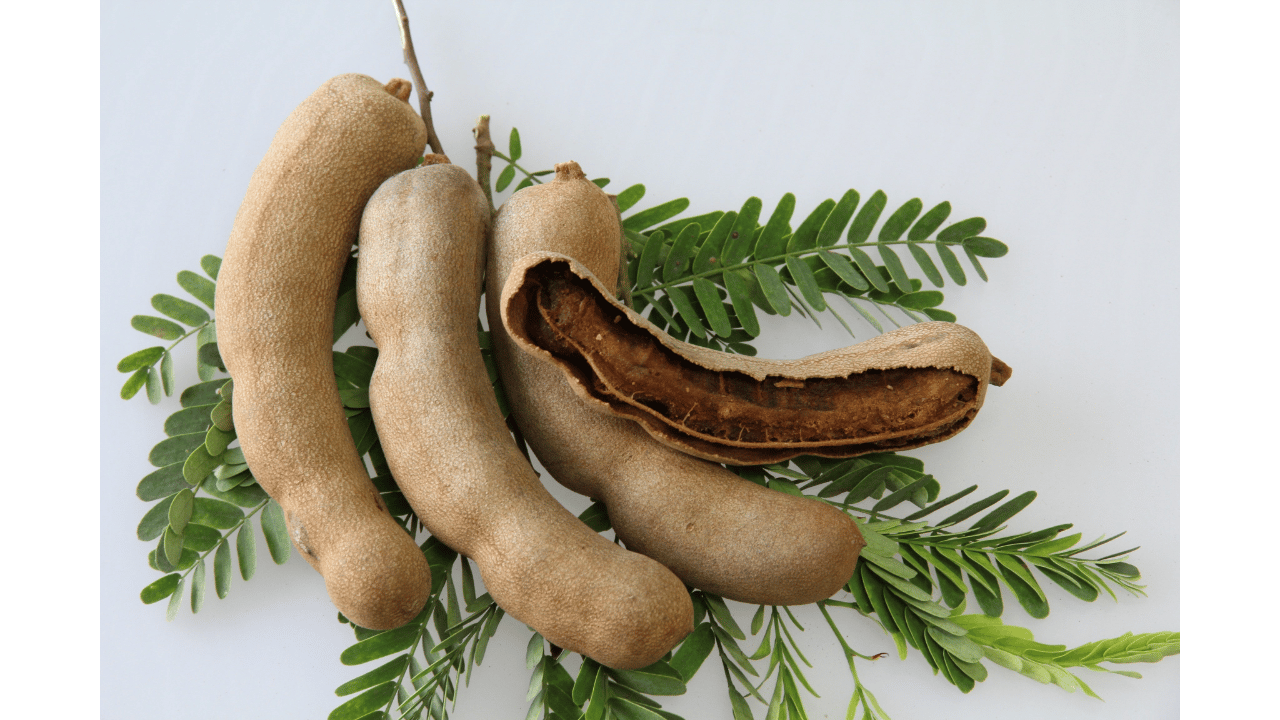 launch the trial when the data is looking good enough. Go ahead and share the prototype, even if it’s not perfect yet. Motion is what really counts, even more than perfect timing. Check out any solid farm or a tough startup. Growth happens through cycles of action. Every planting season and every product version is like a prototype. Sure, they’re not perfect, but each one is just a step towards the next. Seeds don’t sprout just because everything is perfect; they sprout because they get the opportunity to do so. When perfectionism starts to sneak in, try asking yourself, “Is this perfect?” Instead, think, “Is this good enough to keep going today?” So, go ahead and take that step. |
Answer to Brain Teaser
Because he’s not dead yet!
😆 Till You Laugh
Disclaimer

Follow
  |   |