- Networth Farmer
- Posts
- Hope Springs Eternal
Hope Springs Eternal
"The farmer has to be an optimist or he wouldn’t still be a farmer."~ Will Rogers

Networth Farmer
October 29, 2025 • Estimated Reading Time: 17 minutes

"The farmer has to be an optimist or he wouldn’t still be a farmer."
~Will Rogers
Table of Contents
🚜 New In Ag-Tech
How Mushroom Roots are Packaging a Plastic-Free Future
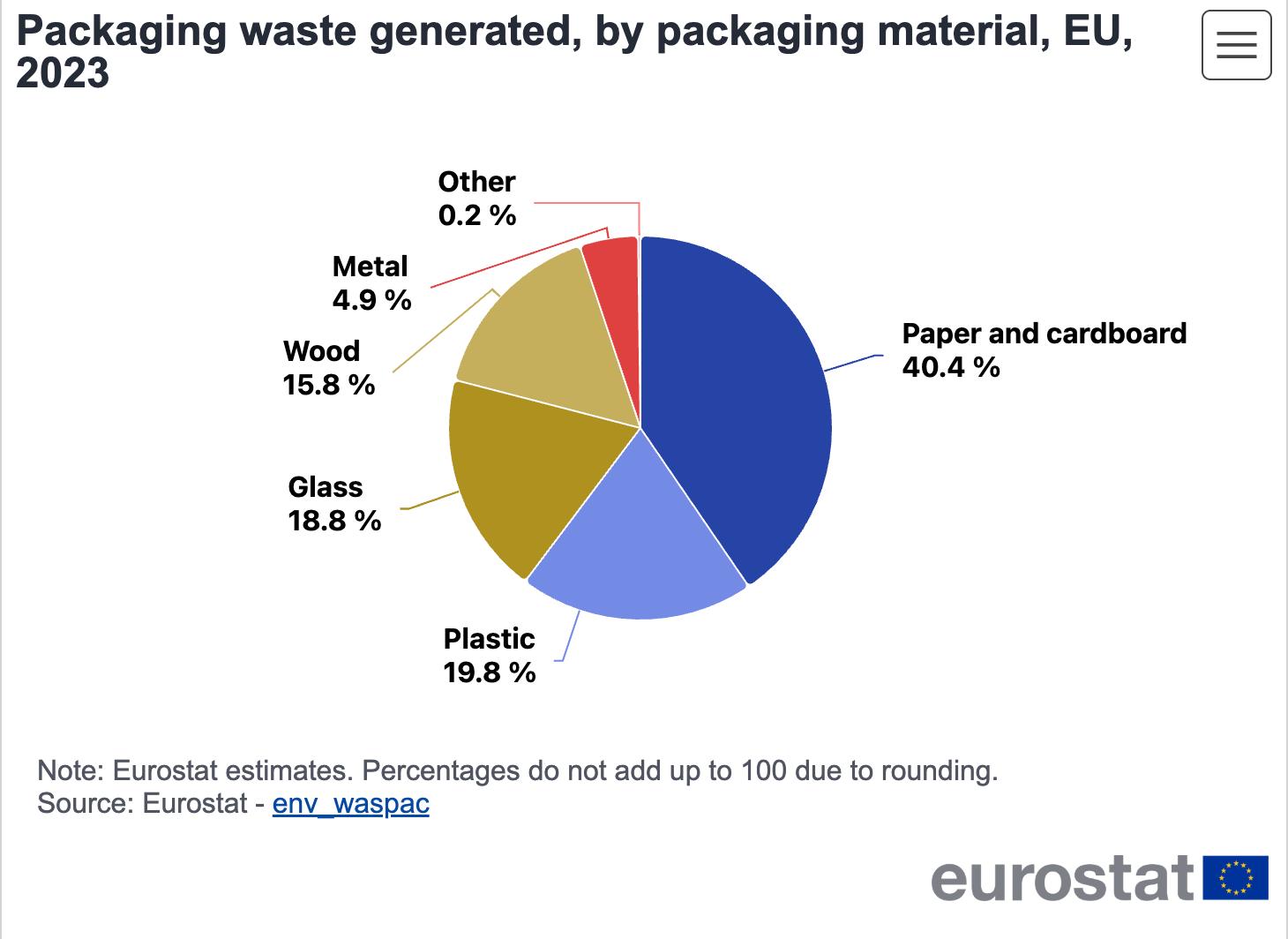
It’s clear that our traditional "take-make-dispose" approach is reaching its breaking point, especially when we look at the packaging industry. Let's talk about expanded polystyrene (EPS) foam. It's made from fossil fuels and is typically used for just a few days, but it sticks around in our environment for hundreds of years. It’s a pollutant that clutters our landscapes and suffocates our oceans, representing an economy that seems to have lost sight of the importance of recycling resources.
The Bad Guy in Our Landfills
EPS really complicates things for a circular future. It's made from non-renewable petroleum, uses up energy, and is known for being pretty tough to recycle economically. So, what's the outcome? It ends up in our landfills and seeps into our ecosystems, where it eventually breaks down into microplastics.
The Hero Grown on Farms
What if the answer isn’t found in an oil well, but rather on a farm? Let's talk about mycelium, which is basically the root system of mushrooms. This isn't just another option; it's a game changer for the economy. Companies like Ecovative are doing something pretty cool. They take agricultural waste, like the husks and stalks from your fields, and then they inoculate it with mycelium. The fungus works like a natural glue, coming together on its own to turn this low-value waste into a valuable protective material.
Turning Waste into a Safe Haven
It's really quite straightforward. You just pour this mixture into a mould that looks like a protective panel or box. In just a few days, the mycelium starts to grow, breaking down the waste and creating a solid structure. They then stop the growth with heat, which also helps to sterilise and strengthen the final product. We're really building packaging from the ground up.
The Enchantment of a Closed Loop
The final product is a packaging material that's protective, insulating, and lightweight. But the real economic magic happens at the end of its life. Mycelium packaging is a nutrient asset, while EPS is just a waste liability. Once you're done using it, you can break it up and toss it in your home compost. It'll turn into soil in just a few weeks! This turns waste into something useful, closing the loop.
This goes beyond simply being innovative; it’s also about staying compliant and gaining a competitive edge. The EU is really stepping up with its Single Use Plastics Directive and Circular Economy Action Plan, driving a move away from those pesky persistent pollutants. Mycelium packaging is the future, and it's being grown on a nearby farm.
Brain Teaser
What invention lets you look right through a wall?
What Shrinking Farmland Means for European AgTech Investment
The Phenomenon Reshaping Investment
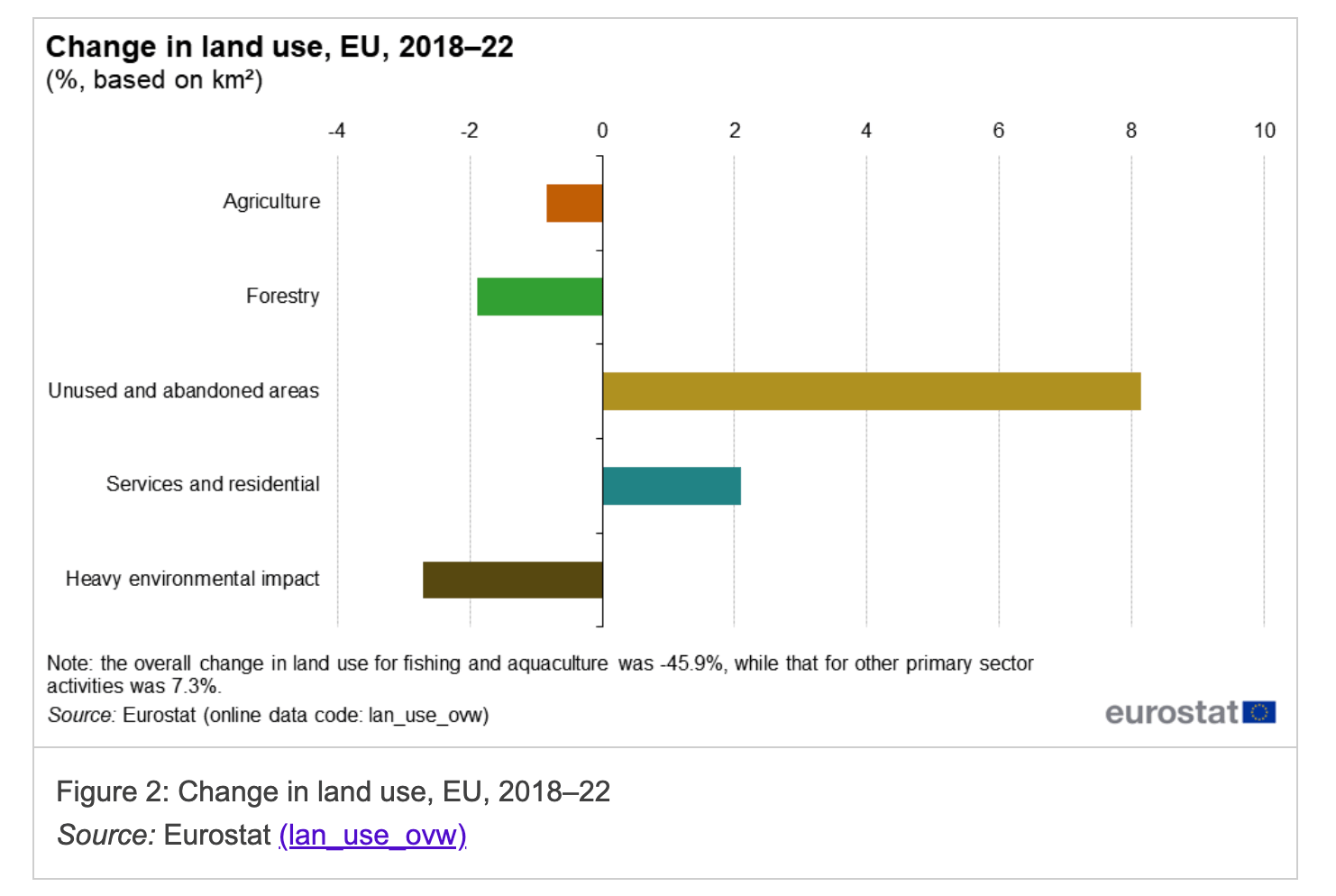
Europe faces a paradox: as agricultural technology advances, the land it's meant to serve is shrinking. In the majority of EU Member States, agricultural land is expected to decrease not only due to land-use changes in favour of urban expansion and afforestation but also to land abandonment processes. Projections suggest 126,000 – 168,000 km² could abandon production by 2030.
The Bifurcation Strategy
It used to be that abandoned agricultural land was viewed as a sign of failure, but now there’s some interesting evidence pointing to new opportunities. Bringing abandoned agricultural land back into production could be a great way to meet the goals of the Common Agriculture Policy after 2020, but it really depends on the specific situations.
Research focusing on Latvia shows that in certain areas, bringing abandoned agricultural land back into use can create a "triple win" situation—boosting productivity, helping with carbon regulation, and enhancing biodiversity habitats. In places where the conditions are just right for intensive production, abandoned land really helps in keeping ecosystem services going strong. Even tiny boosts in primary productivity can impact biodiversity.
Europe really needs a mix of both—intensive farming on the best land and letting nature take over on the less productive areas. However, it seems like the profitable middle ground is fading away.
The Case for Rewilding Business
The company model is growing up quickly. Rewilding is the process of bringing nature back to a state where it can take care of itself on a wide scale. However, it is becoming more and more of a business opportunity. Since 2021, the UK's Innovation Fund has given out more than half a million pounds to support 44 rewilding projects, turning a wide range of concepts into real-world action.
More importantly, marketplaces that are piled on top of each other are starting to appear. Carbon sequestration, biodiversity credits, eco-tourism, high-quality food from large systems, and payments for ecosystem services can all bring in more money than traditional farming on marginal land.
The Two-Speed Reality: What It Costs
Belgium, Denmark, Germany, and the Netherlands are the most economically developed countries and are the least likely to be abandoned. The chances of abandonment go down when farm revenue, agricultural investments, population density, prices of agricultural land, road quality, and density all go up.
This makes European agriculture work at two speeds: rich areas use AgTech to boost production, while rural, hilly, and economically marginal places switch to nature-based economies. This split must be taken into account when investing in AgTech.
What will it take to ignore this? Making precision farming tools for areas that won't be farming in 2035. What is the chance? Creating technology that either make the most of the remaining agricultural land or turn ecosystem services into money in rewilded landscapes.
Your planned response
There are three good options for European AgTech companies:
Intensification Tech: Build for the rest of the productive farmland. This includes precision agriculture, automation, and yield optimisation for areas that will farm more, not less.
Transition Tech: Make tools for lucrative rewilding, like systems for monitoring biodiversity, measuring carbon, eco-tourism platforms, and managing large numbers of animals.
Solutions for both uses: Make technologies that work for both intensive farming and extensive rewilding. These could be remote sensing platforms, data analytics, and tools for managing workers.
The worst plan is acting like farms in Europe will stay the same. AgTech investment must match the agricultural geography that is actually developing, not the one we wish existed. This is because 16.1% of all EU land is already abandoned or not being used enough.
📢 Digital Pasture

👩🌾 Tending Dreams
Relentless InnovationWhen your tractor—bought with a decade of sweat—suddenly feels more like a liability than an asset, its weight crushes the very earth you're trying to save. Hendrik Graafstra knows this feeling. The Dutch farmer-inventor watched his fellow farmers struggle under impossible contradictions: produce more, weigh less on the soil, spend less, comply more. So he did what farmers have always done when the world stops making sense—he built something new. The Agra-Trac has a track width that can be adjusted from 1.80 to 4.60 meters and weighs under 5 tonnes. It is 2 meters high. It is powered by a hybrid technology that provides strong torque and fine control from a standstill with electric wheel motors driven by a 60 hp engine. The wheels' 180-degree rotation allows for sideways driving, which is ideal for confined locations and tree nurseries. | nurseries, and it can handle tasks ranging from 12-meter harrowing to 6.75-metre seeding. 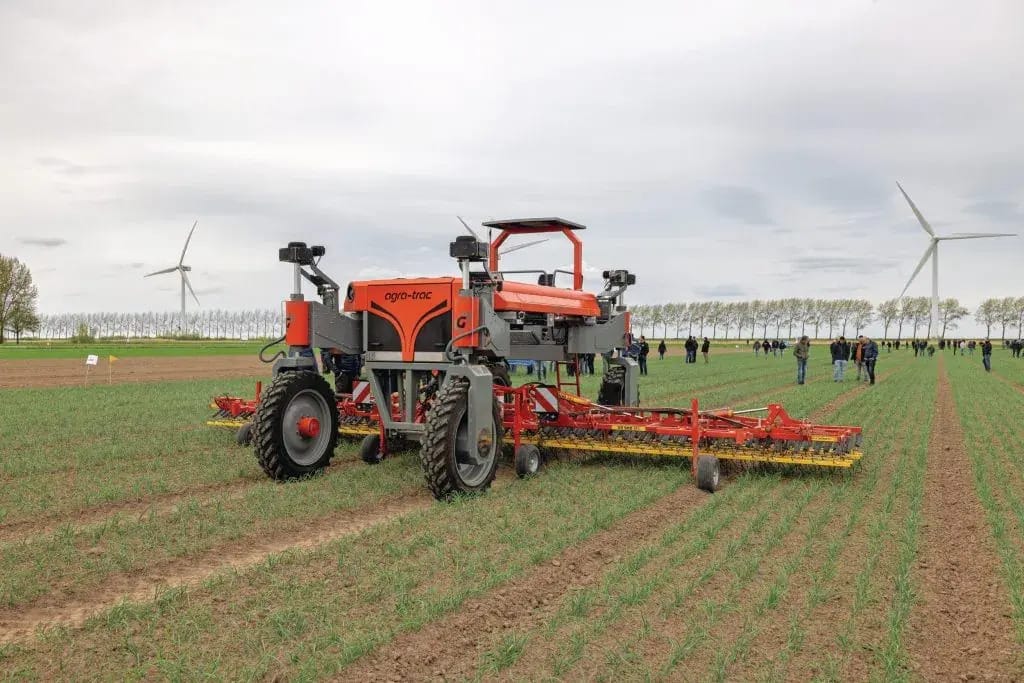 Graafstra came up with the Agra-Trac mainly to tackle mechanical weed control. He realised that lighter machines with improved visibility could address the issues caused by heavier tractors. |
🌎 Fields & Frontiers
The AI That Could Crack Cancer’s Code: In a stunning breakthrough, cutting-edge AI technology has uncovered a revolutionary hypothesis about how cancer cells behave — a discovery that may change everything we thought we knew about this deadly disease. Developed by top-tier scientists and powered by advanced machine learning, this AI model didn’t just analyze data: it generated a validated theory that challenges current cancer biology. What secrets has the AI revealed? Could this be the key to unlocking treatments that have eluded experts for decades? The medical world holds its breath as this technology pushes boundaries and ignites hope. What’s next could redefine the future of cancer treatment forever. Take a glimpse into the future on Patreon.
Precision Spraying Revolution: Scientists and farmers are using AI more and more to change the way crops are sprayed, which will save a lot of money on inputs and make crops healthier. RealCoverage is a new AI-powered sensor system by AgZen in Massachusetts that is put to sprayers. It analyses and changes spraying parameters including speed, droplet size, and boom height in real time. This technology aims to reduce waste and environmental damage while increasing chemical effectiveness by ensuring they are used in the right places. Vishnu Jayaprakash, the CEO of AgZen, talks about how important it is to measure how much pesticide actually gets to weeds or crops. This has been mostly ignored for more than 80 years. The company wants to add RealNutrition to its solutions for spreading, which makes sure that the granules cover as much ground as possible. AgZen is spearheading a new age in sustainable, data-driven agriculture. Around a million acres worldwide are currently using the technology, and it is expanding into markets in Australia, Argentina, and Brazil. AI-powered spraying could soon become the norm for farming as growers look for better, more efficient ways to do things.
Silent Power Moves: At just 24, Josh Kushner shattered expectations, quietly building Thrive Capital into a $25 billion powerhouse that shapes the future of innovation. Against all odds, while others chased the spotlight, Kushner moved in silence, betting early on game-changing technologies like Instagram, Stripe, and OpenAI. You want to know his secret? Relentless focus on long-term vision and deep founder relationships, not flashy headlines. For the AgTech community, this story ignites hope and inspiration: bold disruption can come from humility and patience. Just as Thrive’s quiet powerhouses transformed industries, AgTech innovators today have the blueprint to reshape farming, sustainability, and food security. The path may not always be loud, but the impact? Revolutionary. What breakthroughs will emerge when silent power meets the earth’s greatest challenges? The future of agtech is calling — are you ready to answer?
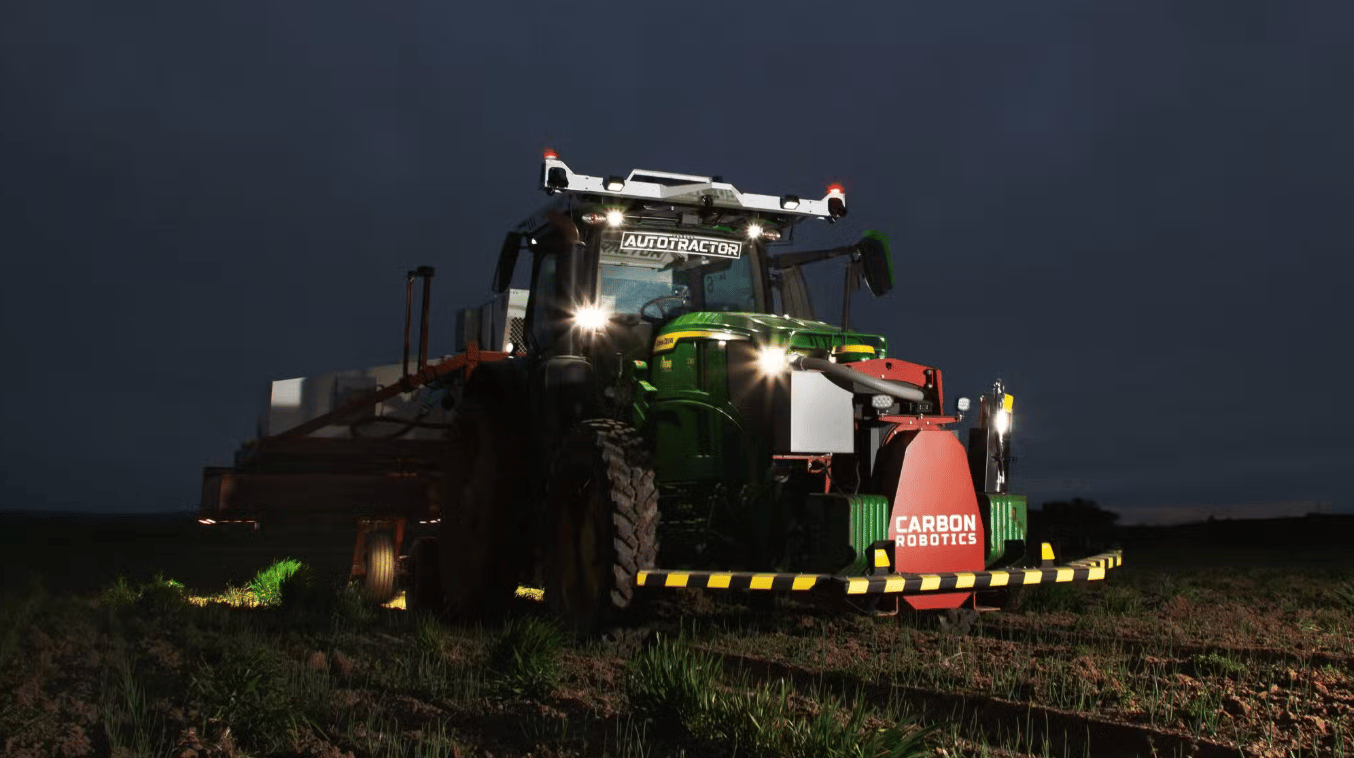
Funding Fuels Farming Future: An astounding $20 million in new funding has been raised by Seattle-based agtech pioneer Carbon Robotics, bringing their total haul to $177 million. Already revolutionising sustainable farming on a global scale, their flagship LaserWeeder robot can eradicate 99% of weeds chemical-free. The real stinger, though, is this: Carbon Robotics is developing a new artificial intelligence robot that can do more than just weed! Think of all the ways a single autonomous machine equipped with state-of-the-art AI and machine vision may revolutionise various agricultural tasks. Our earth is in dire need of this innovation, which will hasten the transition to cleaner, more efficient farming practices around the world. Production and innovation will be accelerated by the new funding, which is led by Giant Ventures and supported by prominent names like NVIDIA. The arrival of AI-driven agricultural robots is clearly in its infancy, as Carbon Robotics spreads across fourteen countries. Attention, agricultural trailblazers: the world of agriculture is undergoing a dramatic transformation, and you won't want to miss it!
When a €150M "Picasso" Was Just a Really Expensive Photocopy: German police busted a transnational forgery ring after a 77-year-old man tried flogging two "original" Picassos, then casually claimed to own Rembrandt's "De Staalmeesters"—despite the actual painting hanging in Amsterdam's Rijksmuseum. Awkward. Coordinated raids across Germany, Switzerland, and Liechtenstein seized 20 suspected fakes priced between $465,000 and $150 million. The elderly mastermind allegedly led 10 accomplices in the scheme, banking on collectors too embarrassed to admit they'd been had. An art expert confirmed the Rembrandt was indeed a copy, not a lost masterpiece —shocking precisely no one except, presumably, the bloke who thought he could sell the same painting twice. The remaining confiscated works are being examined. Place your bets now: how many turn out to be glorified prints from a university art studio?
Europe Faces Accelerating Avian Flu Threat: Highly pathogenic avian influenza (HPAI) is spreading across Europe at an unprecedented pace this season, raising serious concerns among health authorities. Since 1 August, 22 European countries have reported cases of avian flu, marking the largest early-season spread in over a decade. Notably, Germany and Belgium have recently seen significant outbreaks. In total, 56 outbreaks have been recorded on farms across 10 countries, including Poland, Spain, and Germany, compared to 31 outbreaks in nine countries at the same time last year. The risk level across mainland Europe was raised to high on 22 October. This escalation has led to measures including the mandatory confinement of poultry and captive birds in all commercial farms, particularly following the detection of H5N1 avian flu outbreaks in Belgium's West Flanders and Liège provinces. In Germany, the rapid spread prompted orders to cull approximately 130,000 ducks and chickens in farms near Berlin. The Friedrich Loeffler Institute (FLI) has warned that wild birds, especially migrating cranes, are increasingly affected, which could lead to a further widespread outbreak. Given the migration patterns of wild birds, a more generalised spread of the disease is anticipated in the near future, underscoring the urgent need for vigilance throughout Europe.
Silent Invaders: More than two centuries after Napoleon Bonaparte’s ill-fated 1812 campaign into Russia, a cryptic enemy has finally been named. Experts analysing ancient DNA from soldiers’ teeth in a mass grave in Vilnius uncovered two pathogens—Paratyphoid fever and Relapsing fever—that likely compounded the horrors of cold, starvation and battle. These findings challenge long-held beliefs that typhus or trench fever were the primary killers. The unexpected discovery rewrites a pivotal moment in European history, showing how microbial forces quietly shaped the outcome of empires. Curious how science peeled back the layers of one of history’s greatest military disasters? Find out more on livescience.com.
Answer to Brain Teaser
A Mirror
😆 Till You Laugh

Disclaimer

Follow
  |   |