- Networth Farmer
- Posts
- How to Farm in a Crisis
How to Farm in a Crisis
"In every crisis, doubt or confusion, take the higher path, the path of compassion, courage, understanding and love." ~ Amit Ray

Networth Farmer
April 17, 2026 • Estimated Reading Time: 8 minutes

"In every crisis, doubt or confusion, take the higher path, the path of compassion, courage, understanding and love." ~ Amit Ray
Table of Contents
Fields & Frontiers
Your Tractor, Finally Yours: John Deere recently wrapped up a class action lawsuit, settling for a whopping $99 million in the US. They’ve agreed to give farmers access to digital tools that will help them diagnose and repair their own equipment over the next decade. By the end of 2026, equipment owners and independent repair shops will have the ability to reprogram and run diagnostics offline. This means they won't need to connect to Deere's servers anymore, which will loosen the grip of the authorised dealer network. This is important for European farmers, but there's a key point to consider. Under Regulation No 167/2013, the EU has a rule that manufacturers need to give everyone fair access to vehicle repair and maintenance information. This really shows how European legal protections are different from what's happening in the US. Looks like the settlement's spillover here is going to be just partial. What's really interesting here is what it suggests: that the time of shelling out six figures for a machine that you don't completely own is slowly coming to a close.
Listening To Bees: Almost no one in the horticulture industry in Europe takes pollination seriously, despite its obvious economic importance. One of the most comprehensive pollination monitoring programs currently running in European almond production is a European field trial that was initiated by the UK AgTech company AgriSound in collaboration with the Spanish food group Importaco. The trial involved the deployment of over 120 sensors throughout almond orchards in Portugal and Spain to record real-time data on bee activity, pollination dynamics, and crop outcomes. When we get a good handle on measuring pollination, it helps us make smarter choices about how to design our orchards, manage them, and decide where to invest. Plus, we can show with solid evidence, not just claims, that regenerative practices are actually paying off. Making sustainability claims without backing them up with data is just marketing talk. Here’s what proof looks like.
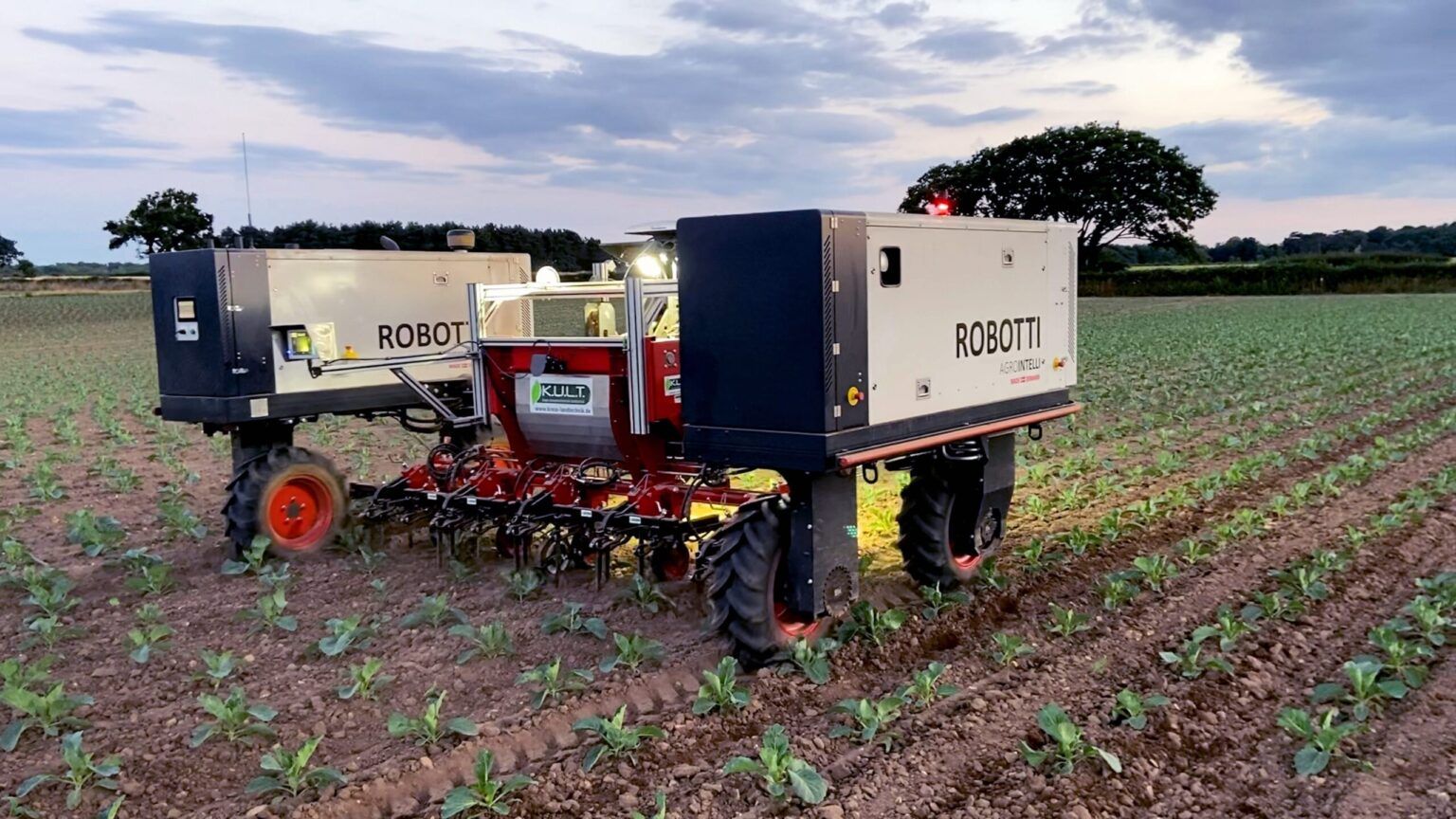
When Good Technology Isn't Enough: 65 units deployed across 20 countries, 10,000 field hours logged. Agrointelli didn't run out of innovation. It ran out of runway. The Danish ag-robotics company was unable to find a single buyer to absorb its entirety when it was declared bankrupt in February. Industry players were sold patents and software individually. Twenty jobs down the drain. Understatedly, the Robotti leaves the market. The issue of continuity and support has now come up for early adopting farmers. It serves as a sobering reminder to founders that proving a concept is different from proving a business. It is becoming more difficult for governments and investors to overlook, even as Europe continues to subsidise the technology. Funding the scale remains a challenge. Aspiration dies out in the space between a functional robot and a profitable operation.
The Invisible Freight Manager: While Europe is trying to figure out how to send seeds and fertiliser to farms on time during the Iran war supply bottleneck, China is secretly showing what a completely automated solution looks like. This spring, China Railway Harbin Bureau used autonomous and smart freight technologies on its rail network in northeast China. In Q1 2026 alone, it moved 2.13 million tonnes of agricultural inputs, seeds, fertilisers, gasoline, and machinery across around 33,000 freight cars. AI-controlled marshalling, automated car handling, and robot maintenance cut down on delays and the need for physical work at important hubs. The field is not usually the weakest link in precision agriculture. It's the supply chain that makes it happen. No matter what kind of technology is in the garden, the best-planned planting window closes when inputs come in late. Agricultural intelligence is also logistics intelligence.
Brain Teaser
In my hand, I have two coins that are newly minted. Together, they total 30 cents. One isn’t a nickel. What are the coins?
New In Ag-Tech
Can a Gene-Edited Seed Actually Fix the Yield Plateau?
Three decades of stagnation. One Massachusetts startup with a different answer. And a regulatory wall standing between Europe and the solution.
The Stubborn 1% Problem
For thirty years, the annual yield gain in maize, soya, and wheat has averaged roughly 1%. Not a mistake, but a decision. Even though billions have been spent on research in agronomy, breeding programs, and precise inputs, the ceiling has hardly moved. At the same time, the cost of inputs rises, profit margins shrink, and the demand for food around the world grows. The gap is real, not just a theory. Every invoice that comes in February is felt on the farm desk.
The question is whether a new type of seed technology can really change that trajectory, or if this is just another lab promise dressed up as a business.
What Inari is Doing Differently
Inari Agriculture, which is based in Massachusetts, is not selling herbicide, a data subscription, or a drone. It is changing the seed itself. Its SEEDesign platform uses AI to analyse genomes and multiplex gene editing, which means making numerous exact modifications at the same time on different DNA locations.
Standard CRISPR methods turn genes off, but SEEDesign can turn them on or off with surgical precision. The stated goals are to increase yields by 10–20%, cut nitrogen consumption by 40%, and cut water use by 40%. First-generation soybeans are getting close to being sold in the United States. Field tests with maize and wheat are still going on.
To put things in context, this isn't only a yield story if those nitrogen numbers stand up at scale. It is a story about input costs, which is what European farmers really need to hear right now.
Europe: Close, But Not Yet
Inari has a research and development center in Ghent, which is where European agricultural science is. But the EU's New Genomic Techniques law, which is still going through the legislative process as of 2026, is still a barrier to commercialisation here. There is no timeline for a European launch. This isn't a technology that you can find on a farm in East Anglia or the Paris Basin this season.
When it does come, farmers will be able to get Inari-derived features through seed brands they already use. This is because the business licenses genetics to established partners instead of selling them directly.

The Business Model Matters
Inari licenses its genetics to established seed companies rather than selling direct to farmers. That B2B2C model means European growers would eventually access Inari-derived traits through brands they already buy from. No pivot to an unknown supplier, no new contracting relationship. Inari has raised $771 million from investors including Flagship Pioneering, Hanwha Impact, and CPP Investments, and was named among TIME's America's Top GreenTech Companies 2026.
Seed pricing and farmer-level ROI data are not yet publicly available for European markets.
NetWorth Farmer Verdict
Who it is for: Strategic investors tracking the next wave of seed IP, and agribusiness advisors monitoring EU NGT regulation.
Who it is not for: Any farmer expecting a near-term purchasing decision.
Ask before engaging: Which seed partners will carry these traits in Europe, and when?
Watch for: EU NGT legislation progress and Inari's seed company partnership announcements.
Digital Pasture

More Fields & Frontiers
When Old Money Starts Packing a Second Passport: Something quiet is happening in the world's private banking lounges. Wealthy clients in Europe and the US are actively hunting for investment and wealth management options in Asia as a shield against volatility they no longer expect to pass. Some are establishing secondary family offices in Singapore. The trigger is a confluence of geopolitical instability, rising energy costs, and the Iran war's ripple through global capital flows. DBS's head of private banking put it plainly: volatility is now "a feature, not a bug." Singapore's largest lender drew a combined S$77 billion in net new wealth last year from rich clients. That number will likely grow. When capital this patient starts moving, it rarely moves back.
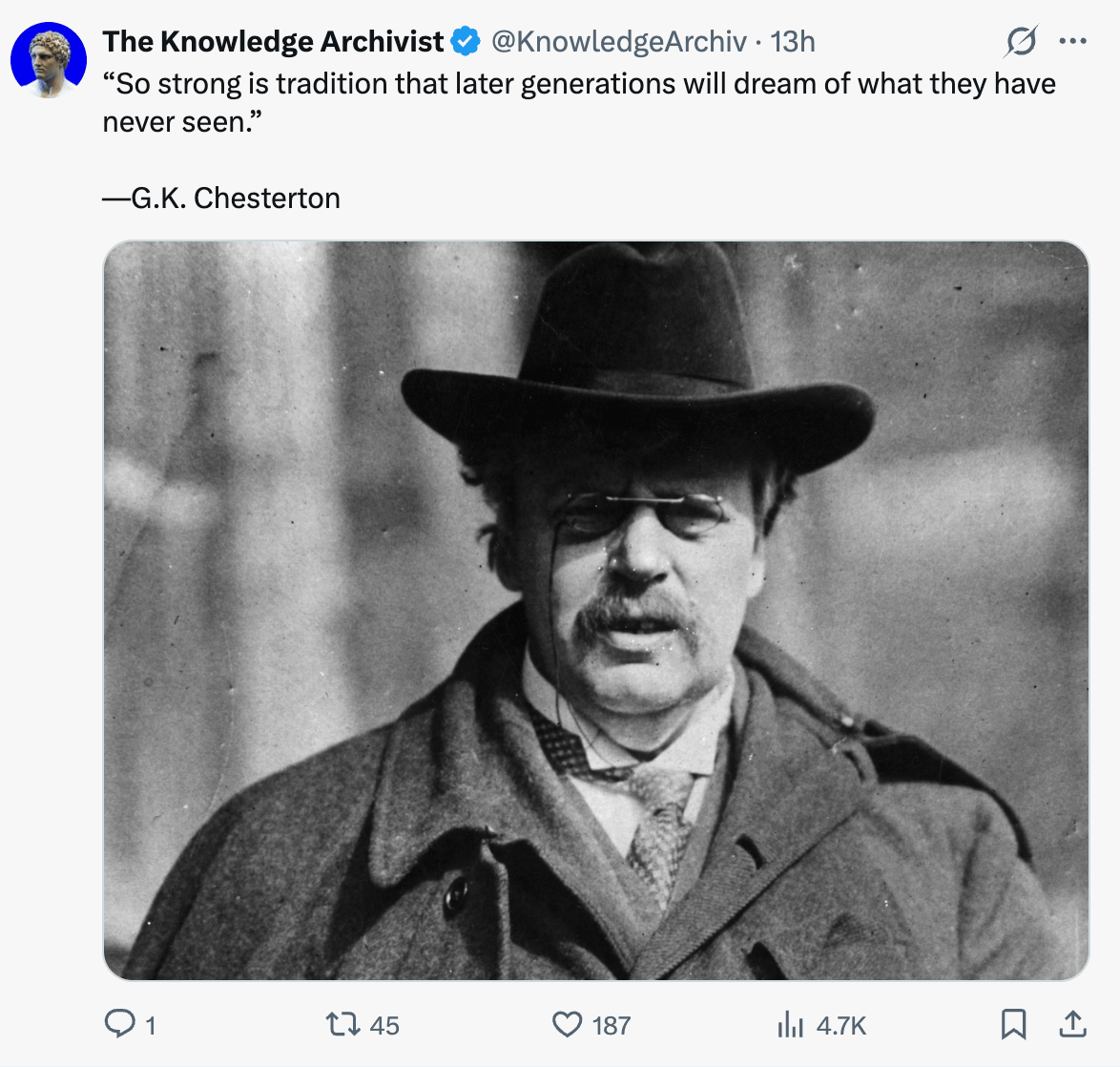
Farming's Hidden Superpower: Imagine your ancestors working the land 10,000 years back, not even realising they were starting a genetic revolution. A groundbreaking ancient DNA study, which looked at more than 1,700 genomes, shows that human evolution really took off after the advent of farming. So, diets started focusing more on grains and dairy, right? And with all those people living close together, it mixed up the genes a bit. Plus, new diseases popped up, which really pushed for some adaptations. Traits such as lighter skin for better vitamin D absorption, lactose tolerance for digesting milk, and increases in height popped up quickly, with selection rates skyrocketing by 100 times compared to the days of hunter-gatherers. Hey farmers, you guys are the real MVPs in helping us level up as a species! The ploughs of your ancestors didn’t just fill our bellies, they really helped us get the tools we needed to survive. Modern farming carries on this legacy, showing how agriculture continues to shape us.
The €100 Masterpiece: Somewhere in the world this week, someone paid €100 for a raffle ticket and is now the owner of a Picasso worth €1 million. The "1 Picasso for 100 Euros" campaign gave people a chance to win a real Picasso at Christie's Paris. There were up to 120,000 tickets available at €100 apiece, which could have raised €12 million for Alzheimer's research. The award was Tête de Femme, a gouache on paper from 1941 that was worth €1 million. The organisers decided to channel their inner Picasso, claiming he was so generous that he gifted paintings to his driver and tailor. He dreamed of his art being snatched up by everyone from the super-rich to that one neighbour who thinks a stick figure is a masterpiece. Who knew being generous could be so stylish? The last two editions raked in over €10 million together. This one might just break the record for going over the top! Isn't it funny how the fanciest stuff often turns out to be the easiest?
Airlines Asked. Farmers Waited: European airlines have formally urged the EU to introduce emergency measures in response to the Iran war, including EU-level monitoring of jet fuel supplies, a temporary suspension of aviation's carbon market, and joint EU purchasing of kerosene, a model Brussels used for natural gas after Russia's 2022 supply cuts. The aviation lobby jumped into action quickly. Agriculture, as always, is taking the hit in stride. Since the war started, diesel prices have really shot up, and Urea fertiliser costs have jumped by around 40%. Experts are saying that even if a ceasefire holds, it’s going to take months for fuel and fertiliser prices to get back to a more manageable level. While Spain has extended fuel rebates specifically to farmers, most of Europe has not. When Brussels convenes on April 22nd to discuss energy crisis measures, European farmers will need more than a seat in the room. They'll need someone who remembered to invite them.
A Thought for Friday
Tired? Good. That Means You're Still In It.
The world is noisy right now. Here's what three remarkable lives have to say about that.
If you’re wrapping up this week feeling a bit drained, whether it’s from the news, the uncertainty, or that subtle weight of things you can’t quite put your finger on, you’re definitely not alone.
It seems like a lot of us are holding onto more than we show, doesn’t it?
But you know what? Hard seasons have always been around, and people have always managed to find their way through them. It's not about pretending the difficulty isn't there; it's about deciding how to handle it.

Three Lives to Ponder This Friday.
1. In his later years, Einstein wasn't just busy rewriting the rules of physics; he was also sounding the alarm about the dangers of unchecked power. He kept asking what if, even when the answers scared him. When you're feeling too worn out to care, that's exactly when you should dig up that one question you've been avoiding. You might be surprised by the answer.
2. Robert Schuman took a look at a continent that had just buried millions and thought, /you know, the most radical thing he could do was to build something. The European Union is definitely not perfect, and it can be pretty frustrating at times, but it’s still here. It all started with a guy who decided to go for reconciliation instead of holding onto resentment. It's totally okay not to see eye to eye with everyone while working together. That's still the case in your office, at home, and in your community.
3. Muhammad Ali gave up everything, his titles, income, and years of his career, because he stood firm in his beliefs. He definitely had some fear when he did it. He went for it, even though he was scared. That's the only type of courage that really matters.
Before this Friday wraps up, how about we do one thing out of curiosity, one thing to make amends, and one brave thing? Sounds good?
Not really for the headlines. Only for you.
Answer to Brain Teaser
A quarter and a nickel.
Till You Laugh


Disclaimer

Follow
  |   |