- Networth Farmer
- Posts
- Mask Off
Mask Off
"Clothes make a statement. Costumes tell a story." ~Mason Cooley

Networth Farmer
October 31, 2025 • Estimated Reading Time: 8 minutes

“Clothes make a statement. Costumes tell a story,”
~ Mason Cooley
New In Ag-Tech
Why Carbon Credits Are Yesterday's Story
Bayer is moving away from the carbon farming hype cycle in favour of a more practical and lucrative approach. During the World Agri-Tech Innovation Summit in London, the company announced its strategic shift towards forming comprehensive value chain partnerships throughout Europe, collaborating with PepsiCo, ADM, Mars Petcare, and Perdue Agribusiness.
Looking Past Carbon Tunnel Vision
“Carbon is no longer the sole emphasis,” clarifies Alexandre, who leads regenerative agriculture at Bayer. "Businesses are increasingly focusing on biodiversity, water management, and soil health—and that is precisely what our portfolio provides." This change recognises what farmers have long understood: regenerative agriculture focuses on resilience rather than merely on carbon metrics.
The model begins with feasibility studies tailored to specific crops based on geographic factors. A Spanish grower might already engage in more sustainable farming practices compared to a French counterpart, thus intervention strategies should align with regional realities. However, the key takeaway is this: enhancing soil resilience allows food brands to ensure their sourcing for the next three decades.

Survival Economics
Farmers face urgent issues. Farmers in Hungary have endured four years of drought. “When discussing long-term benefits, they say, ‘I need to survive tomorrow,’” Alexandre says. How does Bayer react? Work with ADM to help farmers migrate financially by covering cover cropping, no-till, and optimum fertilisation costs, all assessed and certified by Bayer's digital platforms.
A deep understanding of self-interest exists throughout the value chain, rather than a focus on charity. Food brands get supply assurance, farmers get compensation to improve their land, and Bayer is the key mediator. The company can scale across Europe because to its agronomic expertise and local grower relationships. Alexandre says, "We require comprehensive solutions and cohesive technology." Without proper measuring, reporting, and verification tools, credibility suffers. European regenerative agriculture will not rely exclusively on carbon credits, but on partnerships that balance farmer survival with corporate sustainability.
Brain Teaser
What has a thumb and four fingers, but is not a hand?
Modeling Europe's Agricultural Endgame
On Wednesday, we discussed the paradox that Europe faces: while AgTech is expanding, the land it is intended to serve is contracting. We concluded the article with a call to maximize productive land while using less arable land to build Nature-Based Economies. Today, I finish this 3-part series with a game plan for the future of our farming. In the majority of EU Member States, agricultural land is expected to decrease not only due to land-use changes in favour of urban expansion and afforestation but also to land abandonment processes. But how far could this trend extend before stabilizing or reversing?
The 30% Goal
People who want to rewild Britain have set a big goal: to rewild 30% of the country by 2030. With polls showing that more than four out of five Brits favour rewilding and new research demonstrating that rewilding 30% of Britain by 2030 is absolutely necessary for climate and biodiversity goals, it's becoming a reality in policy.
If 30% of Europe were rewilded, almost 1.3 million km² would go from being used for farming to being used for nature recovery. That's not happening in the same way everywhere. Belgium, Denmark, Germany, and the Netherlands will keep farming a lot, whereas areas that are far away, mountainous, and not very important will speed up their abandonment.
The Truth About Modelling
Advanced land-use models can now accurately predict abandonment trends. The territorial assessment of agricultural abandonment trends looks at the trends at the national, regional (NUTS3), and grid levels for all EU countries up to 2030. It shows that environmental and geological conditions, as well as socioeconomic factors, have a big impact on agricultural land abandonment. Low investments in agriculture, falling farm income, falling population density, bad roads and infrastructure, and older farm owners are all things that can lead to failure. The one and only factor that consistently increases abandonment risk is a high proportion of ageing farm owners.

Photo by Theo Felten
The Top Limit
Could abandonment go over 30%? Yes, based on what has happened in the past. Agriculture today dominates land usage in the European Union (EU), covering about half of its territory. However, during the 19th and early 20th centuries, European woods grew a lot as industrialisation caused marginal agricultural land to be abandoned.
The problem isn't with the environment; it's with the economy and politics. The Farm-to-Fork strategy in Europe says that the agricultural industry needs to meet several needs of society, such as producing food, cutting down on emissions, and protecting biodiversity. If abandonment went above 30–40%, it would raise concerns about food security and dependence on imports, which European officials don't want.
The Trillion Euro Question
The financial effects are huge but complex. Agricultural GDP lost from 30% desertion might reach €150-200 billion yearly. Rewilding generates alternative value streams: €20-40 billion in carbon sequestration at current carbon prices, €10-15 billion in biodiversity credits, €30-50 billion in rural economies from eco-tourism, and €15-25 billion in avoided damages from flood prevention and water quality improvements.
Whether Europe builds ecosystem service markets determines the economic impact. Abandonment means economic loss without strong carbon, biodiversity, and water quality markets. Reallocation becomes strategic with them.
The Stabilization Point
Most models suggest European farmland abandonment will stabilize around 20-25% by 2040-2050, concentrated in:
Remote mountainous regions (Alps, Pyrenees, Carpathians)
Areas with poor soils and harsh climates (northern Scandinavia, Mediterranean drylands)
Regions with severe depopulation (eastern European rural areas, southern Italian countryside)
Leveraging AgTech, intensive agricultural regions will consolidate, maintain, or grow productivity on the remaining productive land.
Your Strategic Endgame
AgTech companies in Europe need to plan for three different situations:
Conservative (15–20% abandonment): slowly changing the company model and technology portfolio.
Moderate (20–30% abandonment): quick splitting that needs two plans for intense farming and a lot of rewilding.
Aggressive (30–40% abandonment): a complete overhaul in which AgTech turns either intensification technology for the farms that are still there or ecosystem service technology for landscapes that have been rewilded, with little in between.
Current trends point to a moderate outcome, but changes in policy, especially those related to carbon pricing and amendments to the Common Agricultural Policy, might make things much worse in ten years.
📢 Digital Pasture


🌎 Fields & Frontiers
Free AI, Costly Shift?: Imagine you start using an amazing AI tool for free, and then suddenly, your go-to paid service becomes redundant. This new article from Entrepreneur shows how AI-powered “freemium” models are shaking things up in the world of traditional SaaS offerings. For the end-user, this might mean getting smarter tools without having to pay anything upfront. But it could also lead to some confusion around business models and changing value. Everyday consumers can look forward to more free access to basic AI features, higher expectations for "premium" versions, and a marketplace where things can change quickly. What's the deal with that? Get ready for subscriber fatigue, increased upsell pressure, and the chance that your favourite tools might change their terms. Read the article to see how SaaS and AI are competing for the top spot and what that means for you.
Bovine Export Resumption: Controlled and Cautious: France will resume its bovine exports on November 1—ahead of schedule—after implementing measures to stabilise the outbreak of Bovine Contagious Nodular Dermatitis (DNC). The government's prompt actions since mid-October, which include strict sanitary measures, have effectively stopped new cases outside regulated areas, thereby supporting this decision. Exports will recommence with stringent oversight to ensure animal health protection. Gathering centres in affected areas must announce the resumption of activities and operate under veterinary oversight to ensure compliance with established protocols. Mandatory tracking of all bovine movements will be implemented across France until mid-November to ensure complete traceability and facilitate prompt responses to potential risks. This decision provides reassurance and optimism for cattle breeders concerned about market disruption. France's strategic management of the DNC crisis highlights the necessity of coordinated containment measures to safeguard animal welfare and economic interests within the livestock industry. To find out more on this, visit Reussir.
Rethinking Climate Urgency: Bill Gates has stirred up some conversation by moving away from the typical “doomsday view” of climate change. He’s encouraging a more balanced perspective that emphasises innovation and resilience instead of just fear. Hey there, Europe’s agtech community! This really makes you think: should we focus more on making big cuts to emissions, or should we be all about creating adaptive technologies that help agriculture thrive in a warming world? Gates points out that when it comes to climate strategies, we really need to focus on human welfare, especially in areas that are more vulnerable. He cautions against putting all our resources into just cutting emissions if it means neglecting global health and development. Some critics are warning that if we underestimate climate threats, it could lead to serious issues for food security and farming systems that are already facing challenges. With Europe rolling out some pretty ambitious green policies, the big question is—how do we balance the need for urgent climate action with practical solutions that actually help farmers stay resilient? CBS News explores further.
The Veggie Burger Dilemma: Is your “vegetarian burger” really a burger? The Dutch food watchdog, NVWA, disagrees with using the term “gehakt” (minced meat) on packaging. It turns out, the label’s clarity issue goes way beyond word-games. While burgers and schnitzels remain exempt for now, the debate over terms like “plant-based steak” is heating up across Europe. Recent legislation suggests only real meat can claim “steak”, “burger” or “schnitzel”—anything else might have to stick to “plant slice X”. Meanwhile, consumer studies show most people already understand what “vegaworst” means. So, is tightening the rules about honesty—or just muddying the menu even more? Dive into the full scoop here and weigh in.
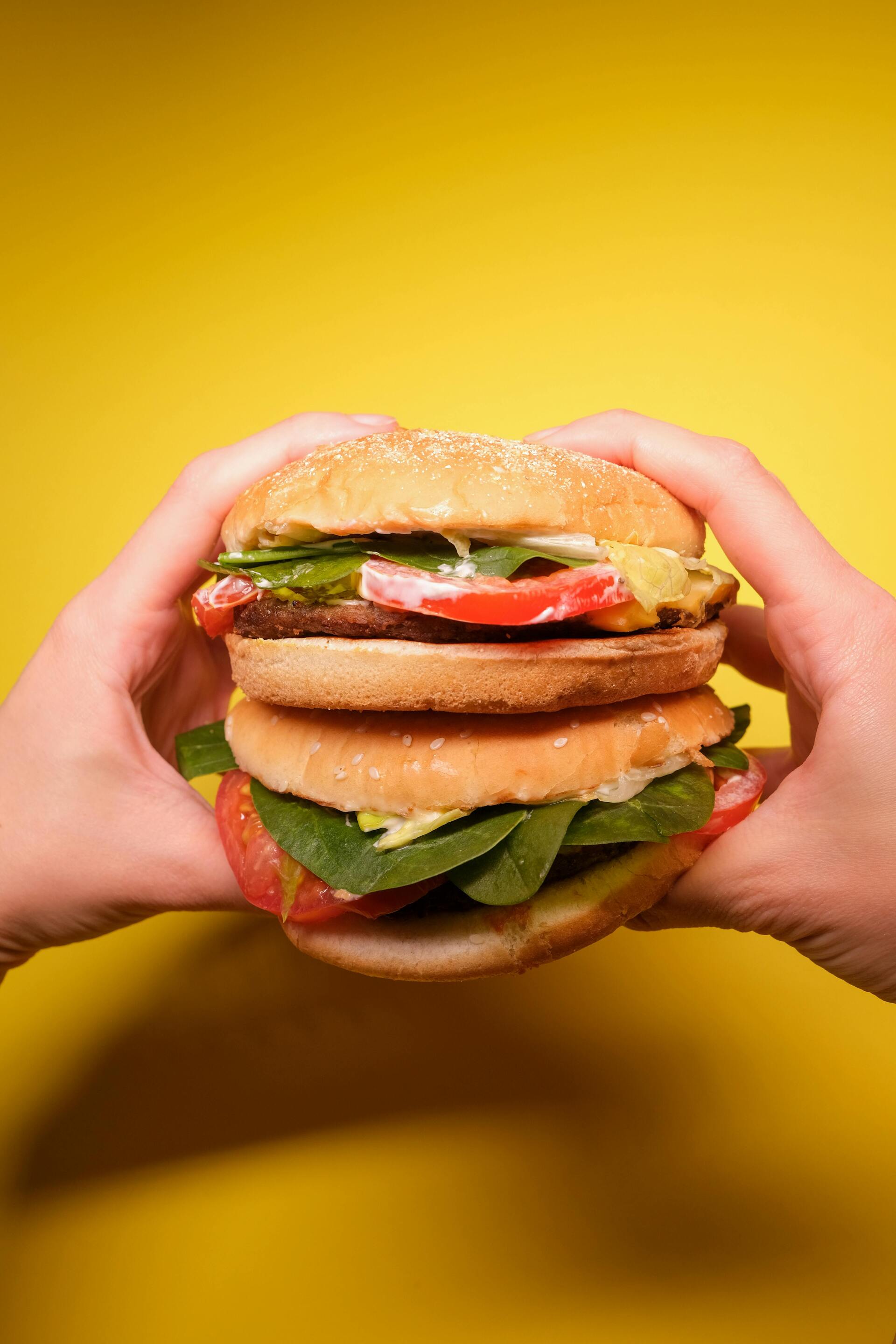
Photo by Alena Shekhovtcova
Water Worlds Beyond Earth: New research shows that some exoplanets may be able to make water on their own, which greatly increases the chances of finding livable habitats outside of our solar system. Scientists think that geological processes on these faraway planets could create water by mixing hydrogen and oxygen in their interiors. This goes against the idea that water must come from comets or asteroids. This important discovery opens up new and intriguing ways to find planets where life could be able to thrive. The hunt for planets that can support life might soon find worlds with a lot of water, which is something that life needs. As telescopes and other observation tools get better, finding these "water worlds" could change everything we know about where life resides in the cosmos. It looks like there may be more watery places in the universe than we thought.
Autonomy Meets Agronomy: In a bold leap forward for field automation, Agtonomy has secured a hefty $18 million Series B to scale its AI-powered robots across global farms. The U.S.-based company’s tech uses advanced computer vision and sensor fusion to autonomously traverse crops—scouting, spraying, and harvesting—while cutting fuel, labour, and soil compaction costs. For European AgTech players, this isn’t just another funding headline—it’s a sign of acceleration. As Europe tightens environmental regulations and labour shortages deepen, autonomous solutions like Agtonomy’s offer a strategic pathway to higher yield, lower input, and resilient operations. The “so what”? If your agritech strategy still treats automation as optional, this round signals a shift: autonomy is becoming essential, not just innovative. Want to see how this tech works and how it might reshape farms from Friesland to Andalusia? Read the full article.
Nvidia Unleashes AI Power: Nvidia is the first firm to have a market capitalisation of more than $5 trillion. This happened at the same time as artificial intelligence was growing rapidly. Nvidia's rise from a small graphics chip maker to a major player in AI technology shows how important the company is to the next big technological revolution. The company's stock price shot up over $212 because investors were quite confident and the company had a lot of big AI transactions, including $500 billion in AI chip bookings. CEO Jensen Huang's strategic vision has put Nvidia at the centre of the global AI race, with processors that are essential to advancements in many fields. Nvidia's new valuation is a measure of the company's present popularity in the computer world, but it also shows how AI might change industries, economies, and everyday life in a big way. This historic event makes us want to learn more about how new ideas and chances come together at the crossroads of technology and finance.
Poised to Soar: Ecorobotix, the Swiss agtech leader in AI-powered precision spraying, has raised $150 million to accelerate the global rollout of its Plant-by-Plant™ technology. This breakthrough system treats crops individually with ultra-high precision, allowing farmers to reduce pesticide use by up to 95% without compromising yield or crop health. The funding, raised through Series C and D rounds, will fuel expansion into new crop types and support the launch of advanced algorithms. With a presence in over 20 countries, Ecorobotix is redefining sustainable farming. Their flagship ARA sprayer, capable of centimeter-accurate spraying, is setting new standards in efficiency and environmental responsibility. The company plans to reveal a new innovation at Agritechnica 2025. This investment highlights the urgent demand for smarter, greener crop care solutions that respond to rising input costs and environmental regulations worldwide.
💡 A Thought for Friday
The Last ScreamAs Halloween's curtain falls today, a peculiar phenomenon haunts the industry: the vanishing scream. While haunted attractions have carved out a $500 million empire—entertaining nearly 47 million thrill-seekers annually—something sinister lurks beneath the fog machines and fake blood. Every year, 500 haunted houses close their doors permanently, their corridors falling silent. They're replaced by 500 new ventures, creating a morbid cycle of death and resurrection that mirrors the very stories they tell. The economics are brutal: $1.5 million in annual overhead costs devour profits like zombies consuming flesh. Property leases, animatronics, insurance—each expense another nail in the coffin. Most attractions draw fewer than 5,000 visitors, scraping by on razor-thin | 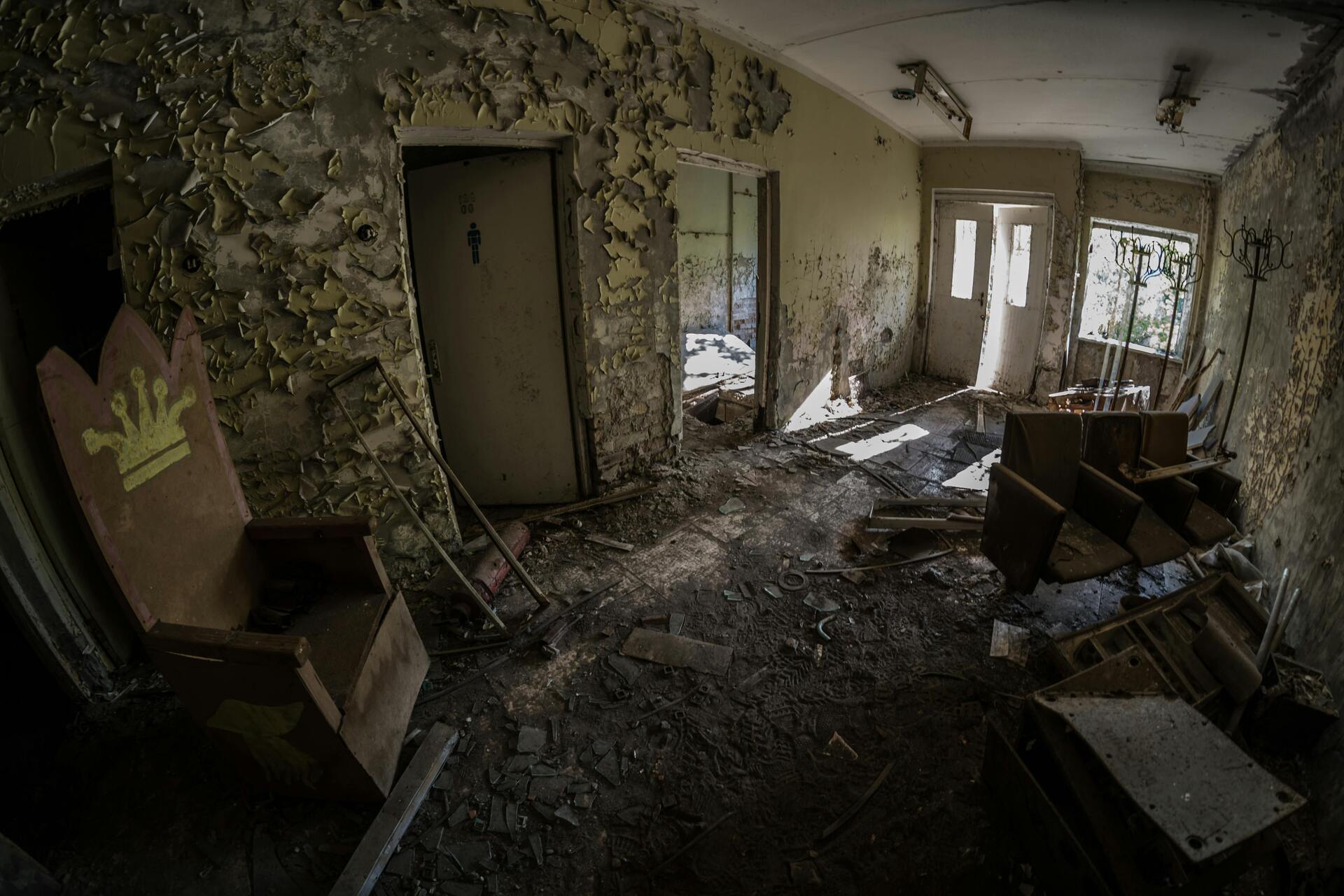 Photo by Wendelin Jacober margins. Only the fortunate 2% near major cities see crowds exceeding 50,000. It's a gamble wrapped in darkness, where entrepreneurs bet everything on humanity's appetite for fear. As the calendar turns to November, these temporary temples of terror face their truest horror: irrelevance. The industry's constant churn reveals an uncomfortable truth—in the business of fear, the scariest monster isn't lurking in the shadows. It's on the balance sheet. |
Answer to Brain Teaser
A Glove
😆 Till You Laugh


Disclaimer

Follow
  |   |