- Networth Farmer
- Posts
- Predicting Ebbs & Flows
Predicting Ebbs & Flows
"Life ebbs and flows, and there's always room for change"~ Ana Huang.

Networth Farmer
February 25, 2026 • Estimated Reading Time: 6 minutes

"Life ebbs and flows, and there's always room for change"~ Ana Huang.
Table of Contents
Fields & Frontiers
Ireland’s High-Tech Blueprint for Agriculture: Teagasc just dropped its 2030 Enterprise Roadmaps, and if you’re looking for a realistic weather vane for European AgTech, this is it. It’s a comprehensive look at how Ireland plans to navigate the tightrope between hitting strict environmental targets and keeping farm businesses in the black. The report covers everything from dairy and beef to tillage, laying out exactly where they expect technology—like precision breeding and carbon-tracking software—to do the heavy lifting. It’s a practical, data-driven vision for an industry under pressure to modernise fast. The goals are ambitious and the technical path is clear, but as with any grand plan, there’s a catch that could change everything. The strategy is solid, but one specific variable remains completely outside their control.
600 Tonnes of Citrus; Revolution or Waste?: Across the Italian town of Ivrea, the air smells of crushed zest as 600,000kg of oranges are used as "ammunition" in an ancient battle against tyranny. While the sight of "wasted" fruit often draws fire, the reality is a masterclass in agricultural repurposing; these are non-marketable grade oranges that would otherwise rot in groves. Instead, they fuel a multimillion-euro local economy before being collected by street sweepers for industrial composting. It is a vivid reminder that in the bio-economy, "waste" is simply a failure of imagination.
A Glimpse into the Driverless Future: The Dutch are notorious for pushing the limits of how efficient farming can be, and the most recent field tests of the AgBot 5.115 autonomous tractor are no different. This isn't just a prototype; it's a 156-horsepower workhorse that shows how useful it is on large-scale farms by doing heavy-duty jobs with surgical accuracy. AgXeed has turned the tractor into lightweight, data-driven equipment that works around the clock and lowers soil compaction by taking off the cab. This change is especially important for the European market because we are seeing tighter job markets and more pressure to reach the Green Deal's soil health goals through better, more independent management. The results from the Netherlands suggest that the technology is ready; the only thing left to do is figure out how to get people to use it. NetWorth Farmer explores the technology on next week’s issue.
Is the Global Dairy Food System Moving Towards a New Normal? : Speaking of dairy, it’s been years of nightmares for dairy farmers in the UK.Data from AHDB indicates that Great Britain has experienced a decline of nearly 200 dairy farms over the past year, while simultaneously observing an increase in milk production per farm. Roughly, the number of dairy producers in Great Britain was 7,040 in April 2025, down 160 from the previous poll in October. During the winter of 2024, the government altered its support programs and imposed new supply chain constraints on a number of producers. According to AHDB's recent poll of milk consumers, most of these departures probably happened in the winter of 2025. Currently, one dairy farm is shutting down every 24 hours. Here is the most recent development.
Brain Teaser
What is full of holes but still holds water?
New In Ag-Tech
Four Forces Dismantling Europe's Crop Protection Status Quo
Corteva is splitting its business unit. FMC is having some tough times with their strategy. Bayer's ongoing struggles. These aren't just one-off events. They are signs of a bigger shift happening in synthetic crop protection. The business model that has kept Syngenta, BASF, and others going for years is now facing some serious challenges. Four big pressures are hitting at once, and they really matter for Europe's shift to regenerative agriculture.
Force One: The Generic Manufacturing Surge
India and China have really ramped up their crop protection manufacturing like never before. These facilities aren't just about making active ingredients more affordable, they've stepped up their game with advanced formulations, vertical integration, and quality standards that can stand toe-to-toe with the established players in Europe. When there's too much capacity, it leads to some pretty aggressive pricing since manufacturers are trying to cover their fixed costs by spreading them out over huge volumes. For European farmers who are already feeling the pressure from CAP reform and sustainability rules, this means getting effective chemicals at much lower prices. This then speeds up the shift towards more standard crop protection methods.
Force Two: The Patent Cliff Without Replacements
The strict rules in Europe that require a lot of ecotoxicology data, endocrine disruptor testing, and environmental destiny studies have rendered it too expensive to produce new active ingredients. The flow of new compounds has reduced to a trickle as patents on popular chemistry run out. What happened? The innovation premium that made traditional players' overhead structures work is going away. Generic alternatives flood the market just as the expenses of regulation make new discoveries unworthy of the practitioners’ money.
Force Three: Different Rules and an Environmental Wake-up Call
The EU Farm to Fork Strategy, which aims to cut pesticide use by half by 2030, will change the market. There are differences in regulations between North America and Asia because of glyphosate controversies, neonicotinoid prohibitions, and the use of the precautionary principle. Traditional companies that make products for worldwide markets now have to deal with fragmented regulatory processes. At the same time, environmental challenges are driving up demand for biological alternatives, precise application, and integrated pest management; technologies outside the area of expertise of such traditional companies.
Force Four: Digital Disruption Rendering Support Functions Obsolete
AI-powered pest identification, spot-spraying systems, and predictive disease models are all examples of precision agriculture technology that cut down on the use of chemicals while making them more effective. What used to go well with synthetic chemistry now looks like it will take its place. Ecorobotix and FarmDroid are two European firms that show how mechanical and digital tools can be used instead of chemicals in some situations. As these technologies get better, they make it harder for traditional crop protection to find customers.
The Regenerative Opportunity
This disruption opens up some strategic opportunities for Europe's regenerative agriculture movement. Using lower-cost generic chemistry really makes it possible to go for integrated approaches without breaking the bank. Regulatory pressure is speeding up the adoption of biological solutions. Digital tools help us make precise interventions that fit well with ecological principles. It's not a matter of if synthetic crop protection is here to stay, it definitely is. The big question is whether the companies behind it can keep up and stay important in the ever-evolving world of agriculture, especially with all the biological and digital changes coming our way.
Digital Pasture


Tending Dreams
Marrying Chemistry to Biology
At first glance, Michael Thompson's planter setup in Almena, Kansas looks pretty typical. It has a liquid-in-furrow system that connects right to the closing discs. It looks like the info flowing through those connections shows a bit of a change towards regenerative agriculture. European AgTech companies should definitely pay attention to this trend.
Chemistry Is Underappreciated
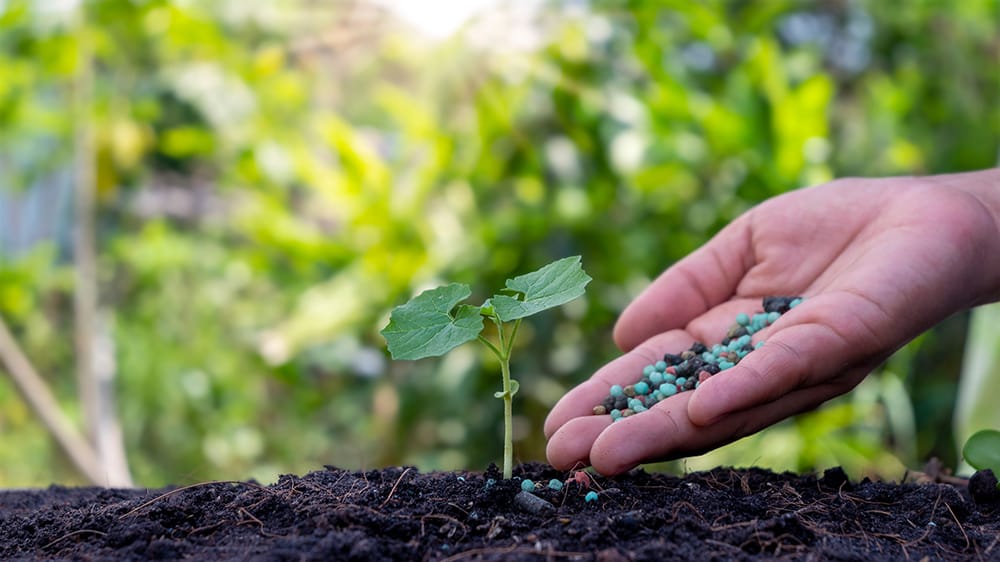
"I'm not running any fertilisers, it's just row support, some biologicals, some compost and things of that nature," says Thompson. He is using biological solutions to provide seedlings with "a happy, healthy place" to grow instead of the conventional NPK starting fertilisers.
No, this is advanced soil biology management; it’s not related to hippie farming at all. Soil research is uncovering more and more evidence that biological activity, instead of chemical treatments, can move nutrients around more effectively in healthy no-till systems. This is especially important during the establishment phase, which is why Thompson's approach considers this factor.
Looking at Europe From a Different Angle
With the growing pressure to cut back on synthetic inputs and the stricter fertiliser regulations, Thompson's approach offers an appealing option for farmers in Europe. Biological starters tackle the issue of nutrient loss, a key part of the EU's Farm to Fork plan. This initiative aims to cut nutrient losses by half while ensuring that soil fertility remains intact.
You can really make a lot of money from this. Liquid biologicals are really gaining popularity as the go-to starting fertiliser since they meet regulations and fit nicely with existing planter setups. What we really need to do is take a fresh look at what we mean by "feeding" a young plant, instead of just swapping out any equipment.

Why This Matters for Market Change
Thompson really represents the trailblazers in this bigger change. As no-till practices spread throughout Europe, driven by worries about erosion and the push for carbon sequestration, the demand for biological alternatives to standard starters is set to increase. Farmers who really understand soil biology are the ones who will find success in farming, rather than those with just advanced chemical knowledge.
AgTech companies have received the message loud and clear: moving forward, crop nutrition solutions will do more than just nourish plants; they'll also support the biological processes that help those plants thrive. We really need to dive into some new research and development, provide agronomic support, and focus on educating farmers since the value proposition is quite unique.
Instead of being idealistic, Thompson's "natural" approach is more of a practical response to the evolving landscape of modern farming, shaped by economic, regulatory, and agronomic realities.
More Fields & Frontiers
Disastrously Creative: A YouTuber known as Styropyro has taken extreme DIY science to new levels by wiring together 400 car batteries to produce enormous electrical currents. The setup reaches more than 150,000 amps, powerful enough to vaporise metals and generate intense magnetic effects rarely seen outside advanced physics labs. While the creator insists he understands the risks and discourages imitation, the spectacle raises eyebrows about safety and responsibility in viral science content. The experiment is undeniably fascinating, but it also highlights the fine line between educational engineering and dangerous showmanship in the race for online attention.
The Famous Excel Tool: We are on the other half of the year and making informed financial decisions is top on our minds. Today’s technologies enable us to track and project financial decisions better but what if I told you this could be done through a simple Excel workbook? They say cash is king, well this template boosts confidence by telling you where your money is going. The VC Corner takes a deep dive into this SaaS financial model raising millions.
Why CVT and Sprouts are a Match Made in Dairy Heaven: It is always brilliant to see a disruptive crew favourite find the right stage, and CVT Soft Serve’s new partnership with Sprouts Farmers Market feels like a match made in heaven. If you’ve followed CVT’s journey from a high-profile food truck in LA to a grocery disruptor, you’ll know they’ve stayed fiercely loyal to a simple, high-quality "CVT" (Chocolate, Vanilla, Twin) philosophy. By teaming up with Sprouts, they are bringing that premium, additive-free indulgence to a much wider audience across the US. This isn't just about putting tubs on shelves; it’s a masterclass in how a boutique brand can scale without losing its soul by finding a retail partner that truly values clean labels and authentic founder stories. It is a massive win for simple, honest dairy.
Answer to Brain Teaser
A Sponge.
Till You Laugh



Disclaimer

Follow
  |   |