- Networth Farmer
- Posts
- Reprogramming
Reprogramming
“You have to let yourself get so bored that your mind has nothing better to do than tell itself a story.” ~ Neil Gaiman

Networth Farmer
April 27, 2026 • Estimated Reading Time: 8 minutes

“You have to let yourself get so bored that your mind has nothing better to do than tell itself a story.” ~ Neil Gaiman
Table of Contents
Fields & Frontiers
Can Italy Crack Biologicals' Dirty Secret?: Biological crop protection has an issue that people often shy away from talking about: products that perform exceptionally well in the lab often don’t deliver the same results when used in the field. UV exposure, heat, hydrolysis, and oxidation can really take a toll on efficacy before the active ingredient even gets to where it needs to go. Nanomnia, based in Verona, Italy, was started by three researchers from the University of Verona, and they're working on some pretty innovative stuff. They're developing biodegradable, microplastic-free encapsulation technology that aims to protect sensitive biological actives, especially in real agricultural settings. Sounds interesting, right? The company works together with Italian institutions like CREA and Agrea, which adds some solid research support to what they do. We don’t have the pricing and farmer-level ROI data out in the open just yet, but it makes sense when you think about it: a biological that delivers results consistently is definitely worth a lot more than one that doesn’t. We will cover Nanomnia on our New in AgTech section next week on Wednesday. Stay tuned
The Man Who Kept Asking Why: Ahti Heinla helped invent Skype, then he built delivery robots. He’d been a ten-year-old kid in Soviet Estonia, learning to code from his mum. The through-line across a remarkable career isn't technology. It's a habit of looking at something everyone accepts as normal and asking whether it has to be that way. What stood out to me from the interview with Heinla is not only the story of technical innovation, but a way of thinking: practical, data-led, and based on the notion that software should solve real issues. Starship robots already account for almost 10% of same-day last-mile deliveries in Finland, a country that gets buried beneath snow for months each year. For AgTech founders who spend their days trying to convince farmers that change is worth the risk, this interview is worth an hour of your time. Heinla has done it twice, at continental scale, against considerable scepticism.
Is The Green Machine Becoming A Software Suite?: John Deere’s 2026 precise approach is less about selling more iron and more about providing “outcome-as-a-service.” The foundation is the Smart Industrial Operating Model that transforms Deere from a hardware producer to a tech giant. Deere plans to generate 10% of its total revenue from recurring software revenue through the John Deere Operations Center by 2026. This “nerve centre” now sees everything from satellite maps of mid-season biomass to real-time harvest weights, so less experienced operators can achieve professional-grade efficiency goals. Rather than buying a new X9 combine, you may upgrade existing fleets with See & Spray Ultimate cameras. They utilise AI to differentiate crops from weeds in real time, reportedly reducing chemical use by as much as 90% – a critical ROI given EU input prices are variable. Already in use in the Netherlands and Germany, this technology helps meet tightening ESG criteria. The business model is changing to “autonomy on your terms.” Farmers now have the choice of automated steering or anticipated ground speed without the large upfront expense of a fully autonomous tractor. If the tractor is now just a mobile computer, how much of your farm's value is currently sitting untapped in your data silo?
95% Less Drift. That's Regulatory Language for "It Works.": Being listed on the Dutch Drift Reduction Technology register is not a marketing badge. It is a recognised regulatory recognition, one with direct weight in permit conditions, subsidy eligibility and compliance frameworks in the Netherlands and increasingly beyond. Austrian precision agricultural company Farm-ING has this month been certified for its SpotSprayING technology, which has been verified to reduce drift by 95%. The technology only uses chemistry when sensors identify it is required, slashing product amounts, protecting watercourses and lowering soil loading in one pass. For European farmers contending with tighter pesticide rules and water framework commitments, the so-what is simple: this technology now has the paperwork to support the performance. It is a worthy candidate for agronomists’ shortlists when advising on sustainable crop protection programmes.” For policy makers interested in developing incentive frameworks around precise application, here is a field-ready solution with independently confirmed credentials.
Brain Teaser
I have one eye but am unable to see. What am I?
New In Ag-Tech
Fungus, Sugar Mills, and a Chicken Rival Under a Dollar
What if your next protein crop never touched a field?
A subtle debate on the fate of our food supply is taking place between a sugar mill in Switzerland and a sugarcane processor in India. No seeds, dirt, or rain are required. Plants with fungal roots are at the heart of Planetary, the Swiss firm's plans to produce protein on a massive scale for less than $1/kg.
The Innovation
Imagine Planetary as the go-to factory builder that alternative protein companies have been looking for. They don't offer a product for consumers. They create, manage, and run fermentation facilities, and they also share their unique BioBlocks platform with agricultural partners who have the necessary infrastructure, feedstock, and land in place. They're working on making mycoprotein affordable enough to really make a difference.
Mycoprotein comes from fungi and is packed with nutrients. It has a fibrous texture that's surprisingly meat-like, and it doesn't require heavy processing or extrusion to achieve that. Quorn has been a staple for British consumers for decades. Planetary aims to turn it into a global commodity ingredient.
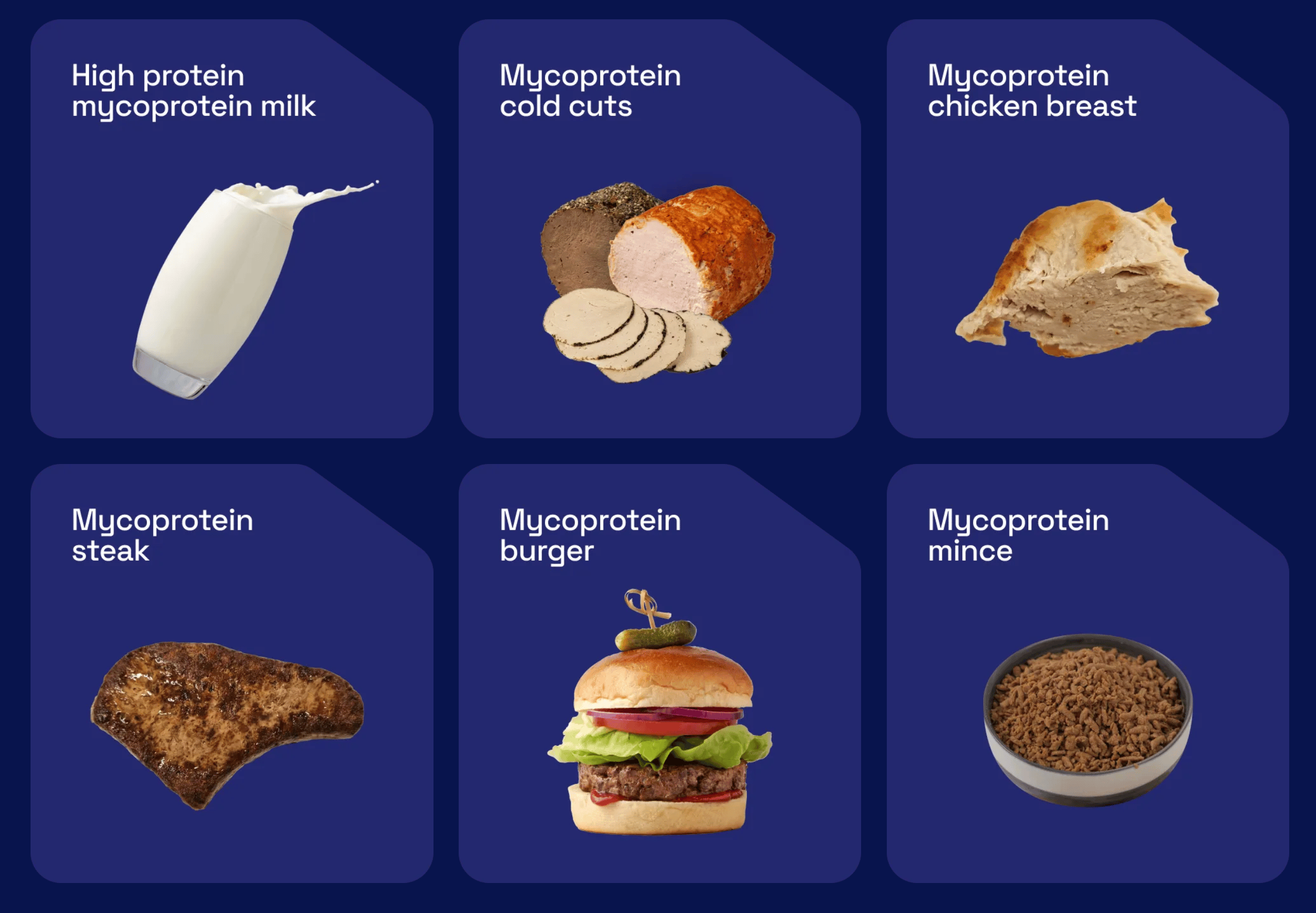
In Aarberg, Switzerland, their facility is right next to a sugar mill. It's not just a coincidence, those sugar side streams actually help with the fermentation process. It takes nine months from the first equipment delivery to get everything up and running. The setup is meant to start generating positive gross margins pretty quickly.
Why India, Why Now
Planetary is considering working with Dhampur Bio Organics, a major Indian sugar producer, to make mycoprotein at an industrial scale at less than $1 per kilogram. The argument is simple: there is a lot of sugarcane side streams, energy can be added to current sugar mill activities and the personnel costs are still attractive. DBO acquires a licensed fermentation platform. Planetary expands into one of the world’s biggest protein marketplaces. It’s a win-win situation.
The target items are available in wet and shelf-stable versions, including, interestingly, a myco tikka masala for the native Indian market. That one detail alone tells you this is not just an export play.
The Hybrid Meet Angle
If you are producing livestock, this is when it gets fascinating. More than 30% of all the beef mince sold at LIDL, Belgium is already hybrid; combining conventional meat with mycoprotein to cut cost, emissions and meet store sustainability standards. ALDI Suisse launches Planetary’s mycoprotein products across the country at the same price as chicken.
This is not alternate protein vs meat. It’s alternative protein being added to meat to cut the amount needed in each product without losing flavour or texture. That’s a different conversation for livestock farmers than we’re having five years ago. It’s no longer a matter of if consumers will switch. It’s about how much traditional beef will be left in the goods they already buy.
The NetWorth Farmer Verdict
This is for AgTech investors keeping an eye on fermentation infrastructure opportunities, food manufacturers looking for protein ingredients, and policy advisors monitoring the growth of alternative protein on a larger scale.
This isn't really for arable or livestock farmers who are hoping for immediate on-farm applications, it's more about upstream infrastructure than a solution you can use right at the farm gate.
Keep an eye on whether the India collaboration gets the green light from regulators, and if that sub-$1/kg mycoprotein really shakes up the hybrid meat game enough to get retailers on board across Europe. We at NetWorth Farmer are keeping an eye on how fast co-location models, like putting fermentation next to current agricultural processing, become the go-to strategy for scaling alternative protein without the hefty costs of building new facilities from scratch.
Digital Pasture

More Fields & Frontiers
The Last Generation to Light Up: This week, something truly historic made its way through Westminster, and it deserves a moment of recognition. The UK Parliament has passed a law that makes it illegal for anyone born on or after January 1, 2009, to buy tobacco products at any point in their lives. The Tobacco and Vapes Bill is setting up a new age restriction that will increase the legal smoking age by one year each year, effectively keeping younger generations from entering the market for good. For those who remember a time when cigarettes were all over TV, given out at parties, and seen as a farmer's buddy during the day, this marks a clear shift for the next generation. The European Commission is aiming for a tobacco-free generation by 2040, as smoking rates are currently about 25% throughout the bloc. Smoking costs the UK public finances about £21.9 billion each year, which is more than twice the amount generated from tobacco taxes. The maths, just like the health situation, was always impossible to answer.
The Sky Above Your Field Has Just Got More Useful: The single biggest constraint on precision agriculture adoption across rural Europe is the absence of reliable connectivity to run technology on farms. When we talk about variable rate application, soil sensors, autonomous machinery, and remote monitoring, it all comes down to having data that flows smoothly between the field and the cloud. In many rural areas in France, Germany, and Eastern Europe, that connection is still missing. Paris-based UNIVITY has closed a €27 million Series A to complete its VLEO 5G demonstration programme, develop its telecom operator offering, and prepare for commercial scale-up from 2028. The company places satellites significantly closer to Earth than Starlink, enabling lower latency, better performance for connected devices, and smaller, more affordable ground terminals. UNIVITY's ambition is to enable operators to leverage space as a natural extension of their terrestrial 5G networks. The field trials may begin in 2028 but the infrastructure decisions being made now will determine which farms are connected and which are not.
Bitcoin's Dual Creators: A documentary that premiered on 22nd April dubbed 'Finding Satoshi' alleges that there are two people who created bitcoin, Hal Finney and Len Sassaman, who worked as Satoshi Nakamoto. Code and whitepaper authorship divides, cypherpunk ties and Satoshi's activity patterns (6am-10pm PST) all rule out other contenders like Adam Back. Finney’s wife confirms his involvement, and Sassaman’s buddy Bram Cohen notes they had similar skills. It counters single theories with forensic proof and was released on 23 April 2026. Check it out for its thorough investigation that mixes data science, interviews—like Coinbase CEO Brian Armstrong giving it a thumbs up—and insider insights. It might just crack the mystery of Bitcoin's origins. For those in AgTech looking at blockchain for supply chains or precision farming traceability, the 1.1 million unmoved BTC really raises the stakes. A captivating ghost-busting story that you can enjoy in less than 2 hours.
A Thought for Friday
The Quiet Work
We've Declared War on Boredom.
At some point, we all agreed that having free time meant we were just wasting it. Now, every little moment between tasks is packed, listening to a podcast on the way, scrolling through my phone between meetings, and getting notifications for just about everything. We've gotten so uneasy with silence that we fill it up before we even realise it's there.
Actually, boredom isn't the issue here. We're just not okay with it.
What Your Brain Does When You Stop Feeding it.
Neuroscientists call it something specific when your mind isn't getting enough stimulation. This mental state is referred to as the default mode network. It's this mental state that kicks in right when you take a break from taking in information. It plays a key role in making creative connections, thinking ahead, and tackling those tricky problems that can't be solved on the spot.

Your best ideas don’t usually come to you while you’re scrolling through your feed. They popped up in the shower, during a long drive, right in that space between one thing and the next. That's definitely not just a coincidence. Looks like boredom is just doing its thing, huh?
Monotony is Proof of Something.
The bulk of the work that goes into building a farm, a company, or a profession is mundane, unremarkable, and sometimes only apparent looking back. You can't expect seeds to sprout just because you watered them enthusiastically once. Going to a conference won't make the soil healthier. Complicating matters further, someone had to turn up on the boring days as well, to record the data, walk the rows, and make the call they were not happy to make.
Experiencing boredom is frequently merely a byproduct of advancement.
The Practical Bit
Avoid making the most of every quiet time. On occasion, take the longer route. Traverse a field without a plan. Put down the phone and sit down with an issue. Taking a mental vacation isn't a waste of time; on the contrary, it's like a field left fallow, which replenishes what constant harvesting destroys.
Anywhere else you look, the world around you will always provide. Staying put is a discipline. Typically, that's the spot where brilliant ideas strike.
Answer to Brain Teaser
A Needle.
Till You Laugh
Disclaimer

Follow
  |   |