- Networth Farmer
- Posts
- Robotics & Roots
Robotics & Roots
“In the field of robotics, the future is limited only by our imagination.” – Bob Reiner

Networth Farmer
February 11, 2026 • Estimated Reading Time: 6 minutes

“In the field of robotics, the future is limited only by our imagination.” ~Bob Reiner
Table of Contents
Fields & Frontiers
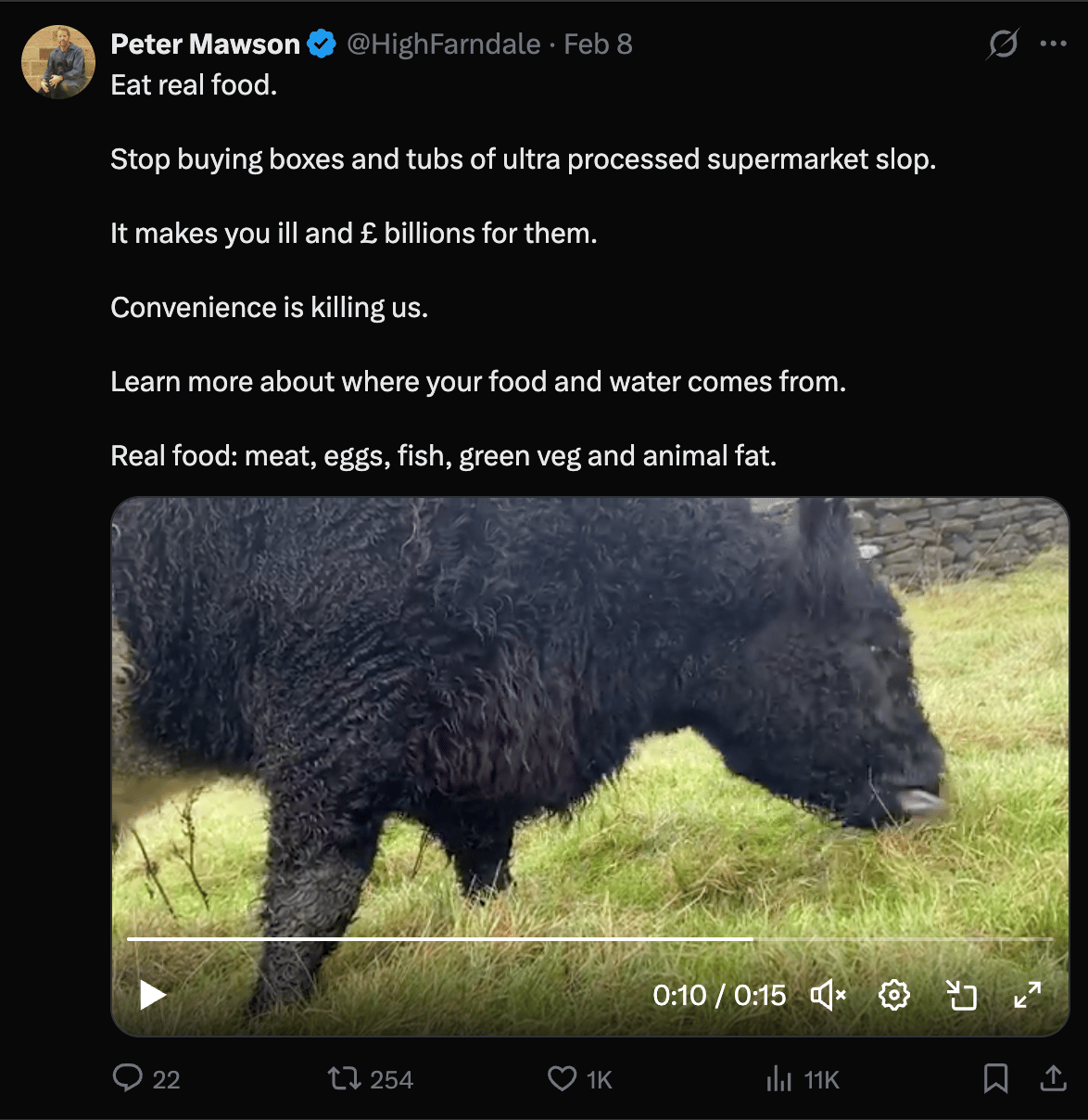
Why UPFs Matter to AgTech: The latest series from The Lancet on ultra-processed foods really brings to light some serious health issues that agricultural innovators should definitely pay attention to. Ultra-processed foods are taking over diets around the globe, pushing out whole foods. This shift is hurting our diet quality and raising the chances of developing chronic diseases like type 2 diabetes, heart disease, obesity, and even cancer. It looks like UPF diets might lead to some nutrient imbalances and encourage overeating, pushing aside those fresh, minimally processed foods that are so important for our health. For Europe’s AgTech sector, this marks an important change: consumers are getting more health-conscious, and food systems that focus on freshness, traceability, and nutrition are probably going to become more popular. Innovators who are looking at fresh-food value chains, minimal processing technologies, or alternative dietary solutions can really meet market demand while also helping improve public health outcomes. The UPF debate goes beyond just nutrition; it’s really changing how we think about food strategy for the future. Read more on UPF health implications on Lancet.
Fertiliser Tariffs: A Rare Glimmer of Price Relief: If you're a European grower feeling the strain of fluctuating input costs, the latest insights from AgTech Navigator bring a refreshing bit of good news. As we head into 2026, it looks like trade dynamics are changing, and there’s a chance that some important import tariffs might ease up. This could mean that those sky-high fertiliser prices we’ve seen in recent years might finally start to settle down. For the AgTech community, this change isn't just about the numbers; it really shifts how we think about the return on investment for precision nutrition tools. When inputs get really pricey, it's all about just getting by; but as prices start to level out, the talk turns to using variable-rate technology to make the most out of every kilogram for the best profit. Right now, it's super important for the industry to shift gears from just cutting costs to really focusing on boosting productivity with data-driven strategies.
Beyond the Data Deluge in AgTech: In an era of rapid digital transformation, the AgTech sector often finds itself overwhelmed by a ‘data deluge’. We are gathering more information than ever before, yet are we truly gaining insight? Aidan Connolly’s latest thought-piece, Can’t See the Forest for the Trees, explores the critical disconnect between possessing sophisticated technology and achieving meaningful agricultural outcomes. Connolly challenges innovators to look beyond individual gadgets and granular datasets to understand the broader ecosystem. Are we addressing the correct issues, or are we becoming lost in the digital jungle? For anyone passionate about the future of food production, this is an essential call to prioritise strategy over mere synchronicity.

Dawn Meats in AgTech: Dawn Meats is challenging gender myths in STEM. It is backing initiatives to close persistent gaps for young women. Female talent drives innovation in meat processing, a hub for precision tech like automation and data analytics, amid talent shortages. Their 2026 Management Programme spotlights rising stars, proving women excel in applied STEM from farm sensors to supply chains. For busy pros building resilient ag systems, this means diverse teams boosting yields and sustainability. Join the shift: empower women, unlock AgTech's full potential across Ireland and beyond.
Brain Teaser
It’s at the center of gravity and you can find it in Venus, but not Mars. What is it?
New In Ag-Tech
The Robot That Ploughed Whilst You Slept
As William Mumford went to sleep, his AgBot kept going. 24 hours later, an autonomous tractor had ploughed 51 acres at Birch Farm in North Yorkshire. This job would have taken a human operator two full days. Mumford, a farmer in Cambridgeshire for five generations, no longer worries about broken-down machinery or equipment that had been left behind. He was giving attention to his family.
More Than Just Automation
The AgXeed Agbot T2 5 series dug in like a determined gardener, keeping a steady 23cm depth and a furrow width of 40cm all on its own. It cruised at a zippy 5.6-8km/h with just one pit stop for a snack; refuelling! Total fuel consumption averaged 18.4L/ha, which is 4.6% less than a Fendt 828 Vario, because robots don’t require heated cabs or fancy comfort systems. Who knew machines could be so low-maintenance? They’re practically the introverts of the farming world!
But efficiency metrics are like trying to measure a unicorn with a ruler. They totally miss the magic of the moment! Mumford explains, "While the AgBot is working I'm becoming a better farmer. I'm paying more attention to the crops. I'm paying more attention to the office work and paying more attention to my family." That's not automation. That's life recovery.
The Stress You Didn't Know You Carried
The AgBot works practically all the time, so you don't have to worry about tight schedules. It uses less electricity, fertiliser, and water. With a tracked design, ground pressure stays below 30 kPa. This implies reduced compaction which is better for the soil, leading to better yields, and making drainage easier.
This technology is no little investment – it costs £310,000. For Mumford, the true cost-benefit analysis is as follows:
"If we can reduce our soil compaction significantly, get at least 5% improvement in nutrient uptake and a 5% increase in yield, this will be one of the best things we've invested in for many years." Compared to traditional tractors, customers have reported a reduction in overall expenditures of 25-35% and a labour savings of up to 90%. One customer clocked 1,200 operating hours in the first year without a single road drive.
The Technology That Isn't Hard to Use
The AgBot works with standard tools that have a 3-point connector. No proprietary attachments, no vendor lock-in, and you don't have to learn how to use equipment you've used for years. There is nothing alien about this technology; it's simply autonomous.
· Use TraXwise Software to set field boundaries before you start mapping your farm.
· The AgBot can turn on headlands, elevate and lower itself, and move with GPS accuracy while being watched from afar.
· At 75% engine load, it can operate for 20 hours on a single tank!
Jeremy Clarkson said it was "the coolest machine in the world." Farmers have a better name for it: the tools that enable them sleep through ploughing season while work goes on as usual.
This has nothing to do with robots taking over farming. It's about farmers reclaiming the aspects of farming that require human judgement, while computers handle the boring, time-sensitive, and physically demanding tasks that have kept people up at night and away from their families for generations.
Digital Pasture

Tending Dreams
From Cockpit to Crop
Justin Hughes used to navigate the skies with the elite RAF Red Arrows, where "surgical precision" wasn't just a phrase—it was a survival requirement. Today, he has traded his flight suit for the muddy boots of AgTech, but his mission is no less daring: he is taking aim at a billion-tonne carbon problem.
The target? Synthetic nitrogen fertiliser. It is a $200 billion industry that powers global food production but remains one of the planet’s biggest polluters. For decades, the Haber-Bosch process has been the backbone of farming, yet it is notoriously inefficient, with up to 70% of nitrogen lost to the environment. Hughes describes it bluntly: "If it were invented today, it would be illegal."
Instead of demanding that farmers overhaul their entire way of life, Hughes’s company, Net Zero Nitrogen (NZN), has applied military logic to biology. They’ve developed a freeze-dried bacterial powder that works within a farmer’s existing routine. By adding the powder to the water used to soak rice seeds, a standard practice, farmers are essentially "placing the fuel right next to the engine." These bacteria live inside the plant tissues, allowing crops to pull nitrogen directly from the air with near 100% efficiency.

The result is what Hughes calls the "Green Discount." It isn't just better for the planet (slashing manufacturing emissions by 88%), it is also cheaper and easier to transport. In a world where fertiliser costs have been rocked by global conflict, the value proposition is simple. As Hughes notes, when you offer a solution that increases yields while cutting costs, the farmer’s response is inevitable: "Why wouldn’t we do this?"
Step into the hangar of agricultural innovation to see how military-grade strategy is finally winning the war on waste.
More Fields & Frontiers
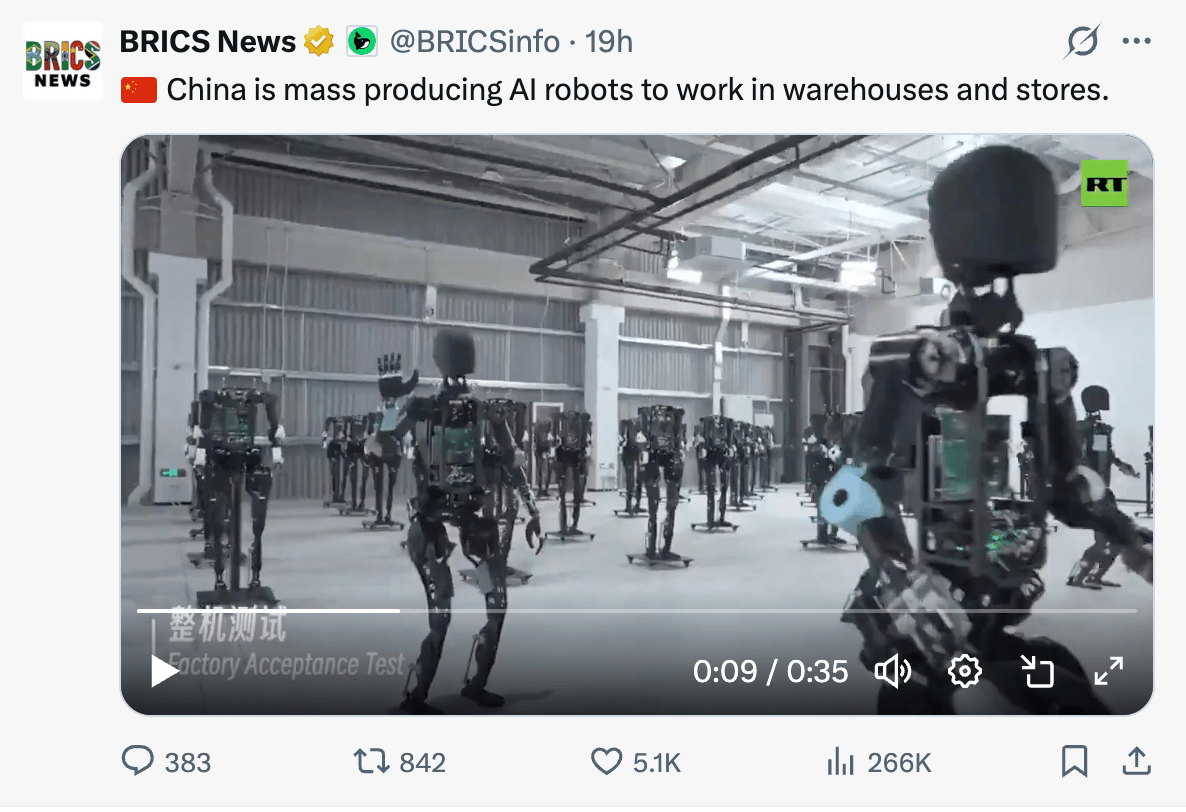
Harvard's Knee-Inspired Robot Joints: Imagine this: tough little robots moving through bumpy fields, picking gentle crops, or working in cramped barns, making everything run smoother where things usually get stuck. Harvard engineers have managed to reduce robotic joint misalignment by an impressive 99% using a math framework that optimises rolling contact designs, taking inspiration from the way the human knee rolls and glides. Curved surfaces and flex connectors bring task-specific motion right into the hardware, moving away from software dependencies. This makes for leaner actuators and grippers that can hold three times the weight. Pretty interesting stuff!
Netafim’s Game-Changer: Imagine turning a one-acre plot in rural India or Vietnam into a data-driven powerhouse that uses 40% less water yet boosts yields by double digits. How cool is that? Netafim, the Israeli drip-irrigation leader, is gearing up to roll out its budget-friendly, AI-driven digital farming suite designed specifically for smallholders in the second quarter of 2026. Solar-powered sensors, automated fertigation, and smartphone dashboards are set to bring advanced precision agriculture right to the fingertips of farmers who are making just a few dollars a day. Might this be the moment when "digital agriculture" begins to hold significance for more than just the large, affluent farms in the West?
Sony’s Scalpel-Wielding Robot: What happens when the experts of world-class imaging and robotics turn their focus to the operating theatre? You get a microsurgery aid capable of precision that defies human boundaries. Vessels smaller than a grain of rice can be seamlessly stitched thanks to Sony's most recent R&D innovation, which is more than simply a machine. This innovation is a high-definition extension of a surgeon's hands. By eliminating tremors and scaling down movements, this robot is turning "impossible" treatments into ordinary wonders. It’s a fascinating view into a future where technology doesn't replace the doctor, but gives them superhuman dexterity.
Celebrating the International Year of the Woman Farmer: 2026 marks a historic global milestone as the UN designates the International Year of the Woman Farmer, and the CDFA is leading the charge in recognizing this vital workforce. For too long, the contributions of women in the field and the lab have been the industry’s "quiet engine," but the tide is turning. As we bridge the gender gap in AgTech, we unlock new perspectives essential for food security and climate resilience. This celebration isn't just about recognition; it’s a call to empower the innovators who are redefining what it means to lead in agriculture.
Answer to Brain Teaser
The letter “V”
Till You Laugh




Disclaimer

Follow
  |   |