- Networth Farmer
- Posts
- Seeds of Resilience
Seeds of Resilience
Life doesn't get easier or more forgiving; we get stronger and more resilient." ~ Steve Maraboli

Networth Farmer
January 09, 2026 • Estimated Reading Time: 13 minutes

Life doesn't get easier or more forgiving; we get stronger and more resilient." ~ Steve Maraboli
Table of Contents
Fields & Frontiers
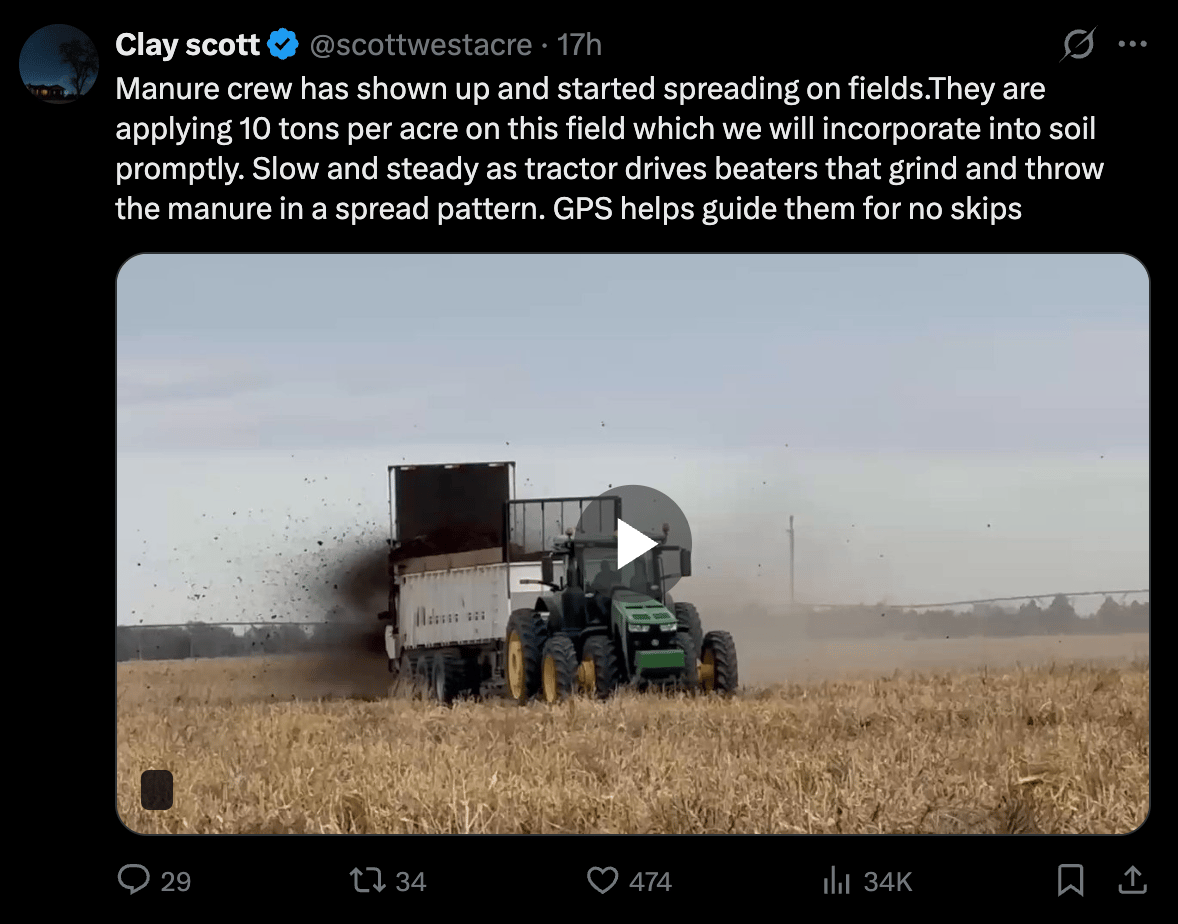
Farmers on the Front Line: French farmers have brought their tractors to the heart of Paris, staging a dramatic protest against a planned EU-Mercosur trade agreement. Their concern? That the deal will allow cheaper agricultural imports, thus undermining their incomes and the stringent standards the EU imposes. Roads and significant sites, such as those close to the Eiffel Tower, were shut down. This action, orchestrated by the Rural Confederation union, was a direct response to mounting discontent with expenses, regulations, and the government's approach to cow illness. The situation had reached a boiling point. This isn't merely a traffic snarl; it's a desperate plea from the very core of Europe's farming sector. For anyone with a stake in the future of agriculture, this serves as a clear illustration of how changes in policy may directly impact people who grow our food. As the EU prepares to cast its vote, a key question looms: can Europe reconcile its commitment to free markets with safeguarding its agricultural sector? Reuters shares scenes live from the protests.
What Next for Dairy?: In our recent look at Humanising Hard Science, we saw how Ryan made the bold choice to leave the family dairy farm to pursue a career in storytelling. It was a story about the emotional and technical tug-of-war that defines modern agriculture. However, as the recent Dairy Foods update regarding Danone and Smith Brothers Farms shows, the industry isn't standing still. It’s evolving with massive corporate-backed resilience programs. For those still in the trenches, staying "responsive" means being selectively adaptive. Corporate leaders like Danone are currently pouring millions into "Milk Academies" and methane-reduction technology. Don’t resist the trend, but don't let it bankrupt you. Look for partnerships that offer "upskilling" or funded infrastructure (like biodigesters) rather than taking on the debt yourself. Leverage the data to prove your farm’s efficiency; it is becoming a currency of its own.
EU Fertilizer Carbon Tax in Limbo: The European Commission has announced a potential suspension of the Carbon Border Adjustment Mechanism (CBAM, or MACF) concerning fertilisers, effective retroactively from January 1, 2026. This decision follows the meeting of EU agriculture ministers held in Brussels on January 7. French Agriculture Minister Annie Genevard described the development as "excellent news" for farmers contending with rising expenses associated with nitrogen fertiliser imports. Commissioner Maroš Šefčovič confirmed that the regulation set for mid-December permits a temporary suspension, contingent upon the approval of EU legislators by February. The proposal includes reducing tariffs on urea and ammonia. To ensure fair pricing, the EU fertiliser market observatory will closely monitor these markets. Farmers' organisations, such as FNSEA, expressed approval of the aid but are now seeking more information. What specific conditions will be in place, and can we truly expect prices to level off? More on this on Reussir.fr
Brain Teaser
I am a protector.
I sit on a bridge.
One person can see right through me, while others wonder what I hide.
What am I?
New In Ag-Tech
How Drone Technology is Redefining European Farming in 2026
As we move into 2026, the European agricultural scene is shifting towards the more precise and agile world of aerial robotics. AgriFlight is a great example of how things have changed. This drone technology shows that high-resolution data and autonomous flight aren't ideas for the future anymore. They are increasingly becoming vital tools for today's farms.
Precision from Above
AgriFlight uses advanced drones that come with multispectral sensors and smart analytics powered by AI. Unlike traditional satellite imagery, which Europe's frequent cloud cover often blocks, AgriFlight operates directly beneath the clouds. It captures data with amazing centimetre-level precision. This lets you do "spot application", meaning you can pinpoint exactly which square metre of a field needs nitrogen or where a pest outbreak is starting. When farmers bring these insights into their current farm management software, they can cut down on chemical inputs by as much as 30%. This not only helps the environment but also improves their profits.
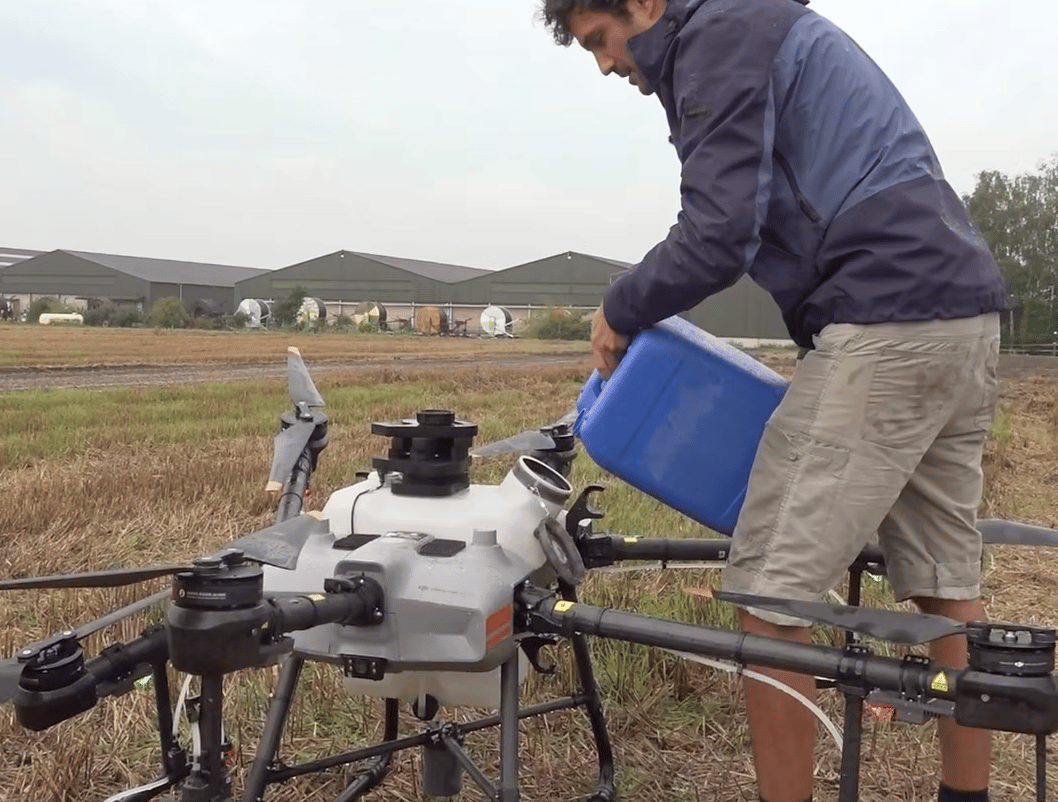
Photo Credits: AgriFlight
The Great Shift: Why Now?
The use of drones has increased dramatically across the continent in the last several years. Farmers are increasingly relying on automation as a means to overcome the challenges posed by both the persistent manpower shortage and the pesticide reduction targets outlined in the EU Green Deal. The days of drones as passive mapping "toys" have passed. Today, these aerial vehicles are powerful tools for precision spraying, cover crop seeding, and live animal monitoring. Improving in durability, efficiency with battery life, and most importantly, affordability for mid-sized European growers, the technology has reached a new level of maturity.
Staying Ahead
For Europe to maintain its lead in the global AgTech race, we must move beyond pilot projects. Staying ahead requires a three-pronged approach:
Regulatory Harmony: Streamlining EASA (European Union Aviation Safety Agency) regulations to make BVLOS (Beyond Visual Line of Sight) operations standard for agriculture.
Data Sovereignty: Ensuring that the wealth of data captured by tools like AgriFlight remains in the hands of the farmers, used to build local AI models tailored to European soil and climate.
Collaborative Investment: Shifting from individual purchases to community-sharing models or "Drones-as-a-Service", ensuring smallholders aren't left behind.
A Call to Action for 2026
Now's not the moment to just sit back and wait to see what happens. When you're putting together your budget for 2026, think of drone technology as more of a safety net rather than just a cost. If you're an investor aiming for scalable impact or a farm operator wanting to boost efficiency, think of the sky not as the limit, but as just the beginning. Let's take flight!
Digital Pasture
More Fields & Frontiers
Drones Unleash Winter Blackout on Ukraine: Picture winter's grip tightening as 97 Russian drones black out southeastern Ukraine overnight on January 7. Nearly 800,000 lost power; over a million shivered without water or heat in Dnipropetrovsk amid sub-zero temperatures. Mines evacuated, schools closed, hospitals on generators, air defences downed 70, but 27 hit critical grids. This "drone mainstreaming" isn't just war: it's a blueprint for cheap, scalable disruption. For European agtech innovators, the question looms—can precision drone tech pivot to defend farms from blackouts and build resilient supply chains?
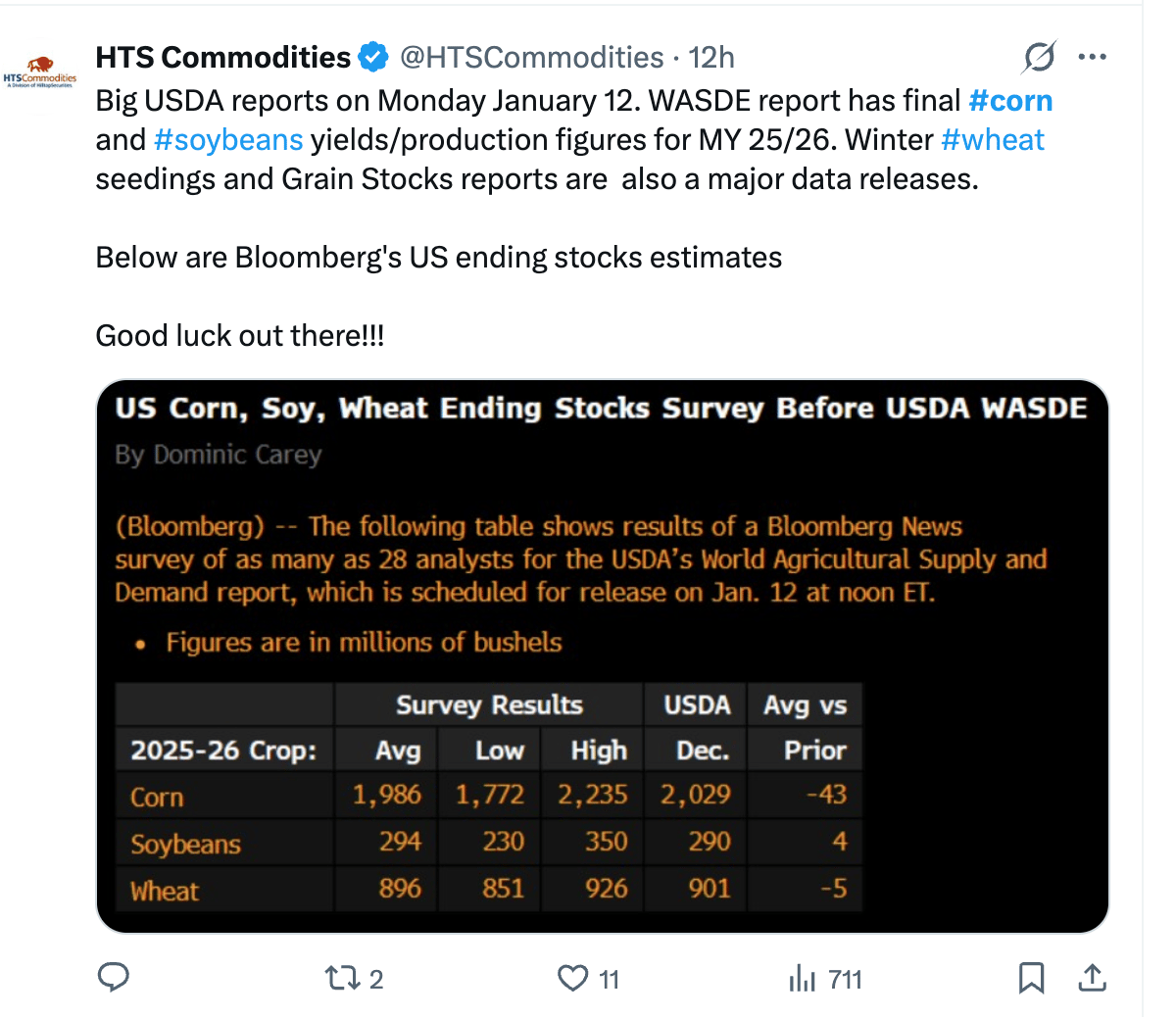
Why Europe Must Watch China’s Shopping List: China's changing preference for soybeans is not only a challenge for American exporters, but it also represents a significant shift for European agribusiness. As Beijing pivots toward Brazilian beans and scales up domestic production, the ripples will hit European feed costs and trade flows hard. For EU professionals, the warning is clear: look out for a "re-routing" of global supply. If China pulls back from traditional markets, expect a flood of inventory elsewhere, sparking price volatility and shifting ESG requirements. In this game of global musical chairs, staying pragmatic means diversifying your protein sources before the music stops.
Musk Delays Mars and Eyes Moon: Elon Musk has pulled the plug on SpaceX's planned uncrewed Mars missions, originally slated for 2026. He deemed them a "low-probability diversion", a decision influenced by NASA's push to meet the 2027 Artemis III lunar landing deadline. Starship Flight 12 tests are on the horizon, slated for the first quarter of 2026. Orbital refuelling demonstrations are also scheduled, tentatively set for June. This move challenges China's advancements on the moon and potentially paves the way for Blue Origin to enter the fray. American legislators are sounding alarms about the possibility of falling behind in a new "space race." Stay in the know with Market Watch.
What a €5M Industrial Win Means for the Farm: The securing of €5 million by Cologne's United Manufacturing Hub (UMH) to address the "broken data layer" in factories should raise serious concerns for the AgTech industry. For a long time, manufacturing, much like farming, has been stuck in a rut, shackled by proprietary software and data silos that refuse to communicate. UMH is leveraging open-source infrastructure to provide a unified source of truth. This approach enables AI to operate effectively at scale within the manufacturing environment. This is the playbook for AgTech. By connecting legacy equipment with contemporary AI through interoperable hubs, we may finally realise the full promise of the "Smart Farm." The days of being trapped in proprietary systems are numbered. The future favours those who can liberate data.
A Thought for Friday
Beyond the Bruise
Entering 2026 feels like walking into a field after a long, unforgiving winter. We cannot ignore the "bruise" of 2025, the high input costs and the regulatory fatigue that left many feeling drained. But as any farmer knows, the hardest seasons often yield the deepest roots. This year, the shift is more than survival; it’s about a newfound clarity.
Old Walls vs. New Doors
In 2025, many felt trapped by "sticks", the rigid regulations and soaring fertilizer prices. However, 2026 is opening doors to "carrots". We are seeing a historic pivot in the EU toward pragmatic innovation. For the first time, barriers to New Genomic Techniques (NGTs) are falling, offering us seeds that can "breathe" through heatwaves and require less synthetic intervention.
Technology as a Partner, Not a Burden
The "good" of 2026 is that AgTech has finally become practical. We’ve moved past the hype of flying tractors to the reality of "Execution Capital." Think of the solar-powered irrigation systems now stabilizing smallholder incomes or AI-driven nutrient tools that treat every plant as an individual. These are shields against volatility.
Entering with Optimism
To start this year right, we must shift our perspective from mitigation to adaptation. Positive thinking in 2026 isn't about ignoring the clouds; it’s about knowing you have the best umbrella ever built.
Acknowledge the stress, but celebrate the fact that you are still standing, leaner and smarter.
Look for the "Grand Bargain"-the merging of tradition with BioTech that promises a fairer return for your stewardship.
Farming has always been a profession of hope. This year, let that hope be powered by the most resilient technology on earth: the human spirit.
Answer to Brain Teaser
Sunglasses.
Till You Laugh
Disclaimer

Follow
  |   |