- Networth Farmer
- Posts
- Unlabelling
Unlabelling
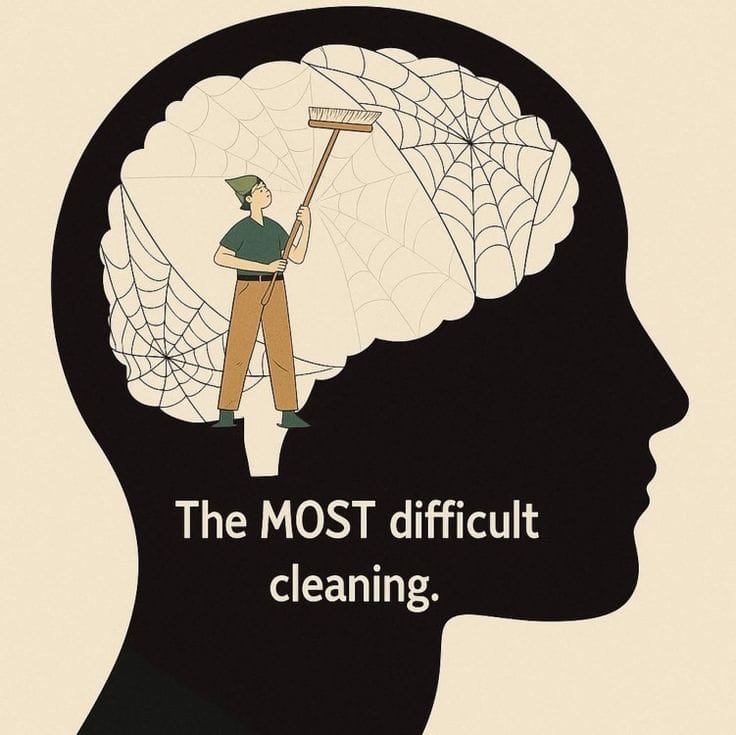
"When I let go of what I am, I become what I might be."~ Lao Tzu

Networth Farmer
March 20, 2026 • Estimated Reading Time: 7 minutes

"When I let go of what I am, I become what I might be."~ Lao Tzu
Table of Contents
Fields & Frontiers
The £30m FETF 2026 Opportunity: Competitive subsidies are now available to English farmers through the Farming Equipment and Technology Fund (FETF) 2026. The fund aims to improve operational efficiency by targeting productivity, slurry management, and animal health. Investors in precision technology or infrastructure that improves animal welfare can get a much-needed financial boost from the fund. Applications for the first round must be submitted by midday on 17 April 2026. This is a rare chance to de-risk high-spec investments such as robotic weeders and modern livestock monitoring systems. Find out more on this opportunity on Gov.UK.
France Proves the Viability of Pesticide-Free Farming: A significant ten-year study conducted by INRAE has established that large-scale, pesticide-free agricultural production is not merely a theoretical goal but a viable reality. By employing diversified crop rotations and sophisticated mechanical weeding techniques, French researchers have achieved substantial yields while improving soil health and biodiversity. This decade-long data set challenges the traditional dependence on chemical inputs. It shows that biological synergy can effectively supplant synthetic interventions without jeopardising food security. This acts as a potent impetus for innovation. The transition towards "zero-pesticide" systems presents considerable opportunities for autonomous weeding robotics and sensor-based crop management. It signals that the forthcoming decade of European agriculture will be characterised by ecological intelligence and the technology that facilitates it on a large scale.
Embracing Autonomy: German agritech startup Eternal.ag just unveiled Harvester, its first commercial product: a fully autonomous robot revolutionising tomato greenhouse harvesting. No human operator needed—it runs up to 22 hours daily, delivering consistent precision cuts at up to 120 trusses per hour with zero damage thanks to patented end effectors and AI-driven vision. Modular and corrosion-resistant, Harvester navigates row changes on concrete floors and integrates into intelligent systems for optimal crop quality. Backed by €8M funding, it's trained virtually in your greenhouse before deployment, paving the way for full autonomy by 2040. A labour-saving, sustainable game-changer for growers!
Cracking the Biological Code: Living Models, an AI-driven biotechnology startup, has come into the limelight with a substantial boost of £5.5 million in seed funding. Traditional genomic tools have a hard time figuring out how DNA sequences affect traits in the real world. This company, on the other hand, is using "foundation models" for biology to make the connection. Their AI technology reads genetic code like a language. This lets it guess how small changes will affect a plant's ability to stay alive or a microbe's ability to grow before the first seed is planted. In Europe's AgTech industry, the shift from trial-and-error breeding to "generative biology" is a big deal. As the growth seasons become less stable, it is essential for food security for us to quickly and accurately identify and grow crops that can survive in harsh climates. Tech EU looks into this company in more depth.
Brain Teaser
What's always in front of you and can't be seen?
New In Ag-Tech
Beyond the Stone: How Grodan Refuses to Be Defined
The Abandoned Building Site Discovery
Over fifty years ago, someone spotted a tiny plant thriving in a discarded piece of stone wool on a construction site. Nature, doing what it's designed to do, had found a way to grow. That serendipitous moment could have been dismissed as botanical curiosity. Instead, it became the foundation of Grodan, a company that has spent five decades refusing to be labelled as merely a substrate manufacturer.
Transitioning from "Rock Supplier"
It would have been simple to classify them as "stone wool producer." Simple. Definable. Restrictive.
As Gordan watched his rivals obsess over slabs, blocks, and plugs, he realised they weren't selling growing media. Systems to regulate the root zone were being engineered by them. By 2026, their technological portfolio will include vermiculite-free propagation solutions, e-Gro Base cross-platform software with LTE fallback connectivity, integration partnerships with Hoogendoorn’s IIVO climate computers, and GroSens sensor networks with updated IPX4 waterproof hardware.
There was no mission creep in the shift from stone wool blocks to precision agriculture driven by artificial intelligence. Refusing to conform to the industry's expectations of what a substrate company ought to be was a deliberate act of unlabelling.
The Strawberry Pivot That Shouldn't Have Worked
In 2025, Grodan, Limgroup, and Delphy ISFC achieved something agricultural convention said was impractical: harvesting over 20kg of strawberries per m² using F1 hybrid seeds grown directly on stone wool. Traditional wisdom dictated that strawberries required field-based tray plant production. Indoor direct seeding on stone wool? Absurd.
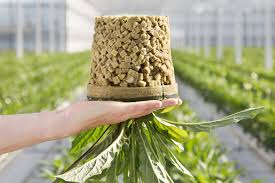
Except it wasn't. The collaboration demonstrated year-round, high-yield strawberry cultivation using 50% less water and 20% less fertiliser than soil methods. The innovation wasn't just agronomic—it was philosophical. Grodan refused to be constrained by what "stone wool is for."
Leadership Transition Without Identity Crisis
When Hub Janssen stepped down as Managing Director after 14 years in January 2026, Grodan could have experienced identity turbulence. Long-tenured leaders often become synonymous with company vision. Yet Grodan's recent appointment of a dedicated Business Development Manager for the turnkey greenhouse market signals continuity through evolution. This embeds their solutions earlier in facility construction rather than retrofitting after the fact.
The company isn't waiting for growers to discover them. They're shaping the infrastructure greenhouses are built upon.
The Unlabelling Mindset
Grodan's journey from accidental botanical observation to precision agriculture ecosystem illustrates a fundamental business truth: companies that thrive don't accept external definitions. They don't ask "What are we?" They ask "What could we become with what we have?"
Stone wool substrate became root zone steering. Physical products became data-driven decision systems. Construction site waste became controlled environment agriculture. Each evolution required rejecting the previous label before it calcified into limitation.
For European AgTech leaders navigating industry disruption, Grodan's trajectory offers operational wisdom: your current category is a starting point, not a destination. The most dangerous label is the accurate one. Because accuracy breeds complacency.
Grodan began with a plant growing through abandoned rock. Fifty years later, they're still discovering what else can grow when you refuse to be defined by where you started.
Digital Pasture
More Fields & Frontiers
Fiscal Relief for Italian Fisheries: In a significant move to bolster the maritime economy, the Italian government has confirmed a 20% tax credit for fuel purchases within the agricultural and fishing sectors. This measure aims to offset the persistent volatility of energy costs, providing much-needed liquidity to operators facing thin margins. For Italian fisherfolk, the credit applies to expenditures incurred during the first quarter of the year, offering a direct fiscal buffer against the operational overheads of maintaining a modern fleet. While the relief is a localised win for Mediterranean producers, it signals a broader European trend of tactical state intervention to protect food sovereignty. For the wider AgTech and machinery sectors, such incentives remain a critical bridge, ensuring that primary producers have the financial stability to continue investing in more efficient, lower-emission propulsion technologies.
Yes, Hard Work Pays: It does not take much to build a dynasty. In agriculture, business, and innovation, consistent effort is what turns problems into products. And as much as hard work alone does not guarantee success, it builds reputations and opens doors that shortcuts can’t. Such is the mindset of the wealthiest individuals on planet earth like Zhou Qunfei. Zhou is the founder and chairwoman of Lens Technology, a renowned touchscreen manufacturer based in Hunan that supplies touchscreens to tech heavyweights such as Apple, Samsung, and Tesla. Forbes ranks the 54-year-old among the top five of the world's 50 richest self-made women in 2025, with a net worth of US$11 billion (HK$86.35 billion). Her journey is a testament to perseverance and determination. Find out the inside story on Tatler.
Government Backs Down on AI Copyright After Artists' Fury: The UK government has changed its mind about the AI copyright plans after receiving strong pushback from celebrities like Sir Elton John and Dua Lipa. At first, the idea was to allow AI companies to train their models using copyrighted materials, but only if people opted out. Critics called it "theft on a high scale." So, Technology Secretary Peter Kyle is saying that they need more time to really "get this right." He's stepping back from making any hasty changes, especially with so much pushback from the creative sector. UK Music called it a "major victory," encouraging everyone to work together for creator control and transparency. This is the first government to back down. Finding the right balance between AI innovation and artists' rights has never been more important.
A Thought for Friday
When Adapting Beats Scale: Vebi's Story
In 1945, not long after the war ended, someone in a little hamlet in the province of Padova decided to start creating medications. The company went by the name Vebi Istituto Biochimico. It had a simple goal, focused on the local area, and really didn’t stand out to anyone who wasn’t unwell and in need of its products. It started out strong by making medicines for people, then shifted to veterinary drugs, and eventually carved out a successful niche in pest control products, which are sold directly and under the names of big multinational brands.
Eighty years is a long time to stay relevant. Most companies don't manage it. Vebi did , just not by standing still.
The Mistakes They Didn’t Make
A lot of agribusiness companies back in the day tried to handle everything on their own for way too long. They stuck with their manufacturing identity, even while the world was shifting towards specialisation, platforms, and partnerships. Vebi could've done that too. Instead, it leveraged its eight decades of commercial success and extensive regulatory expertise in hygiene, health, and safety to establish itself as a leader in the Italian market and a notable international player. Then, it posed the more challenging question: what are we really here for now?
So, in 2024, Vebi teamed up with Blue Line, which focuses on pest control and environmental protection for the B2B market. They came together under a new holding company called Leonardo Lifescience. It was a choice, the kind of strategic move that many family-run businesses tend to avoid until they really have to face it.

The Eureka Pivot
What happened next was a change of perspective. In 2026, the Leonardo Lifescience group introduced a new division called Vebi 4Farm. This division is all about the professional livestock sector, tackling important areas like biosecurity, farm hygiene, and pest control for cattle, poultry, swine, equine, and small ruminant operations.
The idea here is pretty straightforward and definitely something you'd want to share on a barn wall: a healthy farm is the backbone of a great supply chain. It boosts production quality and leads to better economic outcomes. Vebi 4Farm didn't come with a catalogue. It showed up with agronomists and technicians ready to stroll through the sheds, get a grasp on the issue, and create a customised plan before making any sales.
The group currently has more than 500 registered biocidal products in the domestic market, 600 internationally, and operates in over 60 countries worldwide.
What We Learn From This
The tale of Vebi isn't about pest control. It's about knowing when your old identity has done its job and having the guts to make a new one before the market compels you to. Vebi began in a pharmacy after the war. It ended up in the milking room. Companies and farms that are changing themselves now, on their own terms, and not in a crisis mode will do well in European agriculture over the next twenty years. Let’s learn, unlearn and relearn with intention.
Answer to Brain Teaser
The Future of the Farm.
Till You Laugh
Disclaimer

Follow
  |   |