- Networth Farmer
- Posts
- What's Love Got To Do With It?
What's Love Got To Do With It?
"Agriculture is Earth's oldest love story"~ Anonymous

Networth Farmer
February 13, 2026 • Estimated Reading Time: 15 minutes

“Agriculture is Earth's oldest love story.”~ Anonymous"
Table of Contents
Fields & Frontiers
RENURE Redefines the EU Nitrogen Limit: The European Commission’s formal adoption of the RENURE (REcovered Nitrogen from manURE) amendment on 9 February marks a tectonic shift in EU nitrogen policy. By allowing processed organic nitrogen to be spread beyond the historical 170 kg/ha limit set by the Nitrates Directive, Brussels is effectively treating high-spec bio-fertilisers as equivalent to chemical ones. For European businesses, this is a massive green light for the circular economy. It unlocks a surge in demand for on-farm processing tech—think ammonia stripping and reverse osmosis—while providing a vital hedge against volatile gas-based fertiliser prices. By turning "waste" into a high-value asset, the EU isn't just protecting its water; it’s building a sovereign, bio-based industrial base.
DSM-Firmenich’s Pure-Play Strategy: DSM-Firmenich’s €2.2 billion sale of its Animal Nutrition & Health (ANH) division to CVC Capital Partners really stands out as a classic example of "Strategic Refocusing." Based in Kaiseraugst, Switzerland, and Maastricht, Netherlands, this Swiss-Dutch powerhouse emerged from the 2023 merger of a nutrition innovator and a fragrance leader. It's moving away from its more cyclical, capital-heavy agri-business to focus on becoming a high-margin, consumer-orientated player in Nutrition, Health, and Beauty. The ANH unit, known for its leadership in vitamins and premixes, often found itself tied to the ups and downs of global livestock markets. So, by splitting it into two separate parts-Solutions and Essential Products-the group is able to secure a €2.2 billion exit and still keep a 20% stake to take advantage of CVC’s private-equity operational improvements. If we're looking at the future of food being more about personal choices and precision, do you think having control over the industrial animal feed chain is a smart move or could it actually hold back innovation?
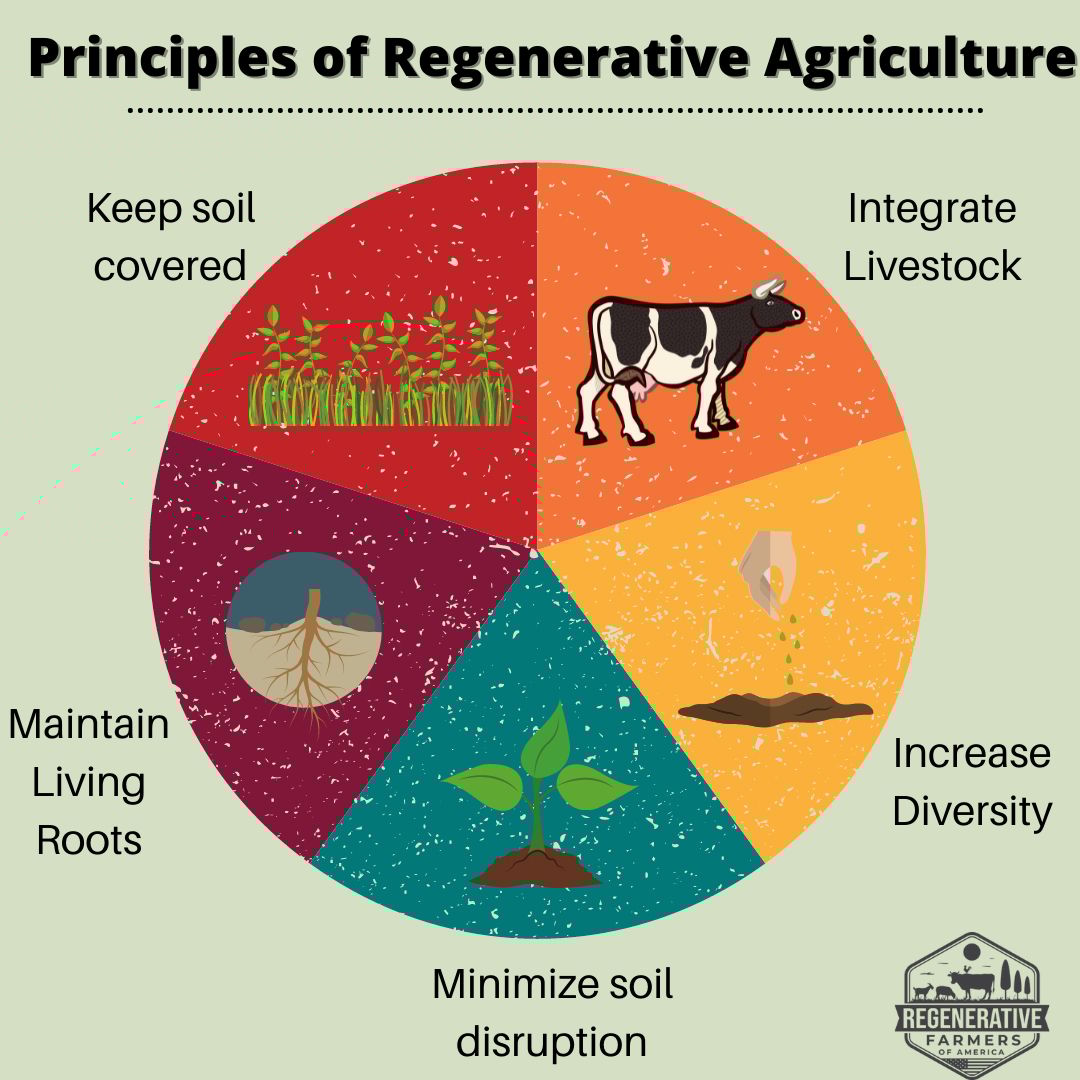
Regen Ag: The Inevitable Evolution: Regenerative agriculture is the most practical roadmap we have for a thriving food system. As we face shifting climates and exhausted soils, moving toward nature-positive farming is a bold, necessary evolution. Pioneers like Andy Cato are demonstrating that when we restore the land, we don't just "sustain", we rebuild. This shift is an invitation to every grower to trade fragile inputs for robust, self-healing ecosystems. It’s an empowering transition that turns the farm into a powerhouse of biodiversity and long-term profitability. The momentum is building, and the opportunity to lead this transformation is yours.
Can a Software Update Replace Thirty Years of Soul?: After thirty-four summers of dust and diesel, the New Holland TR97 has finally decided to take a permanent vacation from the Australian horizon, leaving us to wonder if it’s sipping cocktails on a beach somewhere! For the last time, this trusty old beast chomped through the golden stalks, its gears serenading us with a swan song that’s been going on longer than most sitcoms! It was like that one friend who shows up to every family gathering, helping the farming family weather droughts, gluts, and the relentless march of time without ever asking for a slice of pie! But as the header is shedded and the dust settles on an era, the silence in the workshop feels like a cat trying to sneak past a sleeping dog. Heavy with a new kind of tension and just waiting for someone to trip over a tool and break the spell! The old guard is taking a bow, but what kind of circus act is ready to step into the spotlight and follow a legend that never knew when to call it quits?
Brain Teaser
What do the bird couple call one another?
New In Ag-Tech
Growing More With Less
When Constraints Breed Innovation
The amount of land on Earth that can be farmed isn't growing, and neither is the amount of fresh water. This lack of resources drives the innovations that excite me the most: technologies that increase output while staying within the limits of the planet. Indoor vertical farming exemplifies this pragmatic ingenuity.
From Lab Curiosity to Commercial Reality
Early vertical farms collapsed under their own promise. High energy costs, basic hydroponics, and poor climate control kept them stuck in research facilities and hopeful pilot projects. We finally got a game-changer with energy-efficient LEDs that mimic the red and blue spectra of natural sunlight, and they’re now available at prices that make sense for everyone. Companies such as Philips GrowWise, Valoya, and Osram have fine-tuned light formulas that are tailored to specific crops and their growth stages. This has helped speed up cycles and standardise yields, especially for leafy greens.These days, vertical farms are using automated conveyor systems, robotic harvesting arms, and sensor-driven nutrient delivery. This tech is really cutting down on labour costs. AI-driven environmental controls are always working to fine-tune temperature, humidity, CO₂ levels, and ventilation on the fly. InFarm from Germany is using cloud-based systems to keep track of their decentralised in-store units all over Europe. They rely on machine learning algorithms to monitor plant health, fine-tune inputs, and catch disease outbreaks before they happen, all by using real-time sensor data on things like temperature, light intensity, electrical conductivity, and pH levels. This is really what precision agriculture is all about-making food production safer through smart data use.
Democratizing Food Security: The Little Big Farm Model
While European developers work on improving large-scale vertical farming, a US startup called From The Land is leading the way in making micro-scale solutions more accessible. The company was recently chosen as a finalist at Berkeley's Food Funded conference, which connects visionary food businesses with impact investors. It is now using Little Big Farms, which are cheap, climate-controlled indoor vertical micro-farms that are designed to withstand extreme weather and use renewable energy.
These $50,000 modular units produce high-value crops—mushrooms, saffron, animal feed—on footprints as compact as 10×12 feet. The numbers are hard to argue with: owners can make $10,000 to $60,000 a year with just 10 hours of work a week and still have food security. Little Big Farms solves urban food deserts without relying on the grid or complicated supply chains by growing five times as much food with 90% less water than traditional farming.
From The Land has proven its strategy through paid pilots that were paid for with over $300,000 in grants. The company is led by CEO Dr Gina Oliver and CTO Richard Hutchison. The concept combines conventional building methods with targeted automation to make systems that are cheap and help local food networks, stabilise incomes, and make the economy more resilient.
Europe's Chance
Micro-scale vertical farms are more than just a new idea; they are infrastructure as European policy focuses on food resilience, circular economies, and urban sustainability. From The Land shows that big investments and huge buildings aren't always needed for agricultural innovation that changes the game. Sometimes, the smallest things have the biggest effects.
Digital Pasture
More Fields & Frontiers
Golden Opportunities: Doug was a demanding advertising executive for 27 years, and Becca photographed children. The 2020 COVID-19 epidemic made them realize they needed to shift course. With college-aged children, Mr and Mrs Worples sold their Cincinnati home, rented an RV, and went on a six-month road trip. The couple moved to a 270 acre plot in Vermont but soon discovered just how lonely their 4 golden retrievers were. They started hosting events for people to meet and greet their dogs. The Worples' passion for Golden Retrievers became a viral company after Doug and Becca retired. But getting to Golden Dog Farm wasn't easy, and it wasn't in the Worples' retirement plans. Read more on Golden Dog Farm.
A 3.7-Million-Year-Old Stranger Walked Among Australopithecus: A single fossilised foot, discovered in the sun-bleached badlands of South Africa decades ago but only now understood, has destroyed anthropology's neat family tree. The 3.7 million-year-old bones show a human ancestor who walked upright, climbed trees, and lived on the same savannah as Lucy's renowned Australopithecus afarensis, but it had no known progeny because it did not belong to any recognised lineage. A ghostly species that questions the idea of a linear progression from apes to humans, it was constructed with a grabbing big toe and a heel that bears weight. In the cradle of humanity, at least two or three distinct hominins coexisted with changing weather patterns and disappearing woodlands. How many more unseen players influenced the human experience if we were never alone on that old stage? Here is more.
€3,000 Roan Heifer Stuns Irish Sale: Irish farmers, picture this: a modest 308 kg roan heifer, overlooked by her owner, fetches nearly €3,000 at Carrigallen's January sale- drawing applause and a beaming buyer! Amid wet fields and storm prep, this young star outshone peers, averaging €1,950 with siblings at 330 kg for six-month-olds. Pedigree Limousins shine, with heats aligning for early calves, easing spring workloads despite rising slurry woes. Yet bluetongue and Mercosur loom. For Europe's suckler herds embracing AgTech traceability, will premium calves weather trade storms ahead?
A Thought for Friday
Love Letters and Long Games
Valentine's Day makes us think about love, but agriculture teaches us the difference between infatuation and commitment.
The Honeymoon Phase
Every January, the industry gets all excited. Hey, have you heard about those new precision tools? They’re supposed to boost efficiency by 30%! Pretty exciting stuff! Vertical farming seems pretty groundbreaking in those shiny magazines. Blockchain traceability is going to fix a lot of issues. Carbon credit schemes look great on paper. We’re all about embracing innovation, feeling excited about what’s ahead.
Come March, things start to feel real. It looks like the precision tool needs three engineers to operate and it doesn’t work with the current equipment we have. That trendy regenerative practice seems to work wonders, just not on my soil type. The partnership that’s being called "game-changing" sounds great in the press release, but it doesn’t quite hold up in reality.
We've mixed up infatuation with commitment.
What Commitment Actually Looks Like
Real agricultural relationships aren't exactly glamorous. They’re the soil you’ve been nurturing for fifteen years, getting to know its moods and rhythms. The supplier who picks up the phone at 3 AM when there's a harvest crisis. It took us three seasons to finally nail down the cover crop, but now it’s really paying off with steady results. The market channel that offers fair payments, but takes its time and is dependable.
Commitment is all about sticking around when things get tough. It’s tough when the regenerative transition hits your yields hard for a couple of years before things start to bounce back. So, when that shiny new tech goes belly up and we find ourselves figuring it out as a team, right? When the market changes, it's better to renegotiate than to walk away.
The Question Nobody Asks
Before you "fall in love" with the next big thing in AgTech, ask yourself: Am I ready to commit to this for five years?
Because that's what transformation requires. Soil biology doesn't regenerate in one season. Carbon sequestration takes decades to measure meaningfully. Building trust with new buyers takes years of consistent quality. Learning to operate sophisticated technology well—not just adequately—demands sustained attention.
This Valentine's Day
Instead of chasing what's new and shiny, appreciate what's proven and present. The practices that quietly work. The partnerships that endure pressure. The land that rewards patience.
European agriculture doesn't need more love affairs with innovation. It needs committed relationships with solutions that actually deliver-through the excitement, the disappointment, and the long, unglamorous middle where real value gets built.
The sexiest thing in farming is showing up. Season after season. Getting better together.
Happy Valentine's Day to everyone in a long-term relationship with their land!
Answer to Brain Teaser
Tweetheart
Till You Laugh
Disclaimer

Follow
  |   |